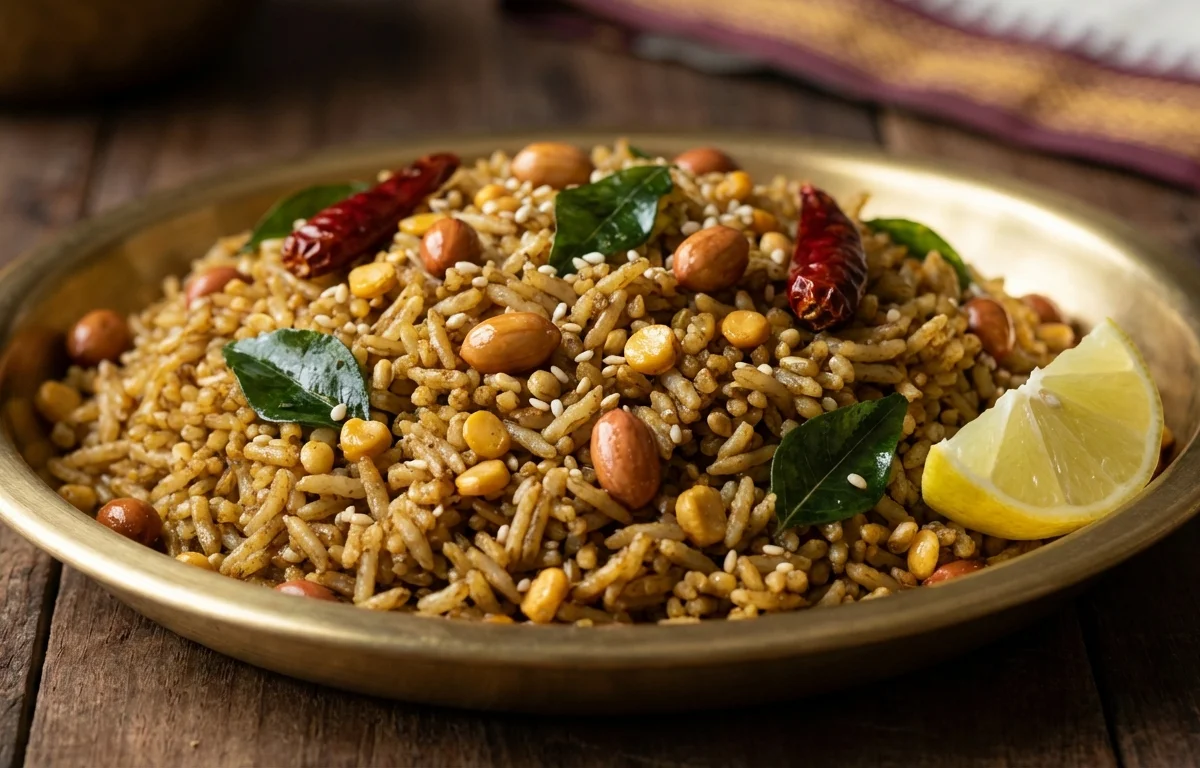
Puliyogare
Tangy tamarind rice from Karnataka with a deep, savory spice mix and crunchy tempering. Each grain stays separate, coated in a bold paste of tamarind, jaggery, peanuts, sesame, and fragrant spices.
For 4 servings
- prep · ~20 min
Soak the rice and tamarind.
1.Rinse the rice well and soak it in water for 20 minutes.2.Soak the tamarind in 1 cup warm water for 15 to 20 minutes.3.Squeeze and strain the tamarind to get a smooth pulp. - boil · ~15 min
Cook the rice.
Drain the soaked rice and cook it with 2.25 cups water until the grains are just done and separate. Spread the cooked rice on a wide plate to cool slightly so it does not turn mushy later.
TIPSlightly firm rice works best because it absorbs the paste without breaking. - roast · ~5 min
Roast the spice mix.
1.Heat a small pan on low heat.2.Roast sesame seeds until they pop lightly and smell nutty.3.Roast coriander seeds, cumin seeds, fenugreek seeds, and 4 dried red chili until aromatic.4.Cool the roasted spices and grind them to a fine powder.TIPKeep the heat low when roasting fenugreek so it adds depth without turning bitter. - temper · ~4 min
Make the tempering.
1.Heat oil in a wide pan over medium heat.2.Add mustard seeds and let them splutter.3.Add chana dal, urad dal, and peanuts; cook until lightly golden.4.Add 2 dried red chili, curry leaves, asafoetida, and turmeric powder; stir for a few seconds. - simmer · ~10 min
Cook the tamarind paste.
Pour the tamarind pulp into the pan. Add salt, jaggery, and the ground spice powder. Simmer on low heat, stirring often, until the mixture thickens to a glossy paste and the oil begins to show at the edges.
TIPThe paste should be thick enough to coat a spoon well; a thin paste will make the rice soggy. - mix · ~3 min
Mix the rice with the paste.
Add the cooled rice to a large bowl. Spoon in the tamarind paste a little at a time and mix gently until every grain is evenly coated. Use all the paste for a bold flavor or stop earlier if you prefer it lighter.
- rest · ~10 min
Rest the puliyogare before serving.
Let the mixed rice sit for 10 minutes so the flavors settle into the grains.
- serve
Serve the puliyogare.
What to keep in mind.
7 tips from the recipe — small details that make a real difference to the final dish.
- 1Cook the rice just shy of soft and spread it out while warm so the grains stay separate when mixed.
- 2Roast fenugreek only until lightly fragrant; even a little over-browning can make the puliyogare bitter.
- 3Simmer the tamarind mixture until glossy and thick, with oil visible at the edges, before adding it to the rice.
- 4Mix the paste into cooled rice in batches so you can control the tang and avoid breaking the grains.
- 5Let the finished puliyogare rest at least 10 minutes; it tastes more balanced after the rice absorbs the paste.
- 6If making ahead, keep a little extra tempering aside and stir it in just before serving for fresher crunch.
- 7Store leftovers refrigerated and bring to room temperature or warm very gently before serving for best flavor.
Adapt it for your goals.
Low-oil
Reduce the oil slightly and simmer the tamarind paste a bit longer; you will get a lighter version with a little less richness.
extra spicyExtra-spicy
Add one or two more dried red chilies to the roasted spice mix for a sharper, temple-style heat.
no peanutNo-peanut
Skip the peanuts if needed and add a little extra chana dal and sesame for crunch without changing the core flavor too much.
milletMillet
Replace rice with cooked foxtail millet or little millet for a nuttier texture and a wholesome lunchbox variation.
Why this is on our healthy list.
Digestive spice profile
Tamarind, cumin, asafoetida, curry leaves, and coriander are traditional ingredients often used in dishes meant to feel lively and balanced on the palate.
Plant-based protein and crunch
Peanuts, chana dal, urad dal, and sesame seeds add some protein, texture, and staying power to an otherwise rice-based dish.
Mineral-rich ingredients
Sesame seeds, peanuts, curry leaves, and jaggery contribute a range of naturally occurring minerals from whole pantry ingredients.
Frequently asked questions
Usually the rice was cooked too soft or the tamarind paste was too thin. Use slightly firm rice, cool it, and simmer the paste until thick and glossy.