Rasam Sadam
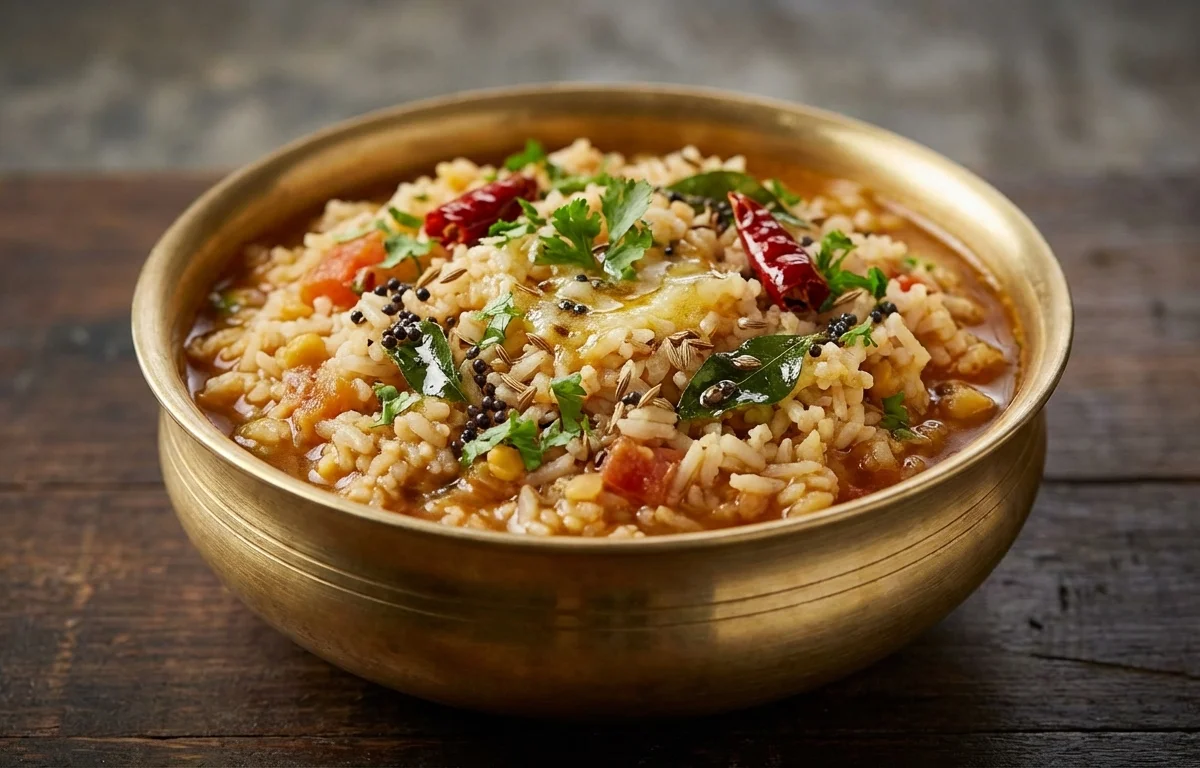
A comforting, tangy South Indian rice dish where steamed rice is mashed and mixed with a freshly made tomato-tamarind rasam. The spiced, soupy texture makes it easy to digest, and a final tempering of mustard seeds, curry leaves, and asafoetida in ghee adds incredible aroma. Perfect for a light lunch or when you need something warm and nourishing.
For 4 servings
- pressure cook · ~15 min
Cook the rice until very soft.
Wash 1.5 cups of rice thoroughly. Add to a pressure cooker with 3 cups of water. Pressure cook for 4-5 whistles or until the rice is very soft and slightly mushy. Let the pressure release naturally.
- boil · ~10 min
Simmer the tomatoes and prepare the rasam base.
In a saucepan, combine the chopped tomatoes, tamarind paste, turmeric powder, red chili powder, rasam powder, crushed black pepper, and salt with 2 cups of water. Bring to a boil, then reduce the heat and let it simmer until the tomatoes are completely soft and the raw smell of the powders is gone, about 8-10 minutes.
TIPMash the tomatoes with the back of your spoon as they cook to help them dissolve into the rasam. - temper · ~2 min
Make the tempering.
1.Heat ghee in a small tempering pan over medium heat until shimmering.2.Add mustard seeds and let them splutter completely (30 seconds).3.Add cumin seeds, dried red chilies, and curry leaves. Fry until fragrant (20 seconds).4.Add crushed garlic and asafoetida, sauté for another 20 seconds until the garlic turns golden.TIPDon't let the garlic burn — it will turn bitter. Keep the heat at medium. - mix · ~2 min
Pour the tempering into the rasam.
Carefully pour the hot tempering mixture over the simmering rasam. It will sizzle and release a wonderful aroma. Stir well and let it simmer for another 2 minutes, then turn off the heat.
- assemble · ~2 min
Mash the rice and mix with rasam.
Transfer the hot, cooked rice to a large mixing bowl. Using the back of a spoon or a potato masher, gently mash the rice while it's warm. Pour the hot rasam over the mashed rice in batches, mixing gently until you reach a loose, soupy consistency. The rice should be fully immersed in the rasam.
TIPAdd the rasam while both rice and rasam are hot. This helps the rice absorb all the flavors properly. - garnish · ~1 min
Garnish with fresh coriander and serve immediately.
Sprinkle chopped coriander leaves on top. Serve the rasam sadam hot in individual bowls. A drizzle of a few drops of raw ghee on top just before eating enhances the taste tremendously.
What to keep in mind.
7 tips from the recipe — small details that make a real difference to the final dish.
- 1Use ripe, juicy tomatoes for a naturally tangy and sweet rasam base.
- 2Mash the rice while it's still hot for a smooth, porridge-like texture.
- 3Always add rasam to the rice when both are hot for maximum flavor absorption.
- 4Do not skip the final tempering; it adds the signature aroma and depth.
- 5Let the rasam simmer until the raw spice smell disappears for a balanced taste.
- 6Adjust the water in the rasam to control the soupiness—more for a thinner consistency.
- 7Crush the garlic cloves lightly to release their oils without burning them during tempering.
Adapt it for your goals.
Low Oli
Replace the ghee for tempering with coconut oil or a neutral oil like sunflower oil to reduce saturated fat while keeping the authentic tempering technique.
High ProteinHigh Protein
Add a handful of cooked, shredded chicken or boiled, crumbled paneer to the rasam in the final simmer for a heartier, protein-packed meal.
VeganVegan
Substitute ghee with a plant-based oil (coconut or avocado oil) and ensure the rasam powder is vegan-friendly. The dish remains deeply flavorful.
Gluten FreeGluten-Free
Use certified gluten-free rice and check that your rasam powder and asafoetida are gluten-free—many commercial brands add wheat flour as a carrier.
Why this is on our healthy list.
Supports Digestion
The combination of asafoetida, cumin, and black pepper in this dish are traditionally used in Ayurveda to stimulate digestive enzymes and reduce bloating.
Rich in Lycopene
Cooked tomatoes in the rasam provide a concentrated source of lycopene, an antioxidant linked to heart health and reduced inflammation.
Hydrating and Light
The soupy, water-based consistency makes this meal easy to digest and helps maintain hydration, especially during illness or hot weather.
Frequently asked questions
Yes, but reheat the rice until steaming hot before mashing. Freshly cooked mushy rice gives the best texture and absorbs flavors better.