Sarson Ka Saag
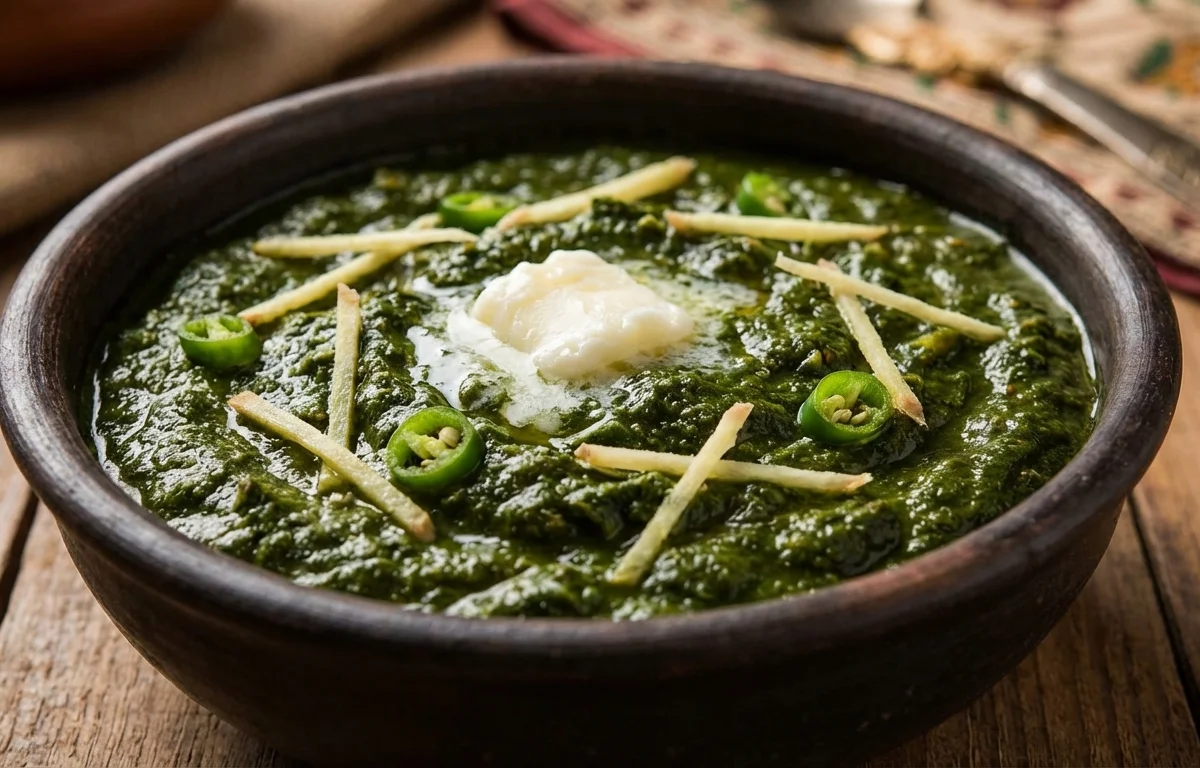
A comforting Punjabi winter classic made with mustard greens, spinach, and a little bathua for depth. Slow-cooked with ginger, garlic, onion, and green chili, this saag turns silky, earthy, and deeply satisfying.
For 4 servings
- prep · ~20 min
Prepare the greens and aromatics.
1.Wash the mustard greens, spinach, and bathua very well to remove any grit.2.Roughly chop the greens so they cook down evenly.3.Chop the onion, tomatoes, ginger, and garlic, and slit the green chilies. - boil · ~25 min
Cook the greens until soft.
1.Add mustard greens, spinach, bathua, green chilies, turmeric powder, salt, and water to a deep pot.2.Bring to a boil over medium-high heat.3.Cover loosely and cook until the greens are very soft and wilted, stirring once or twice.TIPCook the greens until completely tender so the final saag turns smooth and silky. - mix · ~7 min
Mash and thicken the saag.
1.Lightly cool the cooked greens for a few minutes.2.Mash them with a wooden masher or blend briefly for a coarse texture.3.Sprinkle in the maize flour and mix well so there are no lumps.TIPKeep the texture slightly coarse instead of fully pureed for a more traditional finish. - simmer · ~15 min
Slow-cook the saag.
Return the mashed greens to low heat and simmer gently for 12 to 15 minutes, stirring often, until the maize flour is cooked and the saag looks thick and glossy.
- saute · ~12 min
Make the onion and tomato masala.
1.Heat ghee in a pan over medium heat.2.Add cumin seeds and let them sizzle for a few seconds.3.Add onion, ginger, and garlic, and cook until the onion turns light golden.4.Add tomatoes and red chili powder, then cook until the tomatoes soften well.TIPDo not brown the garlic too much or the masala can taste bitter. - mix · ~5 min
Combine the masala with the saag.
Add the cooked onion and tomato masala to the simmering saag and mix well. Cook for 5 more minutes so the flavors come together.
- serve
Serve the sarson ka saag hot.
What to keep in mind.
7 tips from the recipe — small details that make a real difference to the final dish.
- 1Wash the greens in several changes of water; bathua and mustard leaves often hold hidden grit.
- 2Cook the mustard greens until fully tender before mashing, or the saag can taste harsh and fibrous.
- 3Blend only briefly or use a wooden masher to keep the traditional slightly coarse Punjabi texture.
- 4Sprinkle the maize flour gradually into warm greens and stir right away so it thickens without forming lumps.
- 5Simmer on low after adding maize flour; a few extra minutes cooks out its raw taste and gives a glossy finish.
- 6Let the onion turn light golden, not dark brown, so the masala stays sweet and doesn't overpower the greens.
- 7Sarson ka saag tastes even better the next day after the mustard, spinach, and masala have had time to meld.
Adapt it for your goals.
Vegan
Replace ghee with mustard oil or a neutral oil for a fully plant-based version with a more pungent, rustic North Indian flavor.
no blenderNo-blender
Use a wooden mathani or potato masher instead of blending for a more traditional coarse texture and less cleanup.
extra spicyExtra-spicy
Add one more green chili and a little extra red chili powder if you want the saag to have a sharper heat against the rich greens.
jain styleJain-style
Skip onion and garlic, increase ginger and green chili, and make a tomato-based tempering for a simpler satvik-leaning variation.
Why this is on our healthy list.
Leafy Green Richness
Mustard greens, spinach, and bathua bring a wide range of plant nutrients and are a flavorful way to eat more winter greens.
Fiber From Greens
The mix of leafy vegetables can help make the dish satisfying and supports a wholesome, plant-forward meal.
Digestive Aromatics
Ginger, garlic, cumin, and green chili add flavor while contributing traditional warming aromatics to this hearty saag.
Frequently asked questions
Yes. If bathua is unavailable, increase the spinach or mustard greens. The flavor will be a little less earthy but still delicious.



.webp)