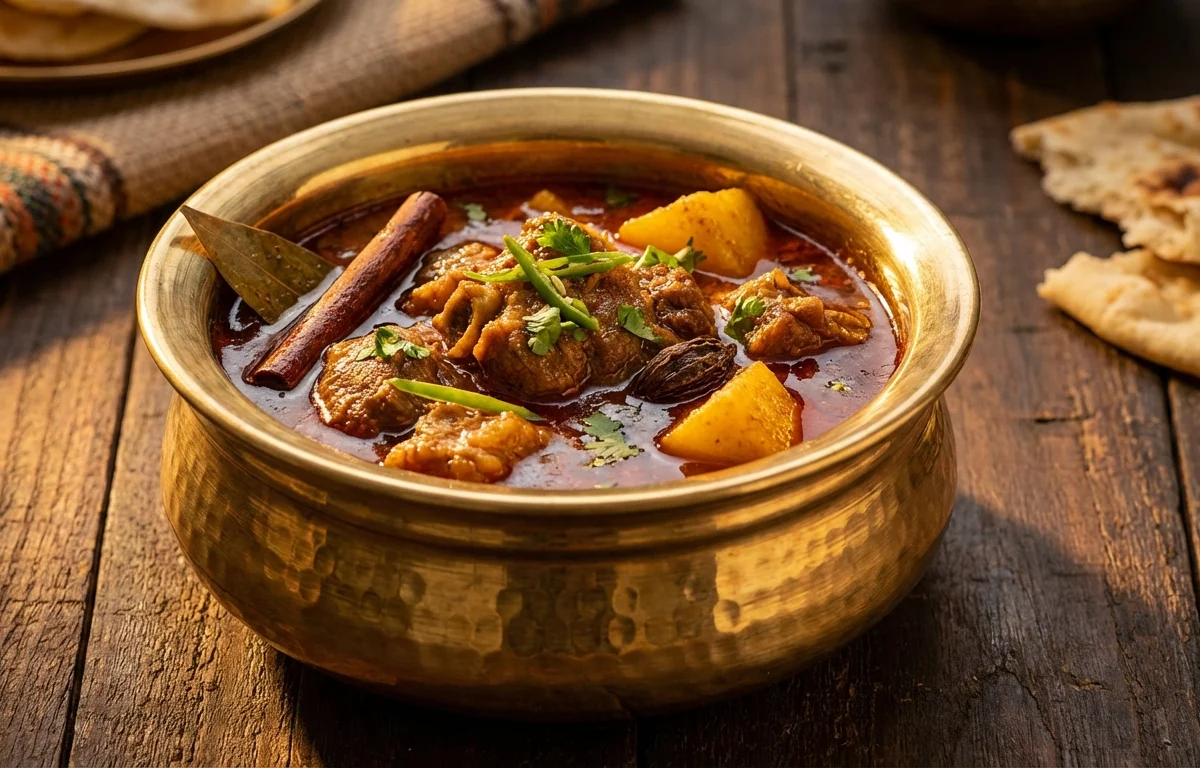
Sindhi Mutton Curry
A homestyle Sindhi curry with tender mutton, onions, tomatoes, and warming spices simmered into a rich gravy. It has deep savory flavor with a gentle tang and pairs especially well with rice or phulka.
For 4 servings
- prep
Prep the mutton and aromatics.
1.Wash the mutton pieces and drain well.2.Slice the onions finely and chop the tomatoes.3.Whisk the yogurt until smooth so it mixes easily into the curry. - saute · ~8 min
Cook the whole spices and onions.
1.Heat oil in a pressure cooker over medium heat.2.Add cumin seeds, bay leaf, black peppercorns, cloves, green cardamom, and cinnamon.3.Let the spices sizzle for 30 seconds until fragrant.4.Add the sliced onions and cook until light golden, about 6 to 8 minutes. - saute · ~7 min
Build the masala base.
1.Add ginger-garlic paste and cook for 1 minute until the raw smell fades.2.Add chopped tomatoes and cook until soft and pulpy, about 5 to 6 minutes.3.Stir in turmeric powder, red chili powder, coriander powder, and cumin powder.TIPKeep the heat medium so the spice powders cook without burning. - saute · ~10 min
Add the mutton and bhuno well.
Add the mutton and salt, then cook with the masala for 8 to 10 minutes, stirring often, until the pieces are well coated and the oil starts to separate.
TIPThis bhuno stage deepens the flavor and gives the curry a fuller taste. - mix · ~2 min
Stir in the yogurt.
Lower the heat and add the whisked yogurt a little at a time, stirring continuously so it blends smoothly into the masala without splitting.
- pressure cook · ~25 min
Pressure cook until the mutton is tender.
Pour in the water and mix well. Lock the cooker and cook on medium heat for 4 to 5 whistles, then let the pressure release naturally.
TIPBone-in mutton gives the curry better body and richer flavor. - simmer · ~8 min
Finish the curry with tamarind and garam masala.
Open the cooker, add tamarind paste and garam masala, then simmer uncovered for 6 to 8 minutes until the gravy thickens slightly and the flavors come together.
- garnish
Garnish with coriander leaves.
- serve
Serve hot with rice or phulka.
What to keep in mind.
7 tips from the recipe — small details that make a real difference to the final dish.
- 1Brown the onions only to light golden; very dark onions can make this curry taste bitter.
- 2Bhuno the mutton until oil separates from the masala for a deeper, meatier gravy.
- 3Add the whisked yogurt on low heat in small additions to prevent curdling.
- 4If your mutton is older or tougher, add 1 to 2 extra whistles before checking tenderness.
- 5After pressure cooking, simmer uncovered until the gravy lightly coats the spoon, not until dry.
- 6Stir in tamarind only at the end; adding it earlier can slow down the mutton's softening.
- 7This curry tastes even better after a few hours of rest, when the whole spices perfume the gravy.
Adapt it for your goals.
Low-oil
Use 1 tablespoon oil and a splash of water while browning onions; the curry will be slightly lighter but still flavorful.
spicierSpicier
Increase red chili powder or add slit green chilies during the simmer if you prefer a hotter, sharper finish.
stovetopStovetop
If not using a pressure cooker, cook covered on low heat until the mutton is tender, adding water as needed for a traditional slow-simmered result.
thicker gravyThicker-gravy
Reduce the final gravy longer after pressure cooking for a richer curry that pairs especially well with phulka.
Why this is on our healthy list.
Rich in Protein
Mutton provides substantial protein, making this curry hearty and satisfying as a main dish.
Contains Probiotic Dairy
Yogurt adds creaminess along with fermented dairy benefits, while also balancing the spices.
Spice-Forward Cooking
Cumin, coriander, cloves, pepper, and turmeric bring flavor complexity without needing heavy cream or butter.
Frequently asked questions
Usually the heat was too high or the yogurt was added too quickly. Lower the heat and stir in whisked yogurt gradually.