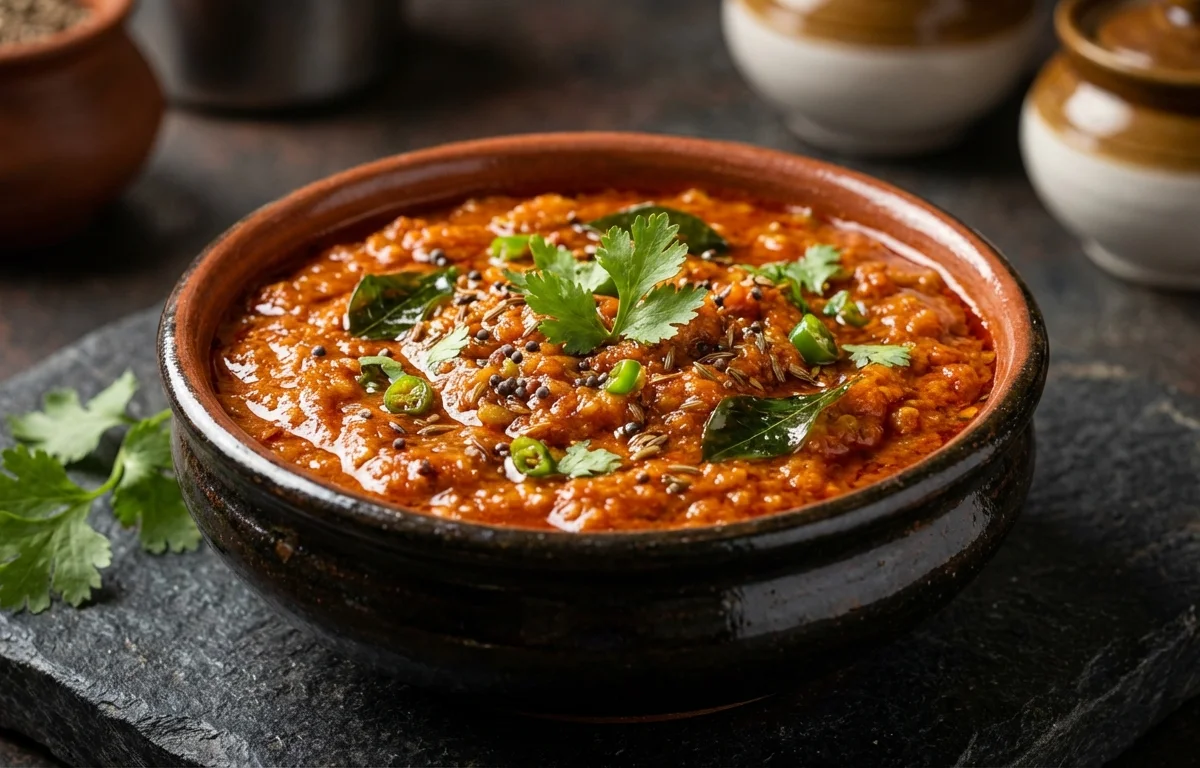
Tamatey ka Kut
A tangy, soul-warming Hyderabadi curry where tomatoes are simmered with toor dal, tamarind, and a crackling mustard-cumin tadka. This comforting dish strikes the perfect balance between sour and spicy, finished with fresh coriander and a drizzle of ghee.
For 4 servings
- prep · ~5 min
Prep the dal and tomatoes.
1.Wash ½ cup toor dal in 2-3 changes of water until water runs clear.2.Quarter 4 medium ripe tomatoes and slit 2 green chilies lengthwise. - mix · ~2 min
Combine everything in the pressure cooker.
1.Add the washed dal, quartered tomatoes, and green chilies to the pressure cooker.2.Pour in 2.5 cups water, then add 1 pinch turmeric powder, 1 pinch red chili powder, and 1 pinch salt.3.Stir to combine.TIPDon't skip the salt at this stage — it helps the dal break down evenly during cooking. - pressure cook · ~15 min
Pressure cook until soft.
Close the lid and cook on high heat until the first whistle. Lower the heat and continue cooking for 3-4 more whistles, about 12-15 minutes total. Let the pressure release naturally.
TIPNatural pressure release is key — it lets the dal and tomatoes meld into a cohesive, silky texture. - mix · ~3 min
Mash and stir in tamarind.
1.Open the pressure cooker once pressure has completely released.2.Mash the cooked dal and tomatoes with a masher or wooden spoon until well blended.3.Stir in 1 tablespoon tamarind paste and mix thoroughly. - simmer · ~6 min
Simmer to the right consistency.
Turn the heat to low and simmer the mashed mixture for 5-7 minutes, stirring occasionally. The kut should be thick but pourable — add a splash of water if it becomes too thick.
- temper · ~3 min
Make the tempering.
1.Heat 2 teaspoons ghee in a small frying pan over medium heat until shimmering.2.Add 1 teaspoon cumin seeds and ½ teaspoon mustard seeds. Let them splutter for 30 seconds.3.Add 4 smashed garlic cloves, 1 dried red chili, 8 curry leaves, and 1 pinch asafoetida.4.Sauté until garlic turns light golden and the mixture is intensely fragrant, about 1 minute.TIPKeep the heat medium — high heat burns the garlic and curry leaves, turning them bitter. - mix · ~1 min
Pour the tempering over the hot dal.
Immediately pour the crackling tempering over the simmering tomato-dal mixture. It will sizzle as it hits the surface. Stir well to distribute the flavors.
TIPPour the tempering the moment it's done — the sizzle is what infuses the dal with that signature smoky, garlicky aroma. - garnish · ~1 min
Finish with coriander and serve hot.
Turn off the heat. Stir in half the chopped coriander leaves, then garnish with the rest. Serve immediately in katoris with steamed rice or roti.
What to keep in mind.
6 tips from the recipe — small details that make a real difference to the final dish.
- 1Use fully ripe, deep-red tomatoes for maximum tang and natural sweetness in the curry.
- 2Natural pressure release is essential — it lets the dal and tomatoes break down into a silky, cohesive texture.
- 3Do not skip salting the dal before pressure cooking; salt helps the lentils soften evenly.
- 4Keep the heat medium while tempering — high heat will burn the garlic and curry leaves, making them bitter.
- 5Pour the tadka immediately after cooking while it's still crackling; the sizzle infuses the dal with smoky depth.
- 6Adjust the consistency with a splash of hot water after mashing if the kut is too thick for your liking.
Adapt it for your goals.
Low-oil
Skip the ghee tadka and instead dry-roast the cumin and mustard seeds, then bloom them in 1 teaspoon of oil. Reduces fat while retaining the essential crackle and aroma.
high proteinHigh-protein
Replace half the toor dal with moong dal (split yellow gram) for a lighter, higher-protein lentil blend that cooks even faster.
veganVegan
Substitute the ghee with coconut oil or any neutral vegetable oil for the tadka. The curry remains equally flavorful and fully plant-based.
extra tangyExtra-tangy
Increase tamarind paste to 1.5 tablespoons and add a teaspoon of amchur (dry mango powder) while simmering. Ideal for those who love a sharper sour note.
Why this is on our healthy list.
Rich in Plant Protein
Toor dal (split pigeon peas) provides a hearty dose of plant-based protein and dietary fiber, supporting muscle repair and digestive health.
High in Lycopene
Ripe tomatoes are loaded with lycopene, a powerful antioxidant linked to heart health and reduced inflammation.
Digestive Support
Asafoetida and curry leaves in the tadka aid digestion and reduce bloating, a traditional benefit in Hyderabadi cooking.
Frequently asked questions
Yes, soak the toor dal for 30 minutes, then simmer in a pot with the tomatoes and water for 35–40 minutes, covered, until soft and mashable.