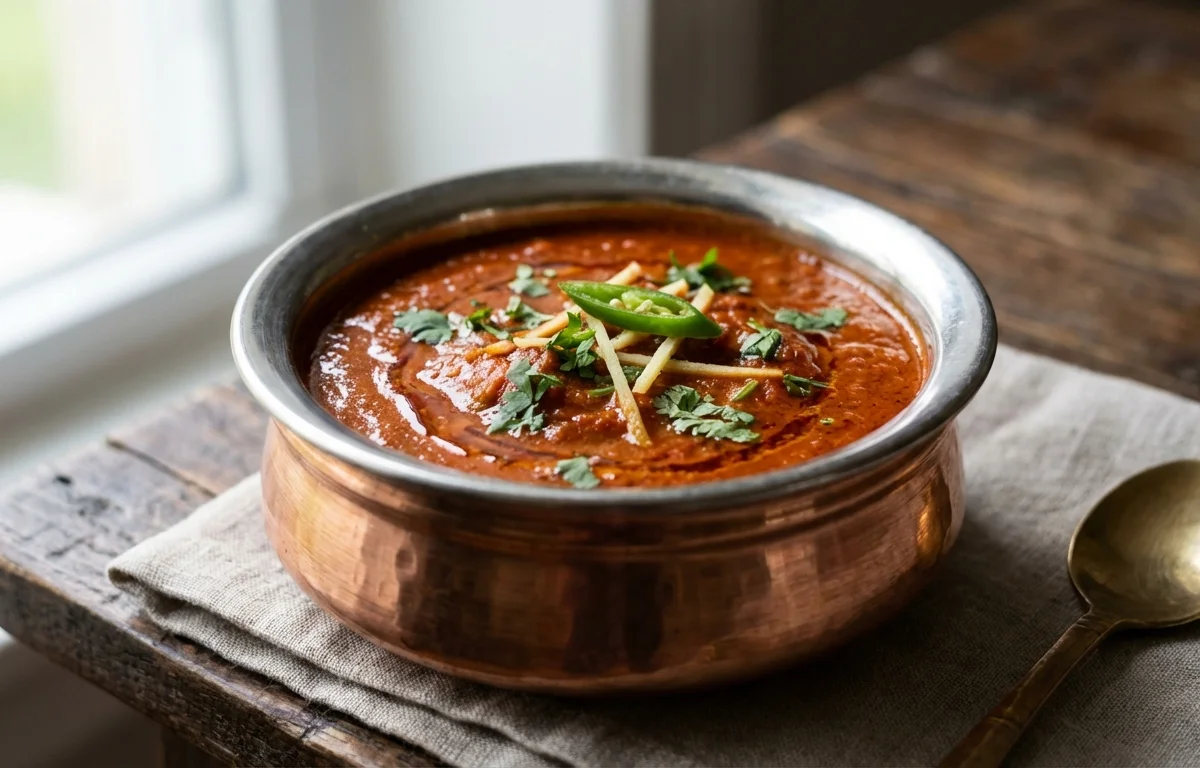
Tomato Curry
A tangy, lightly spiced curry made from ripe tomatoes simmered in a fragrant onion-coconut base. This South Indian-style dish comes together quickly with basic pantry spices and pairs beautifully with steamed rice or roti.
For 4 servings
- prep
Prep the tomatoes and aromatics.
Wash and roughly chop the tomatoes. Finely chop the onion, crush the garlic cloves, grate the ginger, and slit the green chilies. Grate the fresh coconut and set aside.
- temper · ~2 min
Make the tempering.
1.Heat oil in a kadai or deep pan over medium heat.2.Add mustard seeds and let them splutter (30 seconds).3.Add cumin seeds and dried red chili, let them sizzle (20 seconds).4.Add curry leaves and stir until fragrant (10 seconds). - saute · ~6 min
Sauté the onion and aromatics.
1.Add chopped onion and slit green chilies to the pan.2.Sauté until onions turn soft and translucent (4-5 minutes).3.Add crushed garlic and grated ginger, sauté until raw smell goes away (1 minute).TIPKeep the heat at medium — garlic and ginger burn quickly and turn bitter. - saute · ~3 min
Cook the spice paste with coconut.
1.Add grated coconut to the pan and stir for 1 minute.2.Add turmeric powder, red chili powder, and coriander powder.3.Sauté the spices until fragrant and the coconut turns lightly golden (2 minutes). - other · ~8 min
Add tomatoes and cook them down.
1.Add the chopped tomatoes and 1 pinch of salt to the pan.2.Stir well to coat the tomatoes with the spice mixture.3.Cook on medium heat until the tomatoes soften and release their juices (6-8 minutes).4.Mash a few tomatoes with the back of the spoon to thicken the gravy naturally.TIPThe tomatoes should break down completely — this creates the body of the curry without needing any cream or paste. - simmer · ~10 min
Simmer the tomato curry.
1.Add 1 cup of water and stir everything together.2.Bring the curry to a gentle boil, then lower the heat.3.Cover partially and let it simmer for 8-10 minutes until the gravy thickens and oil starts to separate on the sides.TIPPartial covering lets steam escape while preventing splatters — it thickens the gravy perfectly. - garnish
Finish and serve the tomato curry.
Taste and adjust salt if needed. Turn off the heat, garnish with chopped coriander leaves, and serve hot with steamed rice or roti.
What to keep in mind.
7 tips from the recipe — small details that make a real difference to the final dish.
- 1Use fully ripe, deep-red tomatoes for maximum tang and natural sweetness.
- 2Sauté the grated coconut until lightly golden to unlock its nutty aroma.
- 3Don't skip the tempering step — blooming mustard seeds and curry leaves in hot oil builds the dish's foundation.
- 4Mash some tomatoes directly in the pan to thicken the gravy without any cream or starch.
- 5Let the curry simmer until a thin layer of oil surfaces on the sides — that signals the flavors have melded.
- 6Cool completely before refrigerating; the curry tastes even better the next day.
- 7If using frozen coconut, thaw and pat dry to avoid excess water in the pan.
Adapt it for your goals.
Coconut-free
Omit the grated coconut and add 2 tablespoons of poppy seed paste or crushed cashew paste for a nutty, creamy texture — perfect for those who avoid coconut.
high proteinHigh-protein
Add 1 cup of cooked chana dal (split chickpeas) or paneer cubes in step 6 for a more filling, protein-rich meal without altering the core flavour.
low oilLow-oil
Use only 1 teaspoon of oil and dry-roast the coconut and spices in a non-stick pan; the tomatoes' own juices provide enough moisture to cook the aromatics.
Why this is on our healthy list.
Rich in Lycopene
Tomatoes are loaded with lycopene, a powerful antioxidant that is better absorbed when cooked with a little oil, as in this curry.
Good Source of Healthy Fats
Fresh coconut provides medium-chain triglycerides (MCTs) that offer quick energy and support metabolic health.
Anti-inflammatory Spices
Turmeric and ginger both contain curcumin and gingerol, compounds known for their anti-inflammatory and digestive benefits.
Frequently asked questions
Yes, use 2 cups of canned whole or crushed tomatoes. Reduce added water by half, as canned tomatoes are much juicier than fresh.