Tondli Bhaji
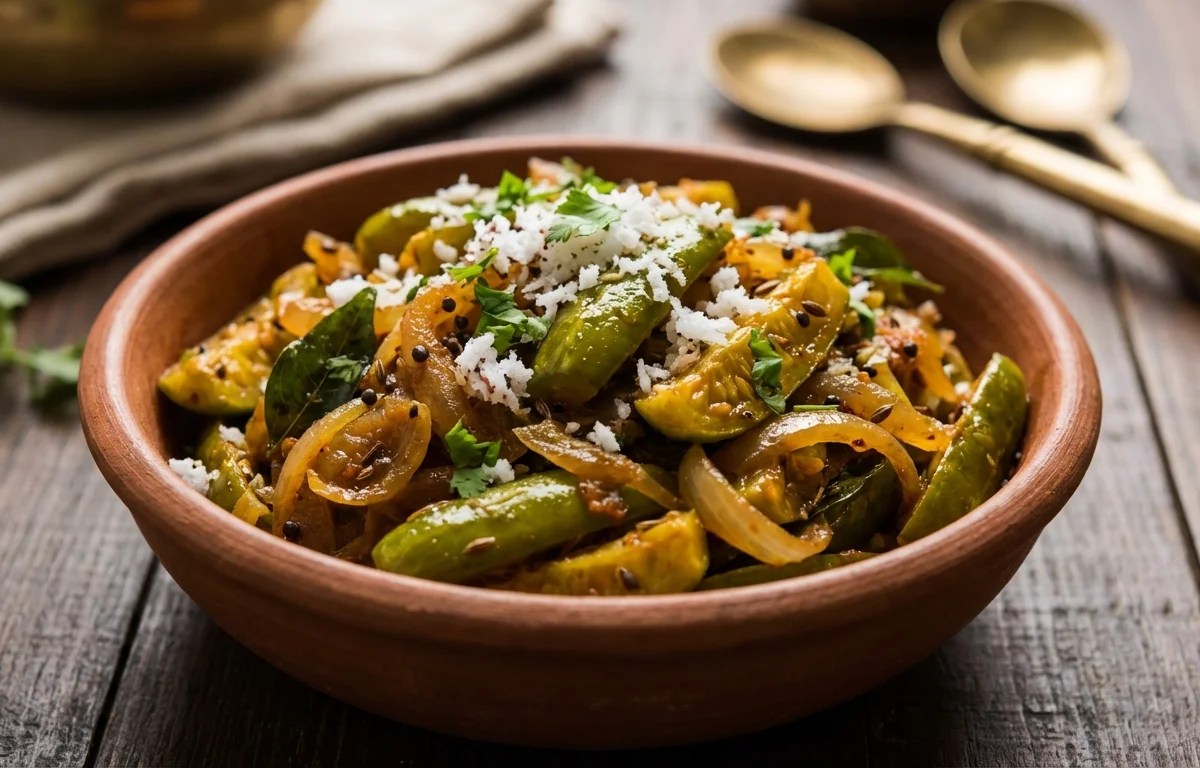
A simple Maharashtrian-style ivy gourd stir-fry that cooks up tender with lightly crisp edges. Mustard, cumin, turmeric, and a touch of peanut give it everyday flavor that pairs beautifully with roti or dal-rice.
For 4 servings
- prep
Slice the tondli.
Wash the tondli, trim both ends, and slice them thinly lengthwise so they cook evenly and turn lightly crisp at the edges.
- temper · ~1 min
Make the tempering.
1.Heat oil in a kadhai over medium heat.2.Add mustard seeds and let them splutter.3.Add cumin seeds and asafoetida.4.Add green chili and turmeric powder, then stir for a few seconds.TIPKeep the heat medium so the spices bloom without burning. - saute · ~5 min
Cook the tondli.
1.Add the sliced tondli and mix well with the tempering.2.Add salt and toss to coat evenly.3.Cook uncovered for 4 to 5 minutes, stirring a few times. - simmer · ~10 min
Cover and cook until tender.
Sprinkle in the water, cover the pan, and cook on low heat until the tondli is just tender but not mushy. Stir once or twice during cooking.
- saute · ~3 min
Finish the bhaji.
Remove the lid, add the crushed peanuts, and cook for 2 to 3 minutes until any extra moisture dries up and the bhaji turns semi-dry.
TIPDo not overcook at this stage; the tondli should hold its shape. - garnish
Add lemon juice and coriander leaves.
Turn off the heat and mix in the lemon juice and chopped coriander leaves for a fresh finish.
- serve
Serve hot.
Serve Tondli Bhaji hot with roti, bhakri, or as a side with dal and rice.
What to keep in mind.
7 tips from the recipe — small details that make a real difference to the final dish.
- 1Slice the tondli thin and as evenly as possible so some pieces turn lightly crisp while the rest cook through at the same time.
- 2Let the mustard seeds fully splutter before adding cumin; this prevents bitter, under-bloomed tempering.
- 3Cook uncovered first to drive off surface moisture, or the bhaji will steam instead of getting those desirable crisp edges.
- 4Add only the stated splash of water while covered; too much water makes the tondli soft and the peanuts soggy.
- 5Stir gently after the tondli turns tender so the lengthwise slices keep their shape.
- 6Mix in lemon juice only after switching off the heat to keep its brightness and avoid a dull, cooked taste.
- 7This bhaji keeps well for lunchboxes; cool fully before packing so trapped steam does not make it wet.
Adapt it for your goals.
No-peanut
Skip the peanuts for an allergy-friendly version; finish with a little extra coriander and lemon to keep the bhaji lively.
spicierSpicier
Add an extra green chili or a pinch of red chili powder with the turmeric for a hotter everyday sabzi.
coconut styleCoconut-style
Replace some or all of the crushed peanuts with fresh grated coconut for a softer, mildly sweet Konkan-style finish.
low oilLow-oil
Reduce the oil slightly and use a well-heated pan; the bhaji will be less rich but still flavorful from the tempering and peanuts.
Why this is on our healthy list.
Fiber-Rich Vegetable Side
Ivy gourd makes this bhaji a vegetable-forward side that can add bulk and satisfying texture to a simple meal.
Plant-Based Good Fats
Peanuts contribute healthy unsaturated fats along with a little protein, making the semi-dry bhaji more filling.
Antioxidant Herbs and Spices
Turmeric, green chili, coriander, cumin, and mustard bring more than flavor; they add a range of plant compounds to the dish.
Frequently asked questions
It should be just tender when pressed, still hold its shape, and have a few lightly crisp edges rather than turning soft or mushy.



.webp)