
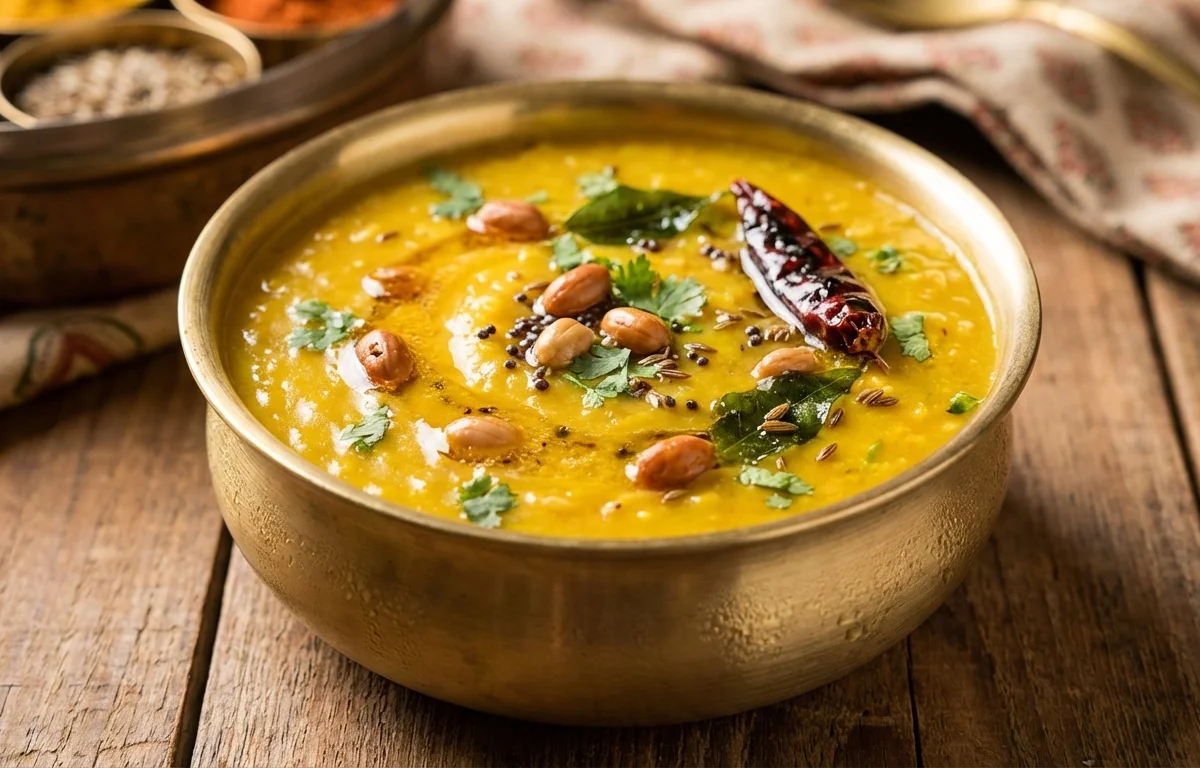
Tuver Dal
A comforting, everyday Gujarati-style dal made from pigeon peas, tempered with mustard seeds, cumin, and aromatic curry leaves. Light, slightly sweet, and tangy, this thin dal is the perfect companion to steamed rice and a dollop of ghee.
For 4 servings
- prep
Wash and drain the dal.
Rinse the toor dal thoroughly under running water 2-3 times until the water runs clear. Drain completely.
- pressure cook · ~15 min
Pressure cook the dal with tomato and spices.
1.Add the washed dal to the pressure cooker with 3 cups of water.2.Add the chopped tomato, slit green chili, turmeric powder, and a pinch of salt.3.Close the lid and pressure cook on medium heat for 5-6 whistles or until the dal is completely soft.TIPLet the pressure release naturally for the softest dal. - mix · ~5 min
Mash the dal and adjust consistency.
Once the pressure has dropped, open the lid and whisk the dal well with a wooden whisk or ladle until smooth. Add 1.5 cups of water, stir, and bring to a gentle boil over medium heat.
TIPA Gujarati tuver dal is typically thinner than North Indian dals. - boil · ~10 min
Add the sweet and tangy flavors, then simmer.
1.Stir in the tamarind paste and grated jaggery.2.Let the dal simmer on low heat for 8-10 minutes, allowing the flavors to blend.3.Taste and adjust salt if needed.TIPDon't add the tamarind before the dal is fully cooked — acidity can prevent the lentils from softening. - temper · ~4 min
Make the tadka with ghee and whole spices.
1.Heat the ghee in a small tempering pan over medium heat until melted and shimmering.2.Add the mustard seeds and let them pop for 20-30 seconds.3.Add cumin seeds and allow them to sizzle and turn light brown.4.Toss in the broken dry red chili, crushed garlic cloves, and curry leaves. Sauté until the garlic turns golden and fragrant, about 30 seconds.5.Sprinkle in the asafoetida, give it a quick stir, and immediately pour the tadka over the simmering dal.TIPKeep the heat steady — medium-hot is perfect for a fragrant tadka without burning. - simmer · ~2 min
Simmer the dal with the tadka.
Stir the tadka into the dal, cover, and let it all simmer together on low heat for 2 minutes so the dal absorbs the tempering aroma.
- garnish
Garnish with fresh coriander and serve.
Turn off the heat, stir in half the chopped coriander leaves, and transfer the dal to a serving bowl. Scatter the remaining coriander on top. Serve hot with steamed rice and a drizzle of raw ghee.
What to keep in mind.
7 tips from the recipe — small details that make a real difference to the final dish.
- 1Use natural-pressure release for softer, creamier dal.
- 2Whisk the dal vigorously after cooking for a smooth, lump-free texture.
- 3Add tamarind only after the dal is fully cooked to prevent it from hardening.
- 4Keep the tadka heat steady — medium-hot prevents garlic and spices from burning.
- 5Adjust the dal's thinness to your liking by adding more or less water after mashing.
- 6This dal thickens on standing — add a splash of hot water while reheating.
- 7For extra depth, add a pinch of fenugreek seeds to the tadka along with mustard seeds.
Adapt it for your goals.
Low-oil
Skip the ghee in the tadka and use 1 teaspoon of neutral oil instead. The dal remains light and flavorful, ideal for those watching their fat intake.
high proteinHigh-protein
Add 1/2 cup of cooked moong dal or masoor dal along with the toor dal for a protein boost without changing the authentic Gujarati flavor profile.
jainJain
Replace garlic with asafoetida in the tadka and use sugar instead of jaggery to make this dal suitable for Jain dietary practices.
veganVegan
Substitute ghee with coconut oil or a neutral vegetable oil in the tadka — the dal remains fully vegan and still gets a rich, aromatic tempering.
Why this is on our healthy list.
Rich in Plant Protein
Toor dal (pigeon peas) provides a solid source of plant-based protein, making this dal a filling and nutritious choice for vegetarian meals.
Supports Digestive Health
The combination of asafoetida, turmeric, and ginger (in the tadka) is traditionally known to aid digestion and reduce bloating.
Low in Fat
With only 2 teaspoons of ghee used in the entire recipe, this dal is a light, low-fat option compared to many creamy lentil preparations.
Natural Antioxidant Source
Turmeric and curry leaves used in this dal are rich in antioxidants that help combat oxidative stress in the body.
Frequently asked questions
Yes! Soak the toor dal for 30 minutes, then simmer it in a pot with 4-5 cups of water for 35-40 minutes until soft. Add more water as needed and mash it well.



.webp)
.webp)
.webp)