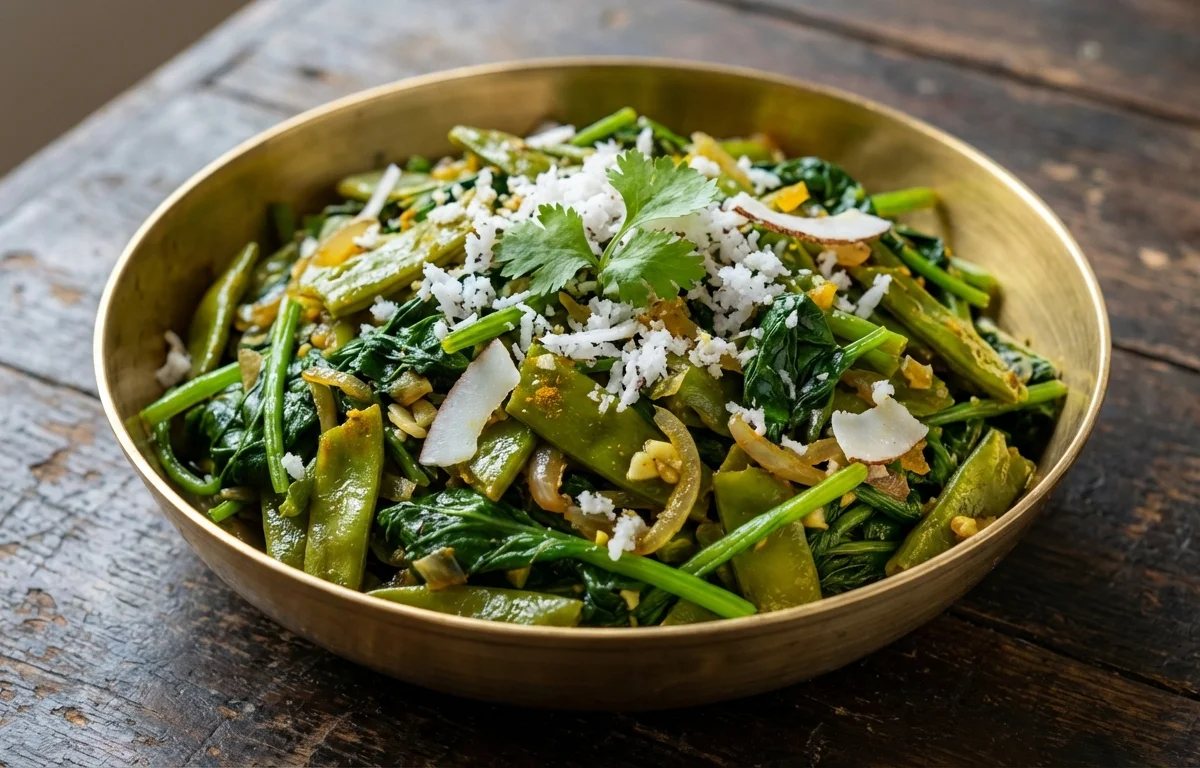
Vali Bhaji
A simple, homestyle stir-fry from the Konkan coast featuring tender Malabar spinach leaves and stems gently cooked with coconut and a touch of jaggery. Mildly spiced and quick to make, this dry curry brings out the natural earthy notes of the greens.
For 4 servings
- prep
Prep the Malabar spinach.
Wash the Malabar spinach thoroughly. Separate the tender stems from the thicker ones, then roughly chop the leaves and tender stems together. Discard any tough, woody stems.
- temper · ~2 min
Make the tempering.
1.Heat oil in a kadai over medium heat.2.Add mustard seeds and let them splutter (30 sec).3.Add cumin seeds and dried red chili, fry until fragrant (20 sec).4.Sprinkle in asafoetida and stir. - saute · ~4 min
Sauté the aromatics.
1.Add chopped onion and slit green chili to the kadai.2.Sauté until the onion turns translucent and soft (3-4 min).3.Stir in turmeric powder and cook for another 15 seconds. - saute · ~10 min
Cook the greens.
1.Add the chopped Malabar spinach and salt to the kadai.2.Mix well to coat the greens with the tempering and onions.3.Cover and cook on low heat, stirring occasionally, until the greens wilt and soften (8-10 min). The stems will release some moisture; let it evaporate for a dry finish.TIPDon't add water — the spinach releases enough liquid to cook. Uncover at the end to dry out any excess. - mix
Finish with coconut and jaggery.
Once the greens are fully cooked and dry, turn off the heat. Sprinkle the grated jaggery and fresh coconut over the bhaji. Mix gently to combine.
- serve
Serve hot.
Transfer to a serving bowl. Enjoy with jowar bhakri, rice and dal, or as a side with any Indian meal.
What to keep in mind.
6 tips from the recipe — small details that make a real difference to the final dish.
- 1Use only tender Malabar spinach stems; discard woody ones for a silky texture.
- 2Do not add water — the moisture from the washed greens is enough to cook them.
- 3Uncover the kadai in the final 2 minutes to let excess steam evaporate for a dry finish.
- 4Freshly grated coconut adds a moist, sweet contrast — avoid desiccated coconut for this dish.
- 5Grated jaggery can be skipped if you prefer a purely savory bhaji, but it balances the greens' earthiness beautifully.
- 6For a more intense flavour, crush the dried red chili slightly before tempering.
Adapt it for your goals.
Vegan
This recipe is already vegan as written; no changes needed for a plant-based meal.
low oilLow-oil
Reduce oil to 1 teaspoon and use a non-stick pan; the moisture from the greens will still cook them without sticking.
protein boostProtein boost
Add 1/2 cup of cooked chana dal or crumbled pan-fried tofu along with the greens for a more filling dish.
nuttyNutty
Swap the coconut for 2 tablespoons of roasted peanut powder for a different earthy, nutty note common in other Maharashtrian preparations.
Why this is on our healthy list.
Rich in Iron and Folate
Malabar spinach is a good source of non-heme iron and folate, supporting healthy red blood cells and energy levels.
High in Dietary Fiber
The stems and leaves provide natural fiber that aids digestion and promotes a feeling of fullness.
Low Calorie, Nutrient Dense
This stir-fry is light in calories yet packed with vitamins A and C from the greens and antioxidant compounds from turmeric and coconut.
Contains Healthy Fats
Fresh coconut offers medium-chain triglycerides (MCTs) that can support quick energy and metabolism.
Frequently asked questions
Yes, but regular spinach cooks much faster and has a softer texture. Reduce cooking time to 3-4 minutes and skip the stem preparation.



.webp)