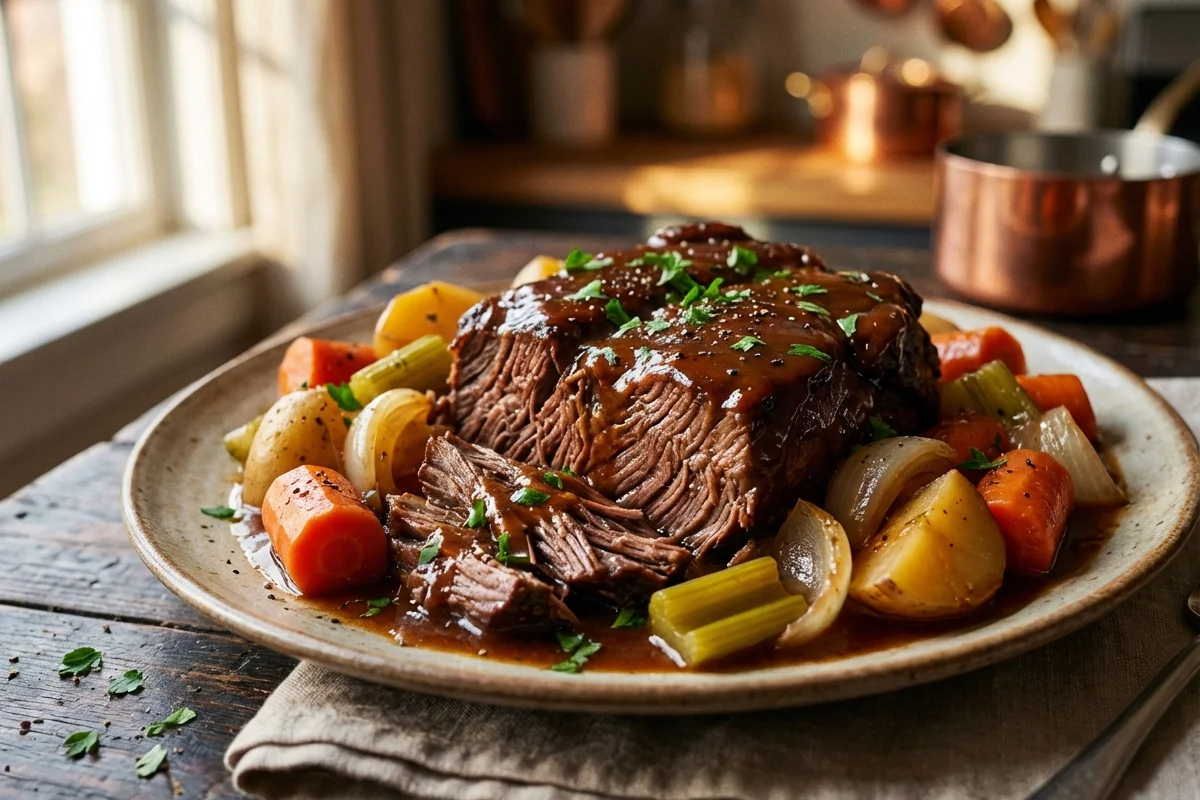
Yankee Pot Roast
A timeless New England classic featuring a chuck roast slow-braised until fork-tender in a rich, savory gravy. Carrots, potatoes, and onions cook right in the same pot, soaking up all the hearty beef flavor. This one-pot wonder fills the house with an irresistible aroma and delivers pure comfort on a plate.
For 4 servings
- prep
Preheat the oven and season the beef.
Set the oven to 325°F (163°C). Pat the beef chuck roast dry with paper towels. Season generously on all sides with salt and pepper, then dredge lightly in flour, shaking off the excess.
- fry · ~10 min
Sear the roast on all sides.
Heat the oil in a Dutch oven over medium-high heat until shimmering. Carefully place the floured roast in the hot oil and sear without moving until a deep brown crust forms, about 4-5 minutes per side. Transfer the roast to a plate.
TIPDon't rush the sear. A deeply browned crust is key for rich, savory flavor in the final gravy. - saute · ~6 min
Cook the vegetables and aromatics.
Reduce the heat to medium. Add the onion wedges and celery pieces to the pot and cook, stirring occasionally, until they begin to soften and take on color, about 5 minutes. Add the smashed garlic and tomato paste and cook, stirring constantly, for 1 minute until fragrant.
- simmer · ~3 min
Deglaze the pot with red wine.
Pour in the red wine and bring to a vigorous simmer, scraping the bottom of the pot with a wooden spoon to dissolve the browned bits. Let the wine reduce by half, about 2-3 minutes.
TIPAll those browned bits on the bottom are pure flavor gems—make sure they dissolve into the liquid. - prep
Return beef and add braising liquid.
Return the seared roast to the Dutch oven along with any juices accumulated on the plate. Add the water, bay leaves, and thyme sprigs. The liquid should come about one-third of the way up the roast—do not fully submerge it.
- bake · ~120 min
Braise in the oven for 2 hours.
Cover the Dutch oven with its lid and place on the middle rack of the oven. Braise for 2 hours. The meat should be progressing towards tenderness but not yet falling apart.
- assemble · ~60 min
Add root vegetables and finish braising.
Carefully remove the pot from the oven. Add the carrot chunks and halved baby potatoes around the meat, nudging them into the liquid. Cover and return to the oven for another 1 hour, until the vegetables are fork-tender and the meat easily shreds with a fork. The internal temperature should reach 195-200°F (90-93°C) for ideal shreddability.
TIPTucking the vegetables into the braising liquid ensures they cook evenly and soak up the beefy flavor. - rest · ~15 min
Rest the pot roast.
Remove the Dutch oven from the oven. Transfer the beef to a cutting board and tent loosely with foil. Let it rest for 15 minutes. Discard the bay leaves and thyme stems from the pot, and skim any excess fat from the surface of the gravy.
- serve
Slice, garnish, and serve.
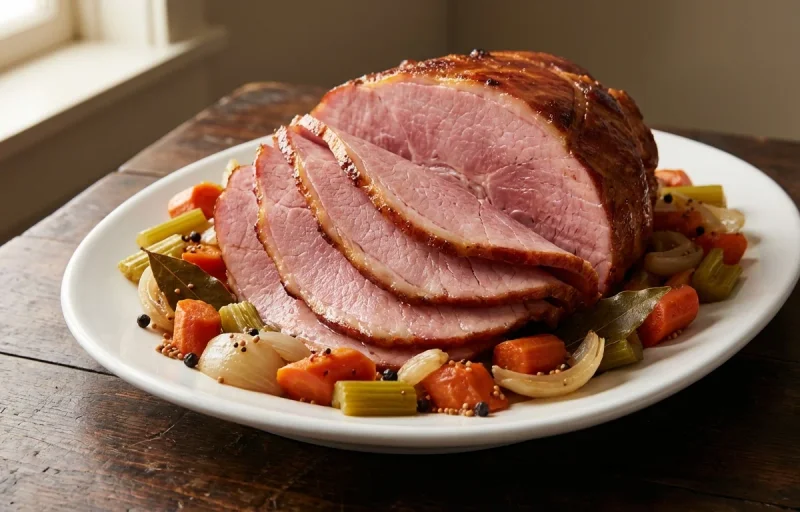
Slice the pot roast against the grain into thick slices, or use two forks to pull it into large chunks. Arrange on a deep platter with the vegetables, ladle the rich pan sauce over everything, and scatter fresh parsley on top.
TIPIf you prefer a thicker gravy, simmer the pan liquid on the stovetop for 5-10 minutes while the meat rests.
What to keep in mind.
7 tips from the recipe — small details that make a real difference to the final dish.
- 1Pat the chuck roast very dry before seasoning to ensure a deep, dark sear.
- 2Don't skip the flour dredge—it helps thicken the braising liquid into a rich gravy.
- 3Use a heavy Dutch oven to maintain steady, even heat throughout the long braise.
- 4Sear the roast undisturbed for 4–5 minutes per side to build a flavorful crust.
- 5Add root vegetables only during the final hour so they stay intact and tender.
- 6Let the roast rest 15 minutes under foil before slicing to keep juices inside.
- 7Skim excess fat from the pan sauce after resting for a cleaner, more concentrated flavor.
Adapt it for your goals.
Low-oil
Reduce the searing oil to 1 tablespoon and use a nonstick pot; you'll still get good browning with less fat.
high proteinHigh-protein
Swap the potatoes for extra carrots and celery, and serve over cauliflower mash to lower carbs while keeping the protein from the beef front and center.
jainJain
Omit the garlic and onion, replace them with asafoetida (hing) and extra celery for a Jain-friendly version that still delivers savory depth.
veganVegan
Replace the beef with large portobello mushroom caps and the red wine with vegetable broth; the mushrooms will absorb the rich braising liquid and become fork-tender.
Why this is on our healthy list.
High-Quality Protein
Beef chuck roast is a rich source of complete protein, supporting muscle maintenance and repair.
Rich in Iron and Zinc
Red meat provides highly absorbable heme iron and zinc, essential for oxygen transport and immune function.
Vitamin A from Carrots
Carrots supply beta-carotene, which the body converts into vitamin A for healthy vision and skin.
Potassium from Potatoes
Baby Yukon gold potatoes contribute potassium, a mineral that helps regulate blood pressure and muscle contractions.
Frequently asked questions
Yes—after searing the beef and sautéing the vegetables, transfer everything to a slow cooker and cook on low for 8 hours, adding the potatoes and carrots in the last 2 hours.