Dietary Lifestyle · 6 MIN READ
6 Flavorful Low-Sodium Dinner Ideas Without Added Salt
Discover 6 delicious low-sodium dinner ideas that don't rely on added salt. Find flavorful recipes for chicken, shrimp, pasta, and vegetables.
Loading...
Discover 6 delicious low-sodium dinner ideas that don't rely on added salt. Find flavorful recipes for chicken, shrimp, pasta, and vegetables.
This guide is for home cooks asked to bring their sodium down — usually for blood pressure, heart failure, or kidney disease — without turning dinner into a chore. The American Heart Association caps sodium at 2,300 mg/day for healthy adults and recommends an "ideal" target of 1,500 mg/day for most adults with cardiovascular risk, noting that cutting intake by 1,000 mg/day measurably improves blood pressure [1]. The DASH-Sodium trial showed that on a typical American diet, reducing sodium from ~3,450 mg to ~1,150 mg/day lowered systolic blood pressure by about 6.7 mmHg — roughly the effect of a single antihypertensive drug [4].
The difficulty is not the salt shaker. The CDC reports that more than 70% of dietary sodium in the United States comes from packaged and restaurant foods, with sandwiches, soups, breads, cured meats, sauces, and "seasoned" rice or pasta dishes leading the list [2]. Cooking from fresh ingredients is what unlocks the budget. The six dinners below are built around a working target of about 600 mg of sodium per dinner — leaving room for breakfast, lunch, and snacks within a 2,300 mg day. Confirm your individual sodium target with your clinician; people with heart failure, advanced CKD, or resistant hypertension are often prescribed tighter caps.
Sodium in the American diet is not primarily a salt-shaker problem. The CDC, citing the 2020-2025 Dietary Guidelines for Americans, lists the top contributors as sandwiches, rice/pasta/grain dishes, pizza, soups, cold cuts and cured meats, breads and tortillas, and condiments and gravies — categories almost entirely populated by packaged or restaurant products [2]. A single serving of canned soup can carry 700-900 mg of sodium; two slices of commercial sandwich bread can add another 300-400 mg before any filling. The FDA defines "low sodium" on a Nutrition Facts label as no more than 140 mg per serving, "very low sodium" as 35 mg or less, and "no salt added" as a product that was not salted during processing (though it may still contain naturally occurring sodium) [3]. Reading the label and choosing the no-salt-added or low-sodium version of the same product — canned tomatoes, canned beans, broth, bread — is the single highest-leverage change most home cooks can make.
The second leverage point is taste recalibration. The DASH-Sodium trial demonstrated that blood pressure responds within weeks to lower sodium intake, and clinical experience suggests that the palate also adapts: foods that initially taste flat at 1,500 mg/day typically taste correctly seasoned after 8-12 weeks of consistent low-sodium cooking [4]. This guide assumes you are in that window and need techniques that make the transition tolerable — not a permanent restriction to bland food.
A low-sodium dinner is the product of three habits, not a recipe list. First, cook from fresh, single-ingredient foods — fresh vegetables, fresh or frozen meat and seafood, dried beans or no-salt-added canned beans (drained and rinsed to remove another ~41% of residual sodium [5]), and no-salt-added canned tomatoes and broth. Second, build flavor with browning, acid, aromatics, and umami before reaching for the salt shaker, then taste before adding any. Third, keep a working per-dinner budget of about 600 mg of sodium so that the day stays under the AHA's 2,300 mg cap (or 1,500 mg if your clinician has set the tighter target) [1].
These six dinners are templates, not prescriptions. If you have heart failure, advanced CKD, cirrhosis, or resistant hypertension, your sodium target is set by your clinician and is often well under 2,000 mg/day — confirm it before adopting any meal plan. If you take ACE inhibitors, ARBs, potassium-sparing diuretics, or have CKD stage 3 or higher, do not substitute a potassium chloride "salt substitute" (LoSalt, NoSalt, Morton Salt Substitute) without clinician sign-off; the NIDDK warns that potassium chloride in packaged foods and at-table substitutes can drive serum potassium dangerously high in these patients [6]. Anyone pregnant, breastfeeding, or managing a chronic condition should review meal plans with a clinician before adopting them.

Kayte is a nutrition writer, food and recipe content creator, and wellness educator. She bridges evidence-based nutrition science with everyday cooking — translating research into practical recipes, meal ideas, and wellness habits that readers can actually use in their kitchens.
Meet the editorial team →Built using verified nutrition databases, culinary research, and traditional cooking knowledge — every claim is cross-referenced against the sources listed in the article. Last reviewed May 2026.
Articles are curated using trusted food databases (USDA FoodData Central, IFCT), culinary literature, and dietary guidelines, then structured by our editorial team for clarity, accuracy, and usefulness.
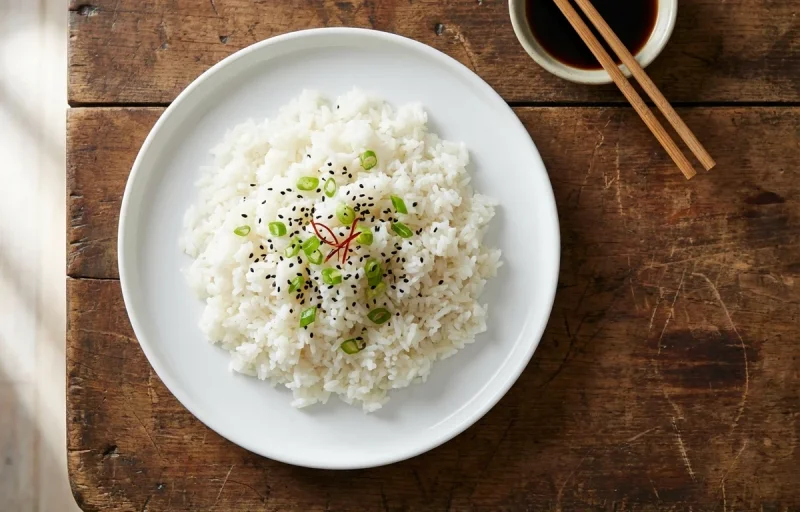
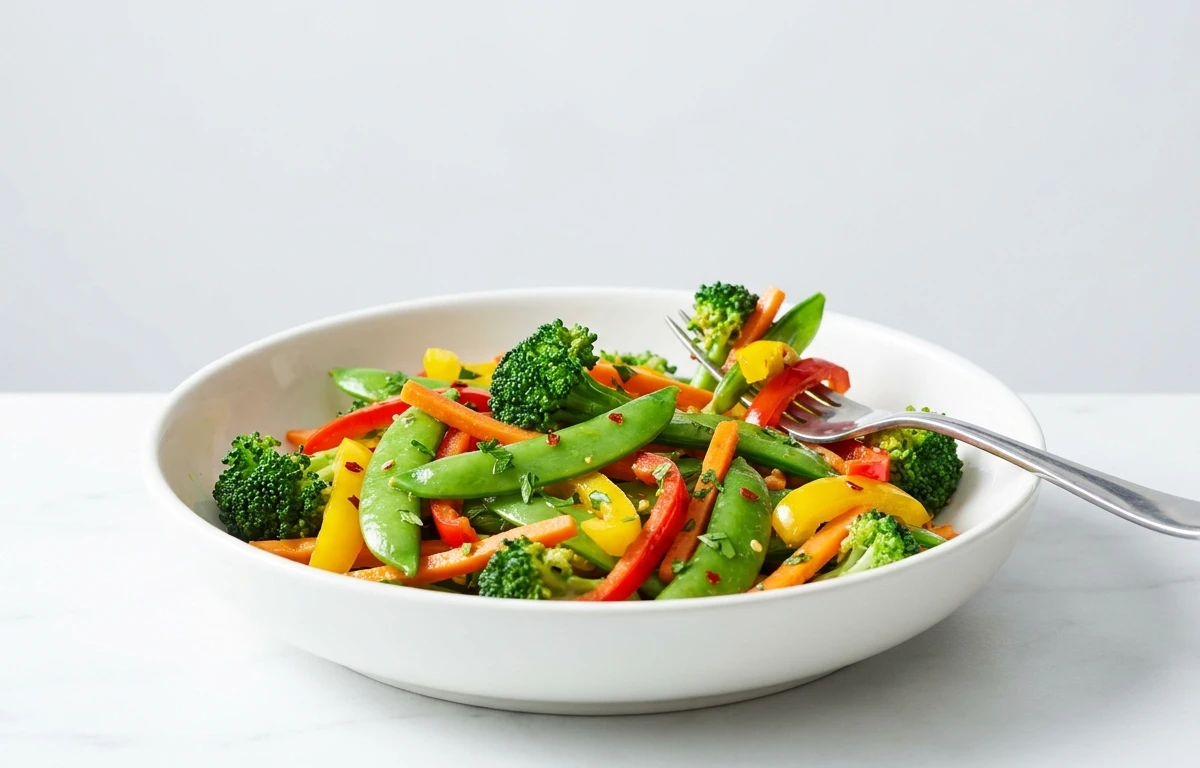
High-heat stir-frying browns the vegetables and concentrates their natural sweetness, while a finishing squeeze of lemon and a generous hit of garlic deliver the flavor lift that salt would otherwise provide. Cook the rice in unsalted water — most restaurant and home rice is salted by default, adding 200-400 mg of sodium per cup before any sauce.
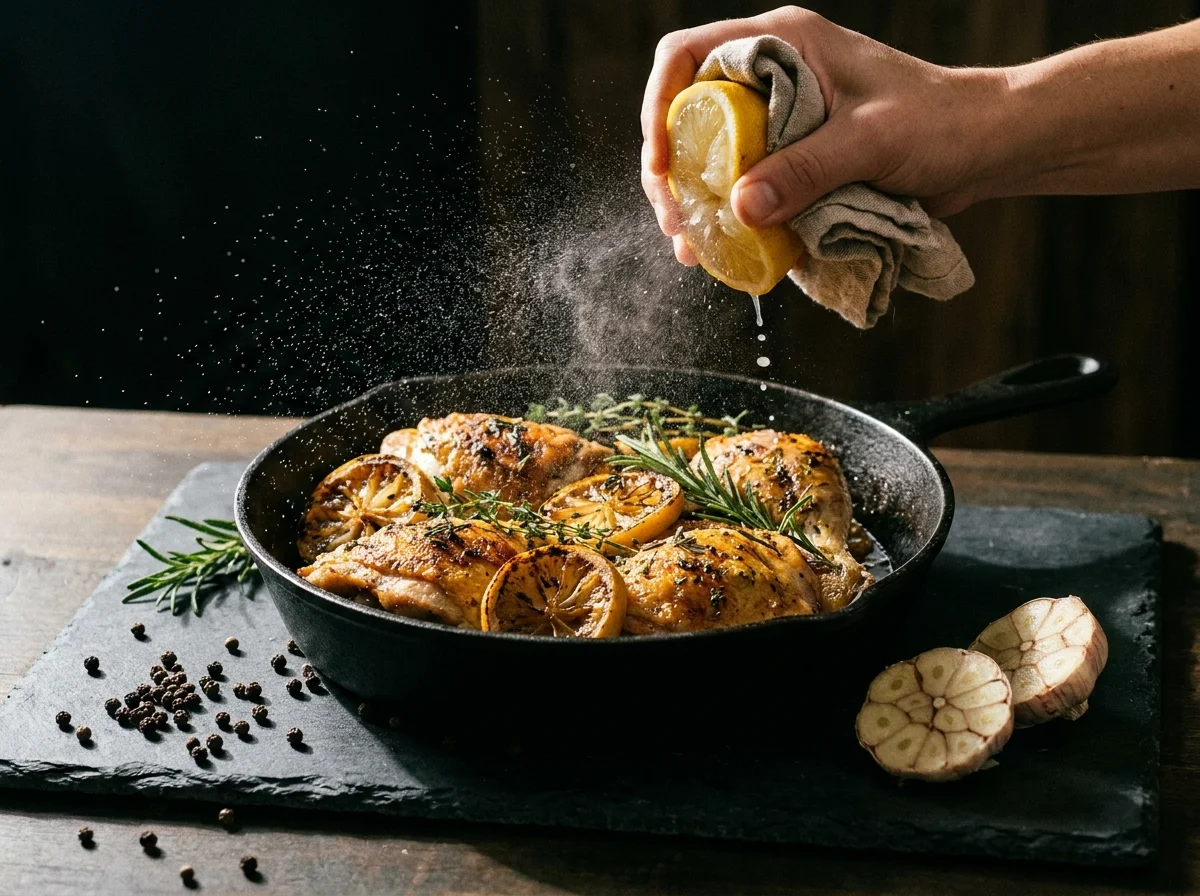
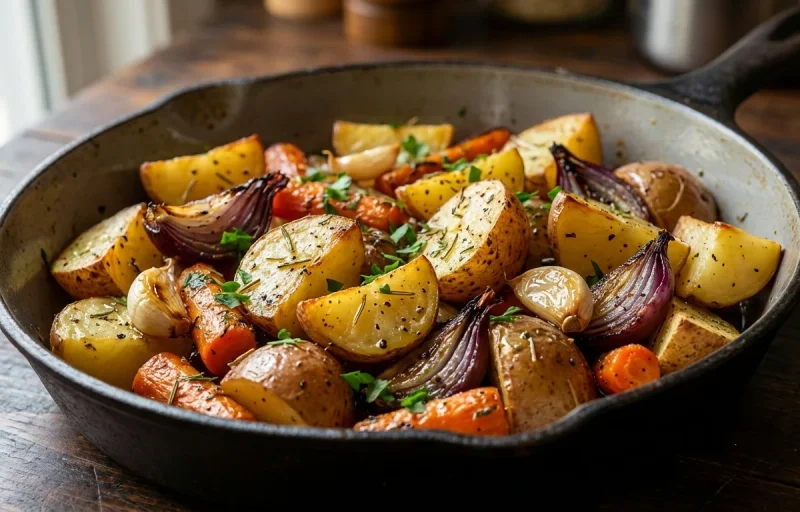
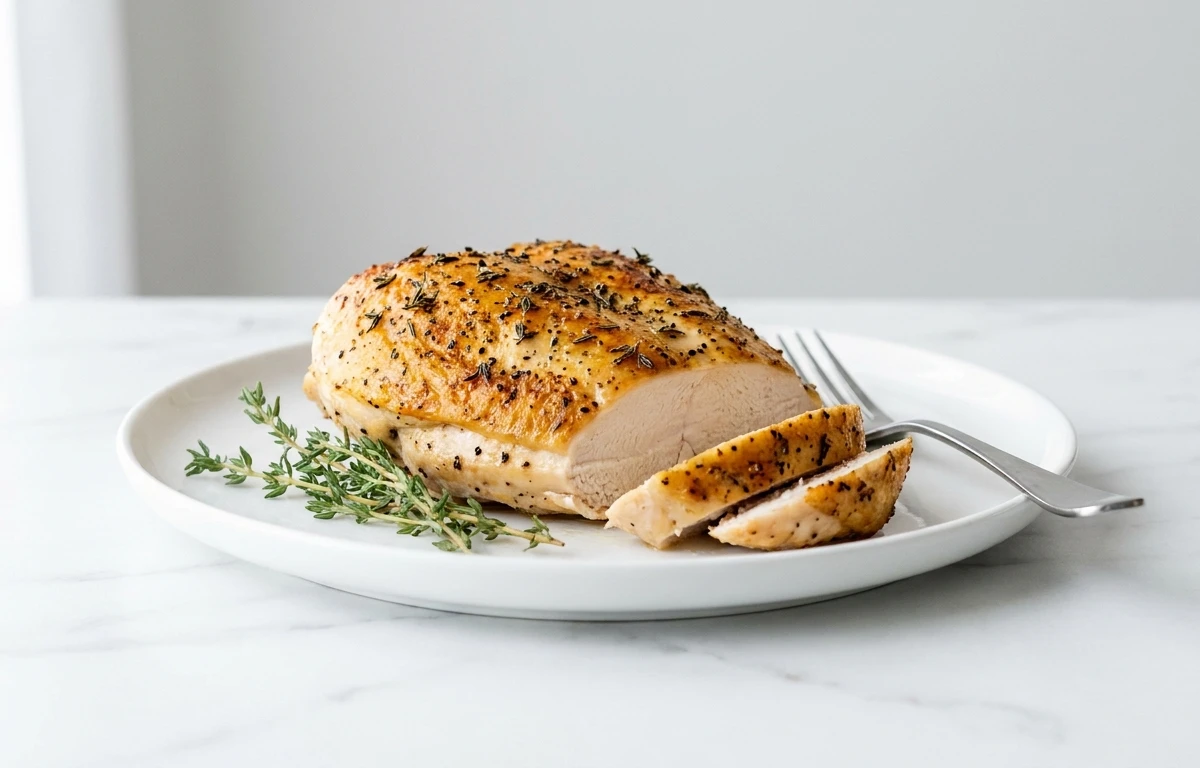
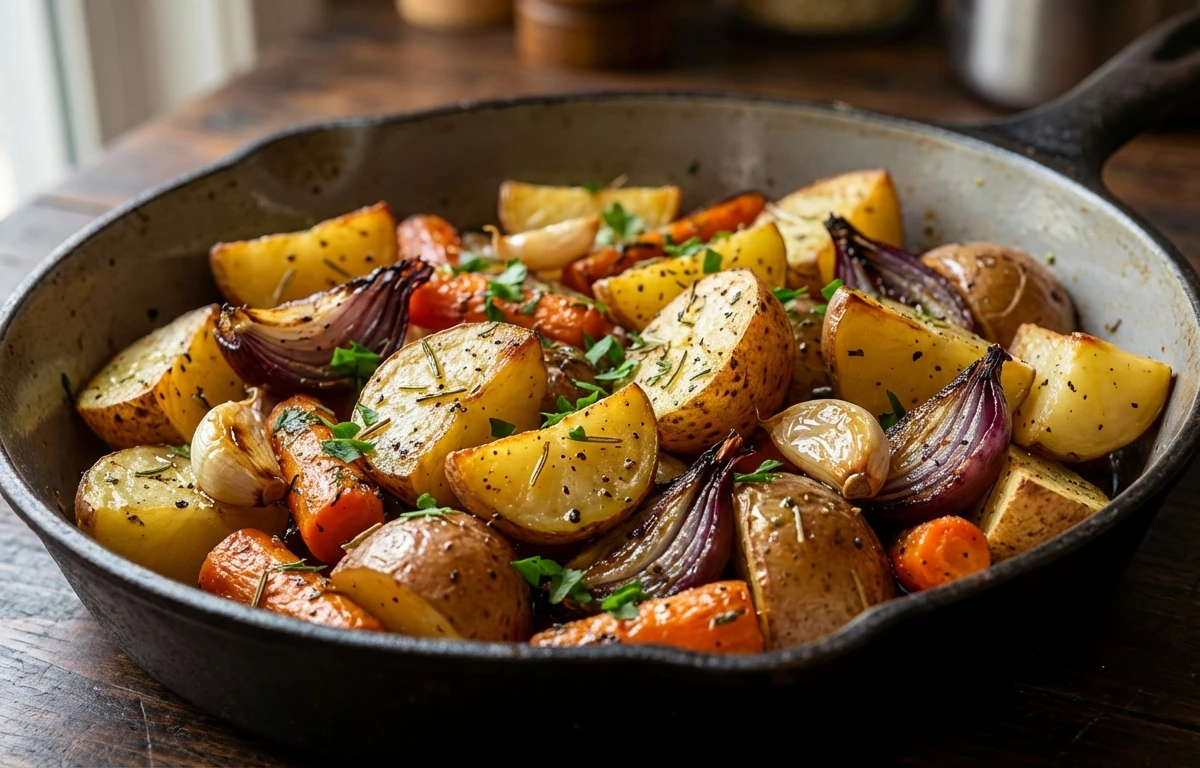
Dry-roasting at high heat drives the Maillard reaction in both the chicken skin and the cut surfaces of the root vegetables, generating the savory depth that the brain otherwise reads as "needs salt." A rub of fresh rosemary, thyme, garlic, lemon zest, and black pepper carries the seasoning. Skip any commercial poultry brine or seasoning blend — most carry 300-500 mg of sodium per teaspoon.
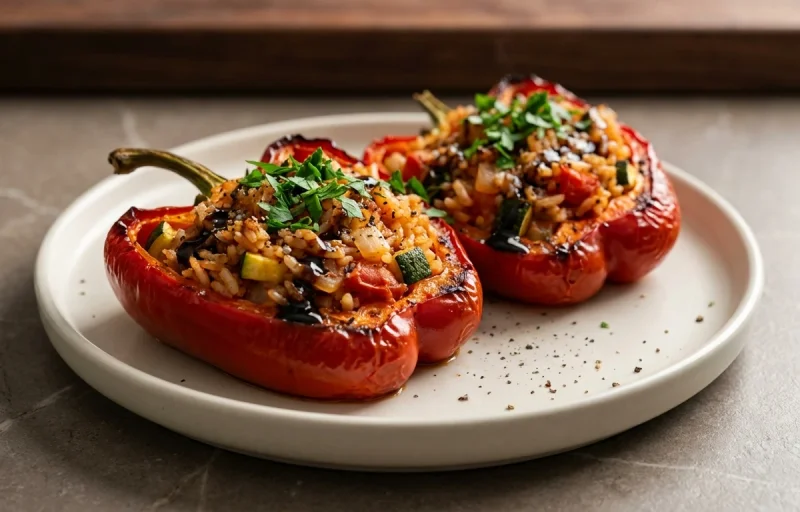
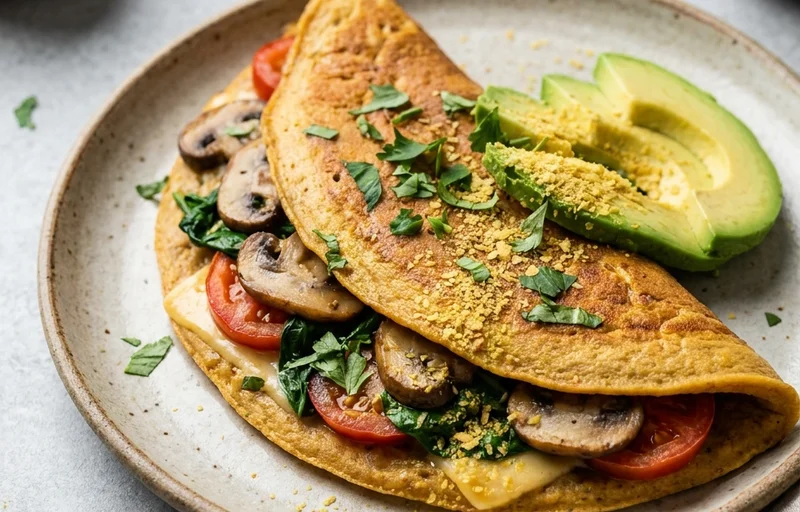
Bell peppers roasted whole concentrate their natural sweetness and act as an edible vessel that needs no added salt. The chickpea-flour (besan) omelette filling is naturally low in sodium when made from scratch — bind it with onion, tomato, cilantro, cumin, turmeric, and black pepper rather than the commercial seasoning blends that drive sodium up. A finishing squeeze of lemon at the table lifts the whole plate.
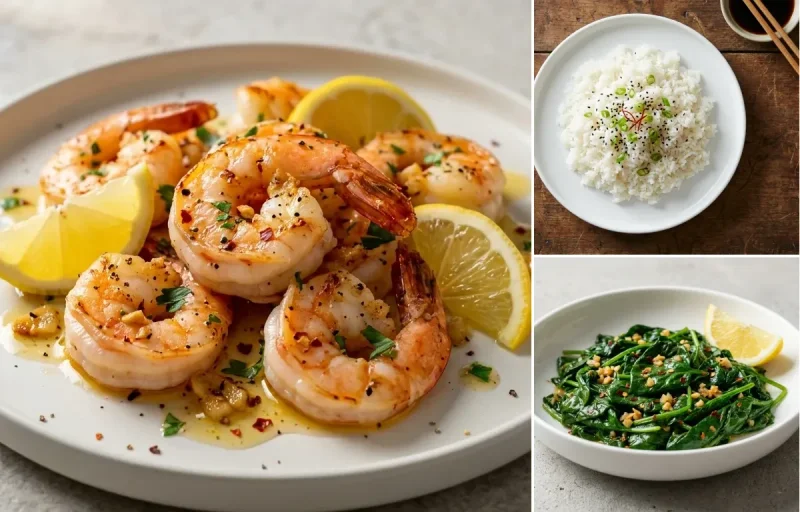
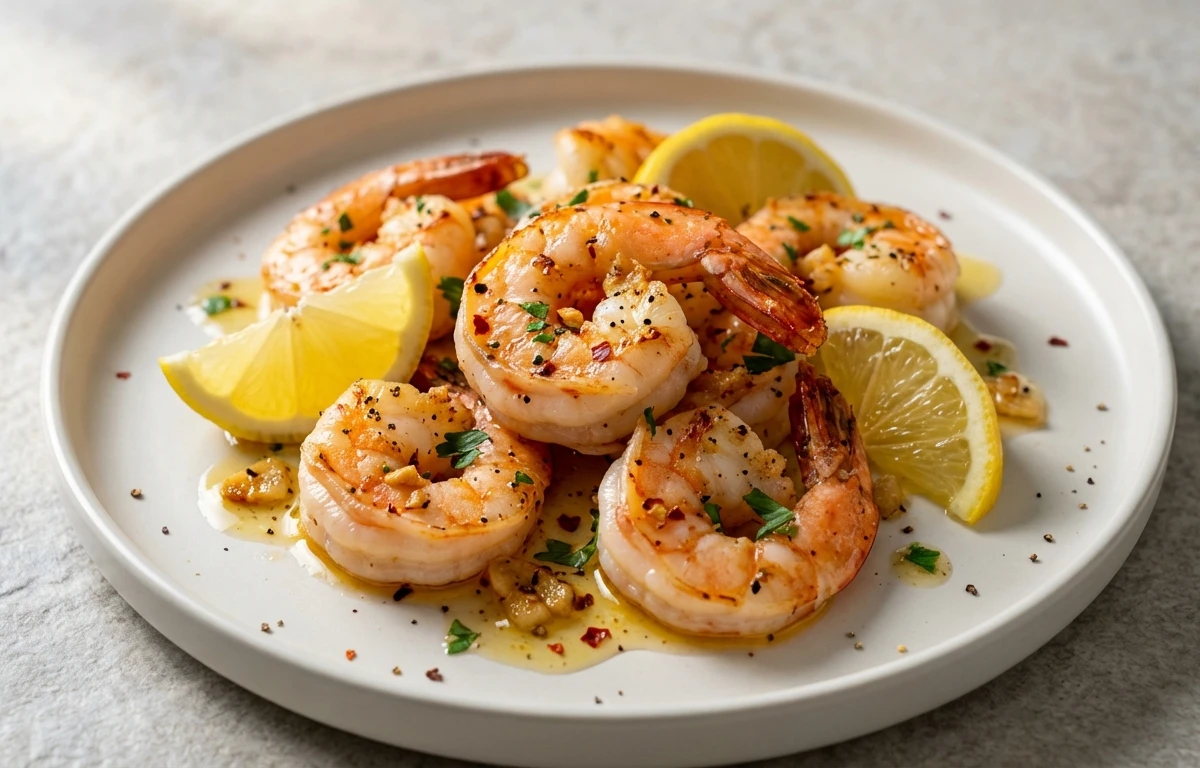
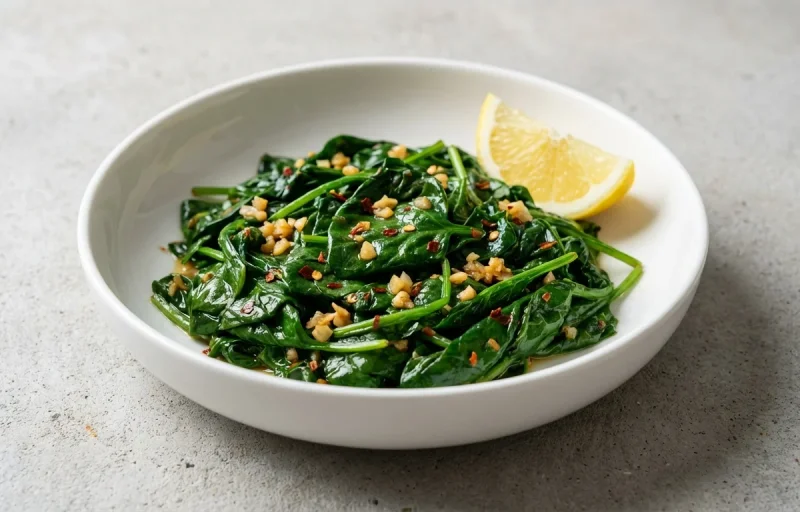
Shrimp cooks in three minutes and absorbs aromatics quickly, which is why garlic, lemon zest, and a final squeeze of juice are enough to season the dish without salt. Use raw, peeled shrimp rather than pre-cooked or pre-seasoned (commercial pre-cooked shrimp can carry 500-800 mg of sodium per 3 oz from the brine). Cook the rice and wilt the spinach in unsalted water; finish the spinach with garlic and a few drops of vinegar.
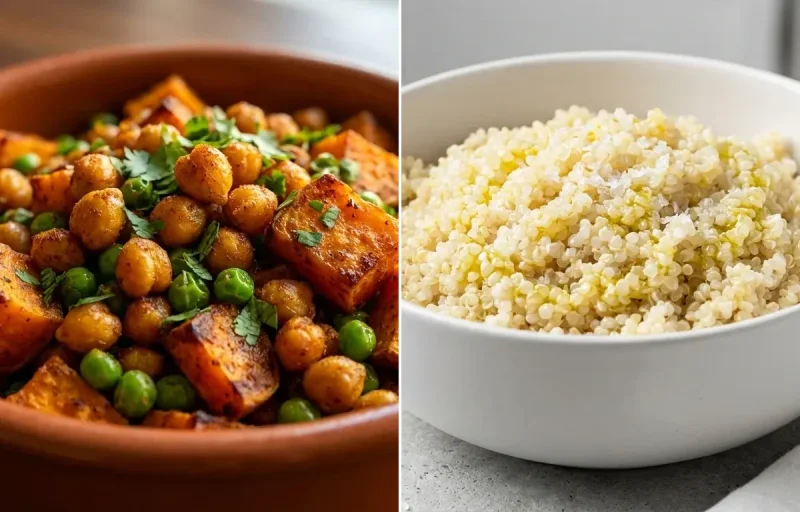
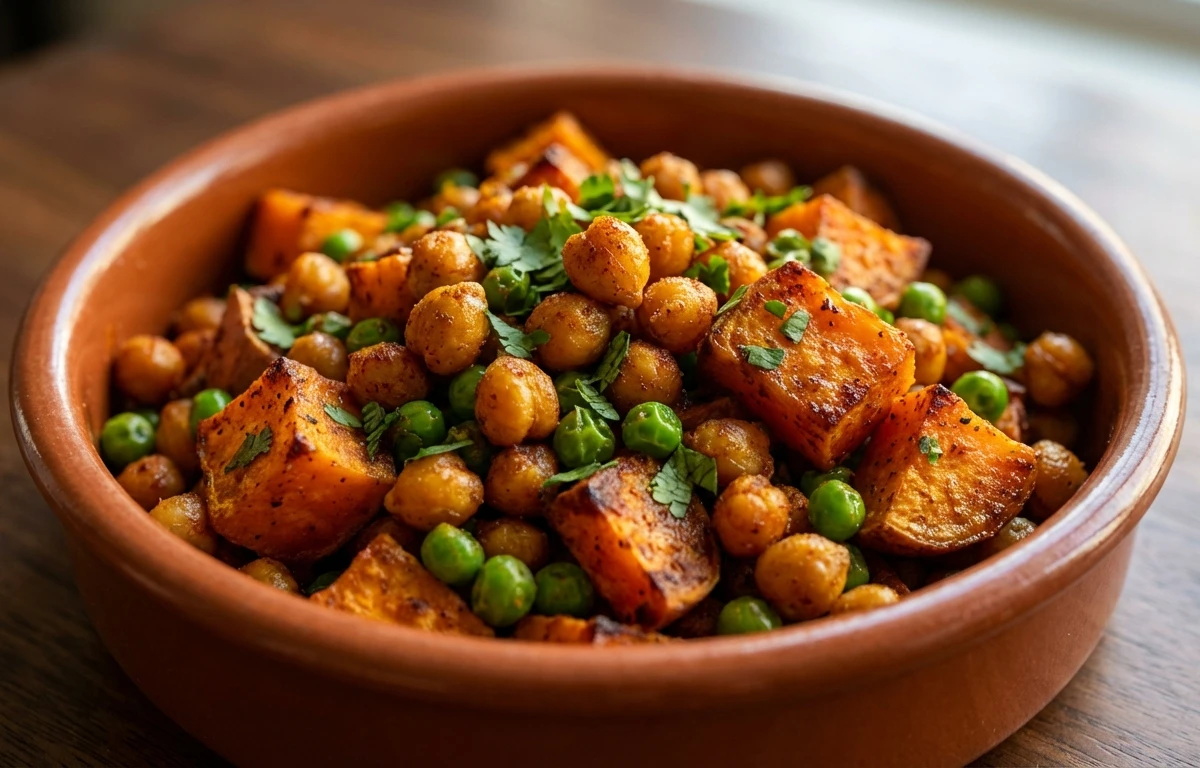
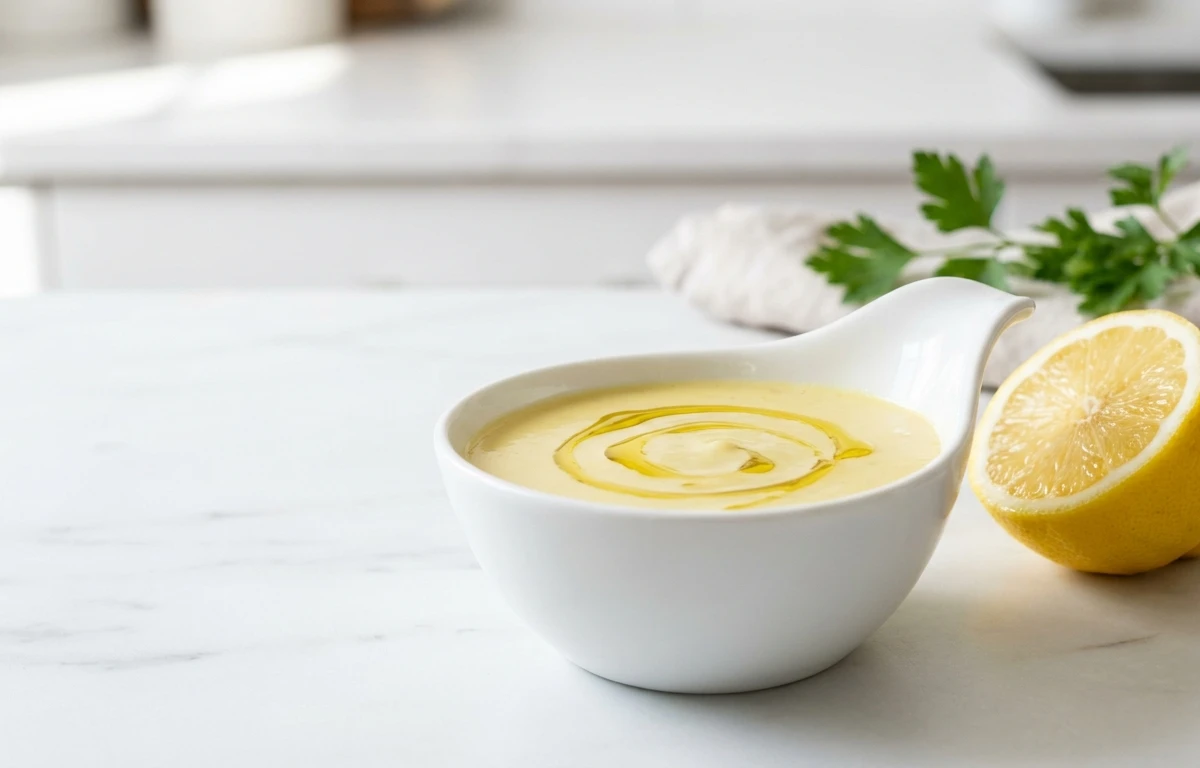
Roasting sweet potatoes and chickpeas at high heat caramelizes their surfaces and produces the crisp-edged texture that drives satiety more reliably than salt. Use no-salt-added canned chickpeas — and drain and rinse them for 10 seconds before roasting to remove another ~41% of residual sodium (Jones & Mount, 2009). The lemon-tahini dressing leans on tahini's nutty richness, garlic, lemon juice, and cumin; tahini is naturally very low in sodium when bought as a single-ingredient product.