
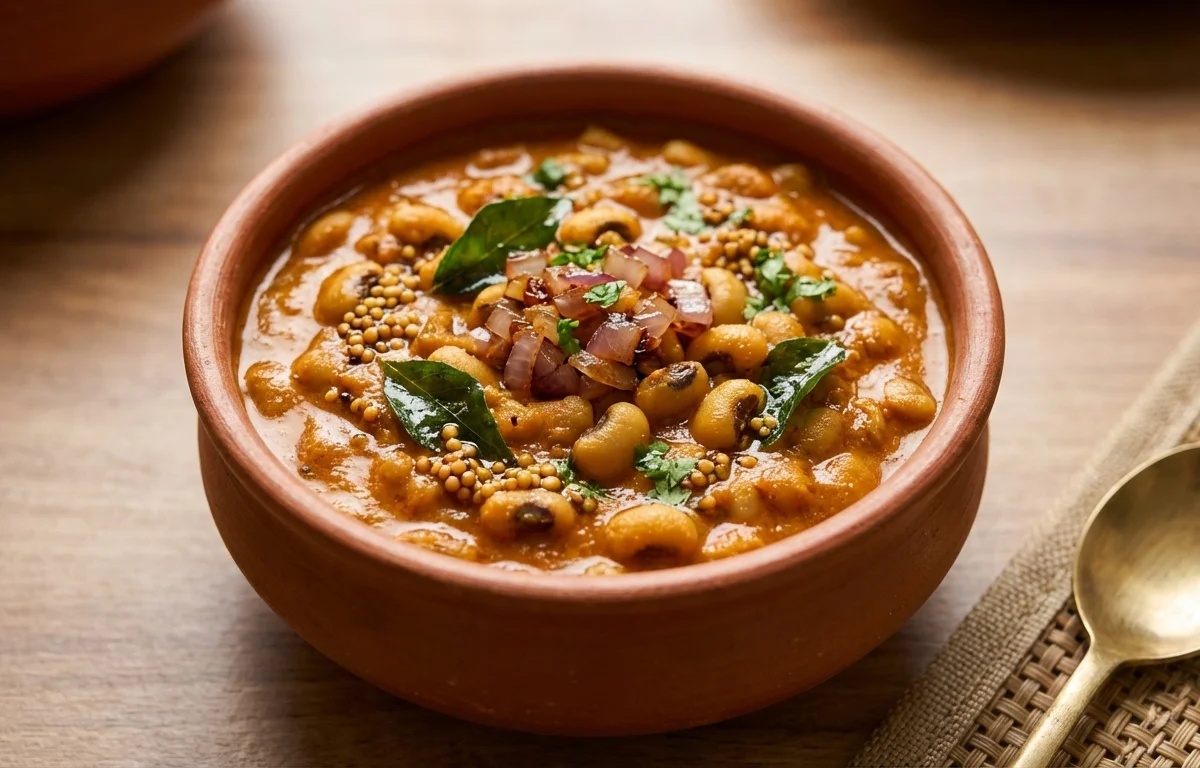
Alasande Gassi
A comforting Mangalorean-style curry made with alasande and a roasted coconut spice paste. It has a gentle heat, a rich body, and a tangy finish that tastes wonderful with rice, neer dosa, or simple chapati.
For 4 servings
- pressure cook · ~25 min
Cook the alasande until tender.
1.Drain the soaked alasande and add it to a pressure cooker.2.Pour in 3 cups water and add 0.25 tsp salt.3.Pressure cook until the alasande is soft but still holds shape, about 5 to 6 whistles.4.Let the pressure drop naturally before opening the cooker.TIPDo not overcook the beans or they can break down too much in the gravy. - roast · ~7 min
Roast the coconut and spices.
1.Heat a small pan over medium heat without oil.2.Roast coriander seeds, dried red chili, cumin seeds, fenugreek seeds, and garlic until fragrant.3.Add the grated coconut and roast until lightly golden.4.Take the pan off the heat and let everything cool slightly.TIPKeep the heat medium and stir often so the coconut browns evenly without burning. - mix · ~3 min
Grind the masala paste.
Transfer the roasted mixture to a blender. Add tamarind paste and a little of the remaining water, then grind to a smooth, thick paste.
- simmer · ~10 min
Simmer the gassi.
1.Add the ground masala paste to the cooked alasande along with the cooking liquid.2.Pour in the remaining water and mix well to make a medium-thick gravy.3.Add the remaining 0.25 tsp salt and bring it to a gentle simmer.4.Cook for 8 to 10 minutes so the flavors come together. - temper · ~2 min
Make the tempering.
1.Heat coconut oil in a small pan.2.Add mustard seeds and let them splutter.3.Add curry leaves and fry for a few seconds.4.Pour the tempering over the simmering gassi. - rest · ~5 min
Rest the curry for 5 minutes.
- serve
Serve hot with rice, neer dosa, or chapati.
What to keep in mind.
8 tips from the recipe — small details that make a real difference to the final dish.
- 1Soak the alasande overnight so it cooks evenly and stays creamy inside without splitting.
- 2Cook the beans only until tender; they should hold shape since they simmer again with the masala.
- 3Roast the coconut to light golden, not dark brown, or the gassi can turn bitter.
- 4Use just a pinch of fenugreek; too much quickly overpowers the coconut and tamarind.
- 5Grind the roasted masala very smooth for the classic Mangalorean body and silky gravy.
- 6After adding the ground paste, simmer gently and stir often so the coconut masala does not catch at the bottom.
- 7Let the curry rest for a few minutes after tempering; the mustard, curry leaves, and coconut oil perfume the gravy better.
- 8This gassi tastes even better the next day, so it is a good make-ahead curry for lunch boxes or rice meals.
Adapt it for your goals.
Spicier
Add 1-2 extra dried red chilies while roasting for a hotter gassi that still keeps the coconut base intact.
onion garlic freeOnion-garlic-free
Skip the garlic in the roasted masala for a simpler, satvik-style version that still tastes rich from coconut and spices.
thinner gravyThinner-gravy
Add a little more water while simmering if serving with neer dosa, so the curry is easier to scoop and soak up.
vegetable addedVegetable-added
Simmer a few cubes of potato or ash gourd with the cooked alasande for a heartier everyday curry.
Why this is on our healthy list.
Bean-Based Protein and Fiber
Alasande provides plant protein and fiber, making this curry more filling and satisfying with rice or dosa.
Spice-Rich Digestive Support
Cumin, coriander, garlic, and curry leaves add aroma while contributing traditional digestive-friendly spice elements.
Naturally Dairy-Free
The rich texture comes from fresh coconut rather than dairy, which suits many South Indian meal patterns.
Frequently asked questions
Yes. Simmer the soaked alasande on the stovetop until tender but not mushy, then continue with the masala and final simmer.


