
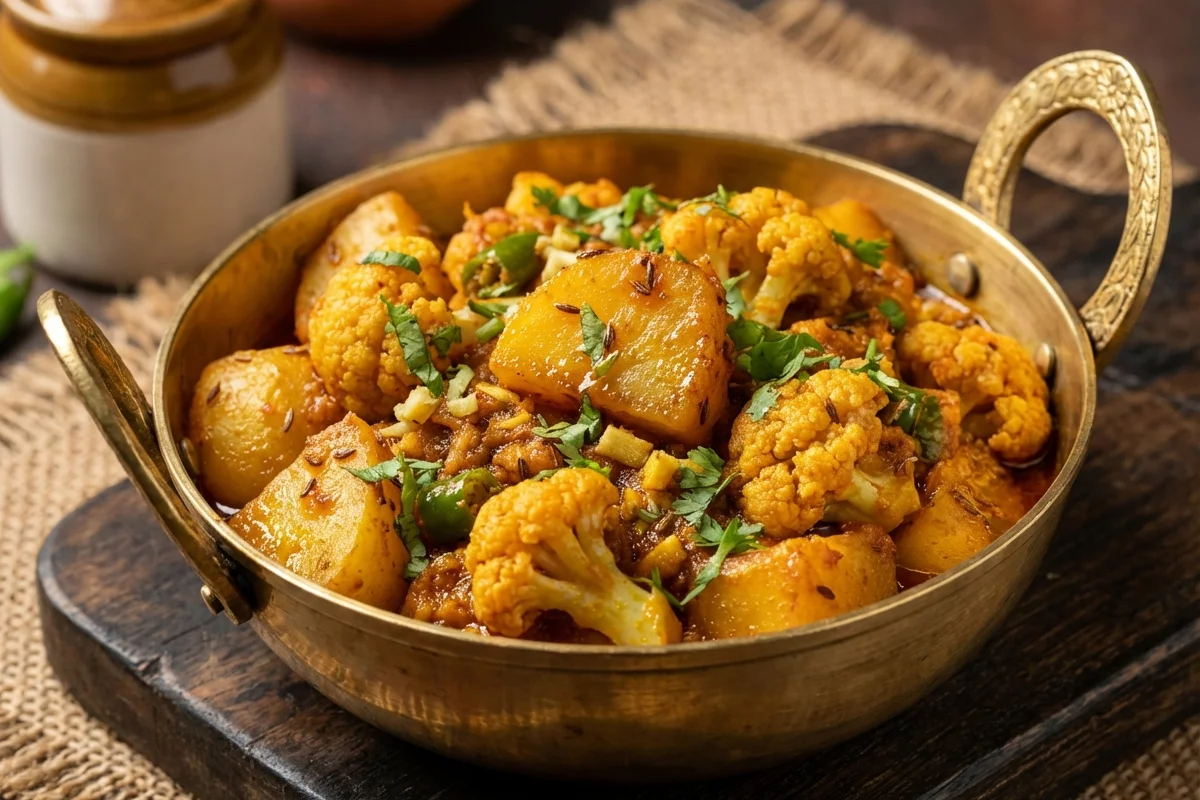
Aloo Gobi Kasa
Aloo Gobi Kasa is a Bengali-style dry curry where potatoes and cauliflower are cooked down with onion, ginger, tomato, and warm spices until the masala clings to every piece. It is hearty, homely, and especially good with roti or dal and rice.
For 4 servings
- prep · ~20 min
Prep the vegetables and spices.
1.Peel and cube the potato into medium pieces.2.Cut the cauliflower into medium florets and rinse well.3.Chop the onion and tomato, grate the ginger, mince the garlic, and slit the green chili.4.Measure the dry spices, salt, sugar, and water so everything is ready by the stove. - saute · ~8 min
Lightly fry the potato and cauliflower.
1.Heat 1 tbsp mustard oil in a kadai over medium heat until it just starts to smoke lightly, then lower the heat.2.Add the potato and cauliflower.3.Cook, stirring often, until the edges get light golden spots and the vegetables look slightly sealed, 6 to 8 minutes.4.Transfer them to a plate.TIPThis quick fry helps the vegetables hold shape and gives the finished kasa its deeper flavor. - saute · ~12 min
Cook the masala base.
1.Add the remaining 1 tbsp mustard oil to the same kadai.2.Add bay leaf and cumin seeds and let them sizzle for 20 to 30 seconds.3.Add onion and cook until lightly golden, 5 to 6 minutes.4.Add ginger, garlic, and green chili, then cook for 1 minute until fragrant.5.Add tomato and cook until soft and jammy, 4 to 5 minutes. - saute · ~1 min
Add the spice powders.
Add turmeric powder, red chili powder, coriander powder, cumin powder, salt, and sugar. Mix well and cook for 1 minute, sprinkling a spoonful of water if the masala starts catching on the pan.
TIPKeep the heat medium-low here so the spice powders bloom without burning. - simmer · ~18 min
Cook until the vegetables turn kasa style.
1.Return the potato and cauliflower to the kadai and coat them well in the masala.2.Add water and mix once.3.Cover and cook on low heat for 10 minutes, stirring once or twice.4.Uncover and cook until the water dries and the masala clings tightly to the vegetables, 6 to 8 minutes more.TIPKasa means cooking down until the masala turns thick and coats the vegetables rather than leaving a gravy. - garnish · ~1 min
Finish with garam masala and cilantro.
Sprinkle garam masala and cilantro over the hot aloo gobi kasa. Toss gently and cook for 30 seconds more.
- serve
Serve hot.
Serve Aloo Gobi Kasa hot with roti, luchi, or as part of a rice meal.
What to keep in mind.
7 tips from the recipe — small details that make a real difference to the final dish.
- 1Let the mustard oil smoke lightly before cooking to mellow its raw sharpness and bring out the Bengali flavor.
- 2Cut the potato and cauliflower to similar medium size so they finish cooking at the same time.
- 3Do not skip the quick initial fry; it helps the cauliflower stay intact during the covered cooking stage.
- 4Cook the tomatoes until jammy before adding powdered spices, or the masala will taste raw and separate.
- 5If the masala sticks while bhunoing, add only a spoonful of water at a time rather than making it saucy.
- 6Stop cooking when the potatoes are just tender and the florets still hold shape; overcooking turns the dish mushy.
- 7This kasa tastes even better after 20 to 30 minutes of rest, when the masala settles onto the vegetables.
Adapt it for your goals.
No-onion-no-garlic
Skip onion and garlic, increase ginger, and use a little extra tomato for a sattvic-style version with a cleaner spice profile.
jhalJhal
Add more green chili and a touch more red chili powder for a sharper, spicier Bengali-style heat.
peas addedPeas-added
Add a handful of green peas in the final covered cook for extra sweetness, color, and a more filling sabzi.
low oilLow-oil
Shallow-brown the vegetables in less oil or roast them first, then finish in the masala for a lighter everyday version.
Why this is on our healthy list.
Fiber-Rich Vegetables
Cauliflower, potato, onion, and tomato make this dry curry filling and support digestive health with plenty of plant fiber.
Packed with Plant Compounds
Cauliflower, tomato, ginger, garlic, and spices bring a range of naturally occurring antioxidants and protective phytochemicals.
Moderate and Satisfying
Because it is a dry curry with measured oil and no cream, it delivers strong flavor without feeling overly heavy.
Frequently asked questions
That short fry helps both vegetables hold their shape, prevents the cauliflower from crumbling, and adds a lightly browned flavor to the final kasa.



-curry.webp)
.webp)