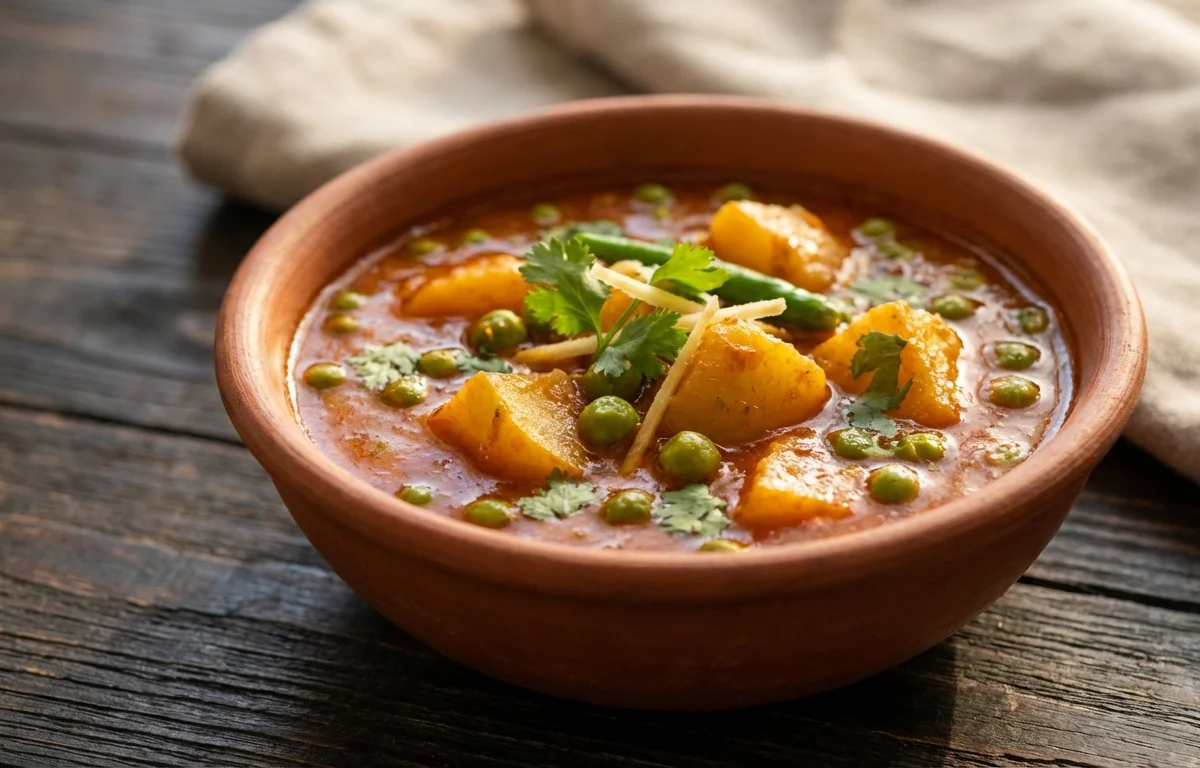
Aloo Matar Tari
A comforting, homestyle North Indian curry where tender potatoes and sweet green peas swim in a light, tangy tomato-yogurt gravy. The gentle tempering of cumin and ginger makes it a soul-warming dish that pairs perfectly with roti or steamed rice.
For 4 servings
- prep · ~10 min
Boil the potatoes and peas.
Place cubed potatoes in a pot with enough water to cover by an inch. Bring to a boil and cook until fork-tender, about 8-10 minutes. Add green peas in the last 2 minutes. Drain and set aside.
- temper · ~3 min
Make the tempering.
1.Heat oil in a kadhai or deep pan over medium heat.2.Add cumin seeds and dried red chilies. Let them splutter and release their aroma (30 sec).3.Add grated ginger and minced garlic. Sauté until the raw smell disappears (1 min). - saute · ~11 min
Cook the onion and tomato base.
1.Add chopped onion and sauté until translucent and pinkish-golden (5-6 min).2.Stir in the pureed tomato, turmeric powder, red chili powder, and coriander powder.3.Cook the masala, stirring often, until the oil separates from the sides (4-5 min).TIPCooking the tomatoes until the oil separates is the secret to a smooth, rich gravy without rawness. - simmer · ~9 min
Simmer the gravy with yogurt.
1.Lower the heat completely. Add the whisked yogurt and stir continuously for 2 minutes to prevent curdling.2.Pour in 1.5 cups of water and add salt. Bring to a gentle simmer.3.Add the boiled potatoes and peas. Simmer for 5-7 minutes until the gravy thickens slightly and the potatoes absorb the flavors.TIPAlways lower the heat before adding yogurt and whisk it well. Room temperature yogurt is less likely to split in the hot gravy. - garnish · ~2 min
Finish and serve.
Turn off the heat. Sprinkle garam masala and fresh coriander leaves on top. Let it rest for 2 minutes before serving.
What to keep in mind.
6 tips from the recipe — small details that make a real difference to the final dish.
- 1Use waxy potatoes like baby reds or Yukon Golds so they hold their shape during simmering.
- 2Always add yogurt on low heat and stir nonstop for 2 minutes to prevent curdling.
- 3For a deeper flavor, cook the tomato-onion masala until the oil visibly separates from the sides.
- 4If using frozen peas, add them directly to the boiling potatoes in the last 2 minutes — no need to thaw.
- 5Let the finished curry rest for 2–3 minutes off heat before serving; this allows the garam masala aroma to bloom.
- 6To make the gravy thicker, mash a few potato cubes against the side of the pan before the final simmer.
Adapt it for your goals.
Low-oil
Skip the oil and dry-roast cumin and red chilies in a nonstick pan, then use a splash of water to sauté the aromatics. Reduces fat while keeping the tempering flavor.
high proteinHigh-protein
Add 1 cup of boiled chickpeas or paneer cubes along with the potatoes and peas for extra protein and heartiness.
veganVegan
Replace yogurt with ¼ cup of raw cashew paste blended with water, and use a neutral oil instead of ghee. The gravy stays rich and creamy.
gluten freeGluten-free
This dish is naturally gluten-free. Just ensure your garam masala blend is labeled gluten-free and serve with rice instead of roti.
protein richProtein-rich
Stir in 200g of cubed extra-firm tofu after adding the water; tofu absorbs the spicy-tangy gravy beautifully for a plant-based protein boost.
Why this is on our healthy list.
Rich in Dietary Fiber
Potatoes with skin and green peas provide both soluble and insoluble fiber, supporting healthy digestion and steady blood sugar levels.
High in Vitamin C
Fresh tomatoes, green peas, and coriander contribute vitamin C, which helps support immune function and collagen production.
Probiotic Boost from Yogurt
The yogurt adds live cultures that promote gut health, and when gently heated, some beneficial bacteria remain active.
Anti-Inflammatory Spices
Turmeric, ginger, and cumin contain compounds like curcumin and gingerol, known for their anti-inflammatory and antioxidant properties.
Low-Fat Cooking Method
This recipe uses only 2 tablespoons of oil for the whole dish, making it a lighter choice compared to cream-based Indian curries.
Frequently asked questions
Yogurt curdles when added to too-hot liquid or if it's cold from the fridge. Always lower the heat to low, and use room-temperature yogurt whisked smooth.



.webp)