Aloo Wadi Sabzi
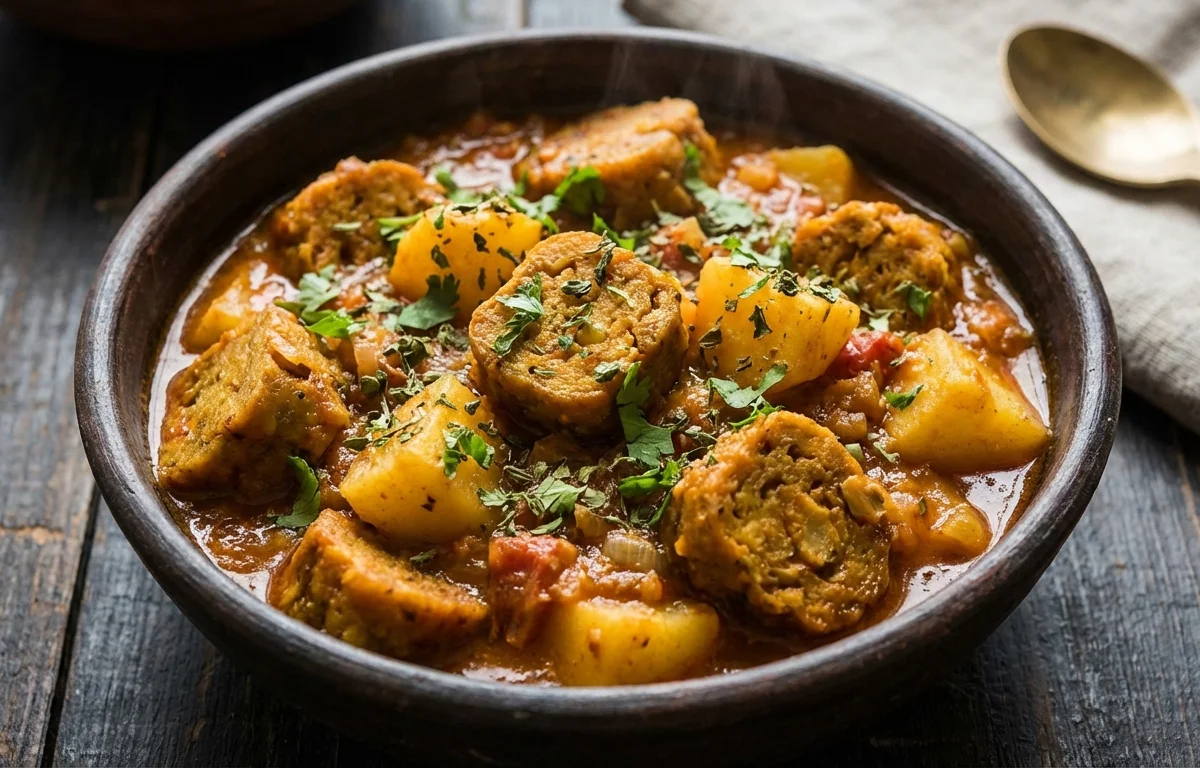
A rustic Punjabi-style dry curry where soft, spiced potato chunks meet earthy, sun-dried lentil dumplings. The wadis soak up the tangy tomato-onion masala, making every bite a hearty mix of textures. A simple homestyle sabzi that comes together quickly with basic pantry staples.
For 4 servings
- prep
Break the wadis into chunks.
Take the sun-dried urad dal wadis and break them into bite-sized chunks. Set aside.
- fry · ~4 min
Shallow fry the wadi chunks.
1.Heat 1 tbsp oil in a pan over medium heat.2.Add the broken wadi chunks and fry until golden brown and crisp (3-4 min).3.Remove with a slotted spoon and drain on paper towels.TIPFry on medium-low heat so the wadis cook through without burning on the outside. - fry · ~6 min
Fry the potatoes.
1.In the same pan, add the cubed potatoes.2.Fry until lightly golden on all sides (5-6 min).3.Remove and set aside with the wadis. - temper · ~1 min
Make the tempering.
1.Add the remaining 1 tbsp oil to the same pan.2.Add cumin seeds and let them crackle (30 sec).3.Add asafoetida and stir once. - saute · ~12 min
Build the onion-tomato masala.
1.Add chopped onion and fry until golden brown (6-7 min).2.Add grated ginger and slit green chilies, sauté for 1 min.3.Add chopped tomatoes, turmeric powder, red chili powder, coriander powder, and salt.4.Cook until tomatoes soften and oil separates from the masala (5-6 min). - simmer · ~12 min
Combine and simmer the sabzi.
1.Add the fried wadis and potatoes to the masala.2.Pour in half a cup of water and stir everything together.3.Cover and simmer on low heat for 10-12 minutes until potatoes are tender and wadis absorb the flavors.4.Sprinkle garam masala and dry mango powder on top and stir gently.TIPIf the sabzi looks too dry, add a splash of hot water — the wadis will keep absorbing moisture. - garnish
Garnish with coriander leaves and serve hot.
Transfer to a serving bowl, sprinkle with fresh chopped coriander leaves, and serve immediately with roti or paratha.
What to keep in mind.
7 tips from the recipe — small details that make a real difference to the final dish.
- 1Fry the wadis on medium-low heat so they cook through without turning bitter.
- 2Use mustard oil for an authentic Punjabi flavor — heat it until it smokes before adding cumin.
- 3Cut potatoes into uniform 1-inch cubes so they cook evenly with the wadis.
- 4Cook the masala until oil separates from the tomatoes — this deepens the flavor.
- 5If the sabzi looks dry after simmering, add a splash of hot water to help the wadis soften.
- 6Stir gently when combining wadis and potatoes to avoid breaking the dumplings.
- 7Leftover sabzi thickens overnight — reheat with a little water to refresh it.
Adapt it for your goals.
Low-oil
Skip shallow-frying the wadis and potatoes. Instead, boil the wadis for 5 minutes, drain, and add directly to the masala with raw potatoes. Cook covered until tender. This reduces oil significantly while keeping the dish's soul intact.
high proteinHigh-protein
Replace potatoes with paneer cubes or boiled chickpeas for a protein-packed twist. Add them after the masala is ready and simmer just until heated through.
jainJain
Omit onions, garlic, and potatoes. Use finely chopped bottle gourd (lauki) or raw banana instead of potatoes. Replace hing (asafoetida) with a generous pinch to mimic onion flavor. The wadis are typically onion-garlic-free in Jain variants.
veganVegan
This recipe is naturally vegan — just ensure the wadis are made without any dairy byproducts. Most traditional urad dal wadis are vegan. Serve with vegan roti or rice.
instant potInstant pot
Sauté masala on sauté mode, add fried wadis and potatoes with 1/4 cup water, pressure cook on high for 3 minutes, then quick release. Cuts cooking time to under 15 minutes.
Why this is on our healthy list.
High in Plant Protein
Urad dal wadis are rich in plant-based protein and fiber, supporting muscle repair and digestion.
Gut-Friendly Spices
Asafoetida and cumin aid digestion and reduce bloating, common in Indian cooking.
Balanced Carbohydrates
Potatoes provide slow-release energy, while the lentils add protein, making this a balanced meal.
Iron from Lentils
Urad dal is a good source of iron, which helps maintain healthy blood oxygen levels.
Frequently asked questions
Frying gives the wadis a crispy texture and prevents them from dissolving into mush. If you skip it, boil them separately for 5 minutes before adding to the masala.



.webp)