
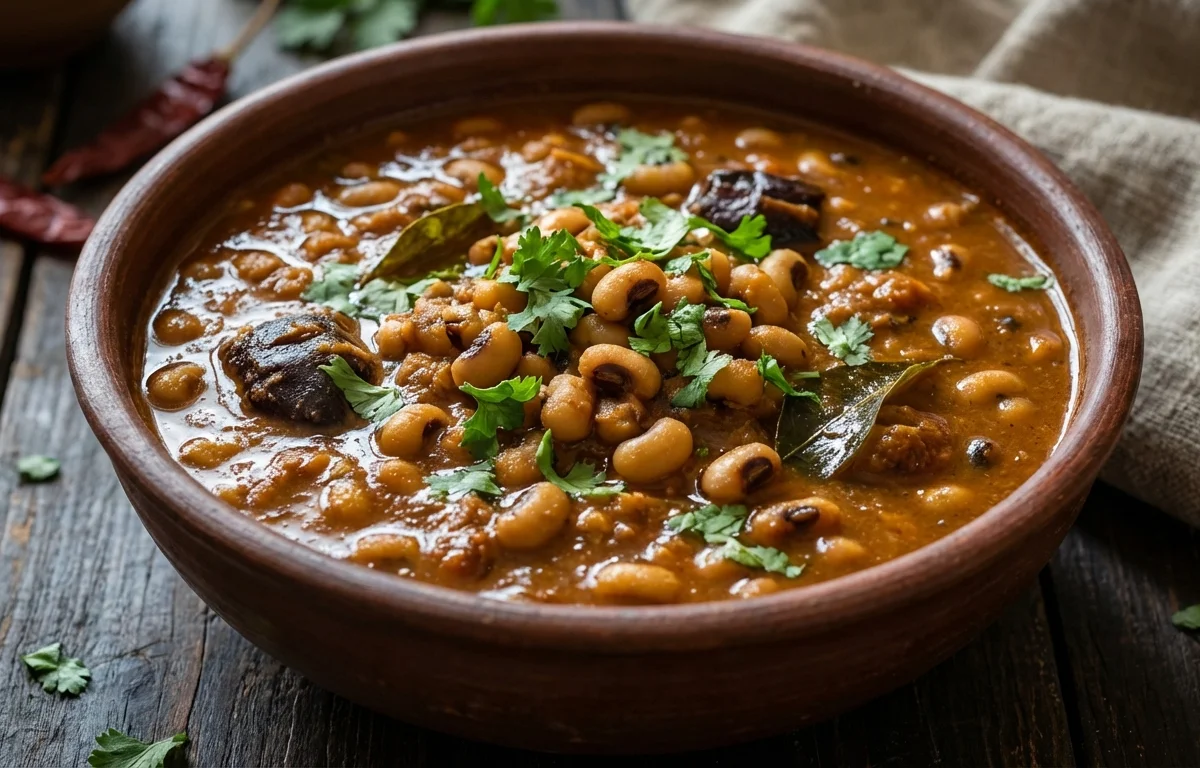
Alsanyache Tonak
A comforting Goan curry made with alsande beans simmered in a spiced coconut masala. It has a gentle heat, a rich texture, and the kind of homestyle flavor that goes beautifully with rice or poi.
For 4 servings
- prep
Soak the alsande beans.
Rinse the alsande beans well and soak them in plenty of water overnight. Drain before cooking.
- pressure cook · ~20 min
Pressure cook the beans.
Add the soaked alsande beans to a pressure cooker with 2 cups water. Cook until tender but not mushy, about 4 to 5 whistles.
TIPThe beans should hold their shape in the curry, so avoid overcooking. - roast · ~3 min
Roast the masala ingredients.
1.Heat a small pan over medium heat.2.Add dried red chili, coriander seeds, cumin seeds, black peppercorns, garlic, and ginger.3.Roast for 2 to 3 minutes until fragrant without burning the spices.TIPKeep the heat medium and stir often so the chilies darken lightly but do not turn bitter. - mix · ~2 min
Grind the coconut masala.
Blend the roasted spices with grated coconut, tamarind paste, and a little water to make a smooth, thick paste.
- saute · ~11 min
Cook the onion and tomato base.
1.Heat oil in a pan over medium heat.2.Add sliced onion and cook until lightly golden, 5 to 6 minutes.3.Add chopped tomato and turmeric powder.4.Cook until the tomato softens and turns pulpy, 4 to 5 minutes. - simmer · ~12 min
Simmer the tonak.
1.Add the ground coconut masala to the pan and cook for 2 minutes.2.Add the cooked alsande beans along with their cooking liquid.3.Add the remaining 1 cup water and salt, then mix well.4.Bring to a gentle simmer and cook for 10 to 12 minutes until the gravy thickens slightly.TIPTonak should have a medium gravy, not a dry masala, so add a splash of water if it gets too thick. - serve
Serve hot.
Serve Alsanyache Tonak hot with steamed rice, Goan poi, or chapati.
What to keep in mind.
7 tips from the recipe — small details that make a real difference to the final dish.
- 1Soak the alsande beans fully overnight so they cook evenly and stay creamy inside without splitting.
- 2Pressure-cook just until tender; the beans should press easily but still hold shape in the final simmer.
- 3Roast the chilies and whole spices on medium heat only, or the masala can turn bitter and muddy.
- 4Grind the coconut masala as smooth as possible for the classic thick, velvety tonak texture.
- 5Cook the onion until lightly golden before adding tomato; this gives the curry a deeper, sweeter base.
- 6After adding the ground masala, let it cook briefly in oil before adding beans to remove any raw coconut taste.
- 7This curry tastes even better after a short rest, as the tamarind, coconut, and spices meld together.
Adapt it for your goals.
Low-oil
Use less oil and sauté the onions with a splash of water as needed; good if you want a lighter everyday version.
spicierSpicier
Add 1 to 2 extra dried red chilies or a few peppercorns for a hotter, more robust Goan-style tonak.
no onionNo-onion
Skip the onion and cook the tomato base a little longer; useful for a simpler fasting or pantry-style variation.
thicker gravyThicker-gravy
Increase the fresh coconut slightly and simmer a bit longer for a richer tonak that pairs especially well with poi.
Why this is on our healthy list.
Bean-Based Plant Protein
Alsande beans provide plant protein and make the curry hearty and satisfying without needing meat.
Fiber-Rich Main Dish
Black-eyed peas, onion, tomato, and coconut contribute fiber that supports fullness and a steadier digestion.
Spice-Driven Flavor
Coriander, cumin, pepper, garlic, ginger, and turmeric add strong flavor, so the dish stays rich-tasting with modest oil.
Frequently asked questions
Yes. Simmer the soaked alsande beans in a pot until tender, adding more water as needed; it will just take longer than pressure cooking.


