Badane Ennegai
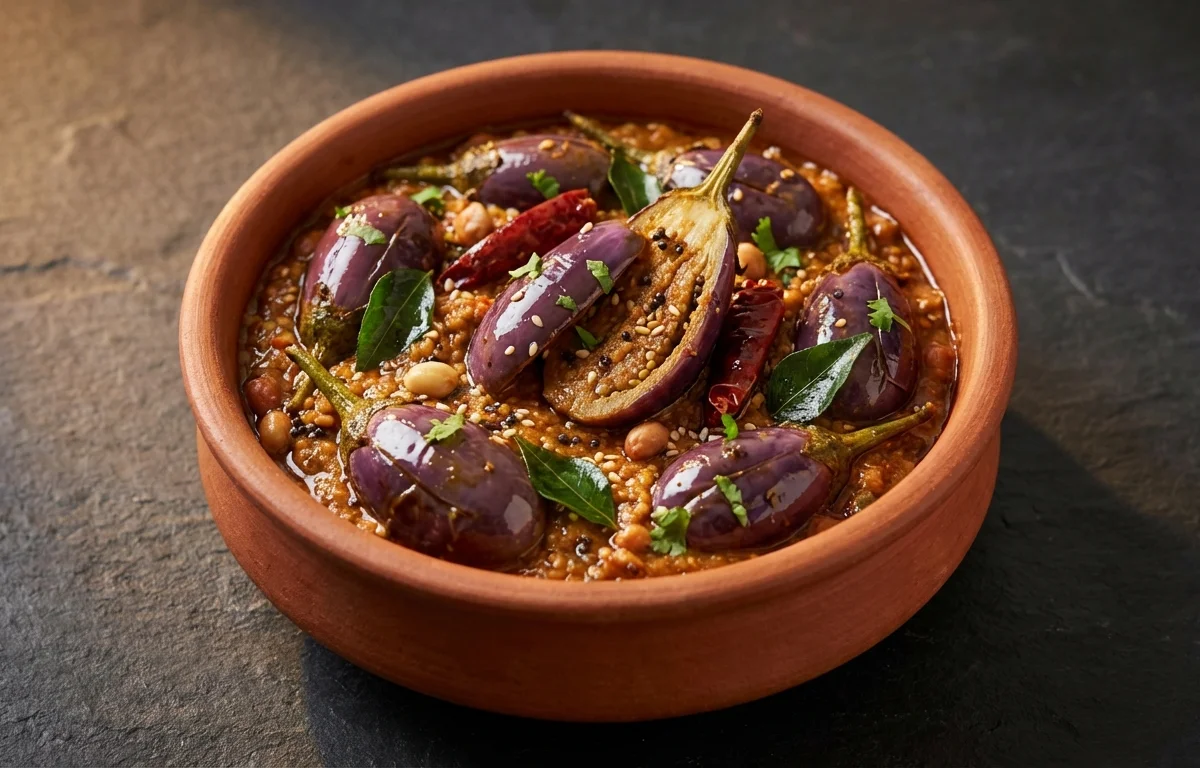
Tender baby aubergines simmered in a rich, roasted spice and groundnut gravy — a Kannadiga classic from Karnataka. The deep, nutty masala coats each eggplant beautifully, making it a perfect companion to jowar roti or steamed rice.
For 4 servings
- prep
Prepare the baby aubergines.
Wash the baby aubergines. Making two perpendicular slits from the base towards the stem, without cutting through the stem end. Keep them in a bowl of salted water until ready to use.
TIPKeep the stems on — they help hold the aubergine together during cooking. - roast · ~8 min
Roast the masala ingredients.
1.Heat a small pan on medium-low. Dry roast peanuts until golden and aromatic (3-4 min).2.Add desiccated coconut and roast until lightly golden (1-2 min).3.Add sesame seeds, coriander seeds, cumin seeds, and dried red chilies.4.Roast until fragrant and the spices deepen in colour (2-3 min).5.Transfer to a plate and let the mixture cool completely.TIPRoast on medium-low heat. High heat burns the coconut and sesame seeds, making the masala bitter. - mix · ~2 min
Grind the masala paste.
1.Transfer the cooled roasted ingredients to a blender.2.Add tamarind paste and ½ cup of warm water.3.Blend to a smooth, thick paste. Scrape down sides and add a little more water if needed. - saute · ~7 min
Sauté the aubergines.
1.Heat 1 tablespoon of oil in the heavy-bottomed pan over medium heat.2.Drain the aubergines and pat them dry with a kitchen towel.3.Add the aubergines to the pan and sauté gently, turning occasionally.4.Cook until the skin is lightly blistered and starting to soften (5-7 min).5.Remove the aubergines and set aside on a plate.TIPIf the pan is too crowded, sauté the eggplants in two batches for even blistering. - temper · ~13 min
Make the base and tempering.
1.In the same pan, heat the remaining 1 tablespoon of oil.2.Add mustard seeds and let them splutter (30 sec).3.Add curry leaves and sauté until fragrant (10-15 sec).4.Add chopped onions and crushed garlic. Sauté until the onions turn golden brown (7-8 min).5.Add the ground masala paste along with turmeric powder and salt.6.Cook the masala, stirring frequently, until the oil starts to separate at the edges (5-6 min).TIPPatience is key — the masala must release oil for the raw smell to disappear and a rich flavour to develop. - simmer · ~20 min
Simmer the aubergines in the gravy.
1.Pour in 1 cup of warm water and stir in the grated jaggery.2.Bring the gravy to a gentle boil.3.Carefully nestle the sautéed aubergines into the gravy.4.Lower the heat, cover the pan, and simmer until the aubergines are tender and cooked through (15-20 min).TIPGently turn the aubergines once halfway through cooking so they absorb the masala evenly. - garnish · ~5 min
Finish with fresh coriander and serve hot.
Turn off the heat. Garnish generously with chopped coriander leaves. Let the dish rest for 5 minutes before serving for the flavours to settle.
What to keep in mind.
6 tips from the recipe — small details that make a real difference to the final dish.
- 1Slit the baby aubergines from the base to near the stem so they hold their shape and soak up the masala.
- 2Dry roast the peanuts, coconut, and seeds on medium-low heat to prevent burning and bitterness.
- 3Sauté the aubergines until the skin blisters — this firms the flesh and prevents it from turning mushy.
- 4Cook the ground masala until oil separates on the sides; this deepens the flavor and eliminates raw spice taste.
- 5Use warm water when grinding the masala and adding it to the pan for a smoother, more cohesive gravy.
- 6Let the finished dish rest for 5 minutes after cooking so the flavors meld and the gravy thickens slightly.
Adapt it for your goals.
No-Onion No-Garlic (Satvik)
Omit the onion and garlic. Add a pinch of asafoetida (hing) to the tempering. This creates a lighter, satvik version suitable for certain fasting days or Jain diets, while the roasted nuts and coconut still provide ample depth.
High ProteinHigh-Protein
Increase peanuts to 4 tablespoons and add 1 tablespoon of roasted chana dal (split chickpeas) while grinding. This boosts the protein content and adds a subtle nutty earthiness, ideal for a more filling main course.
Low OilLow-Oil
Reduce oil to 1 tablespoon. Skip the initial sauté of aubergines and instead add them directly to the masala after the tempering, then simmer for a few extra minutes. This lowers the fat while keeping the dish moist and flavorful.
VeganVegan
This recipe is already vegan as written — no substitutions needed. The groundnut-coconut gravy and tamarind provide all the richness without any dairy.
Why this is on our healthy list.
Rich in Healthy Fats
Peanuts and sesame seeds provide unsaturated fats that support heart health and help absorb fat-soluble vitamins from the meal.
Good Source of Plant Protein
Peanuts and sesame seeds contribute a moderate amount of plant-based protein, making this dish more satiating and balanced.
High in Dietary Fiber
Baby aubergines (with skin) and peanuts are rich in fiber, which aids digestion and promotes a feeling of fullness.
Antioxidant-Rich Spices
Turmeric, coriander seeds, cumin, and curry leaves contain natural antioxidants that help combat oxidative stress and inflammation.
Frequently asked questions
Yes, but cut them into 2-inch chunks and adjust the cooking time — large chunks may need 5-10 more minutes of simmering to become tender and absorb the masala.