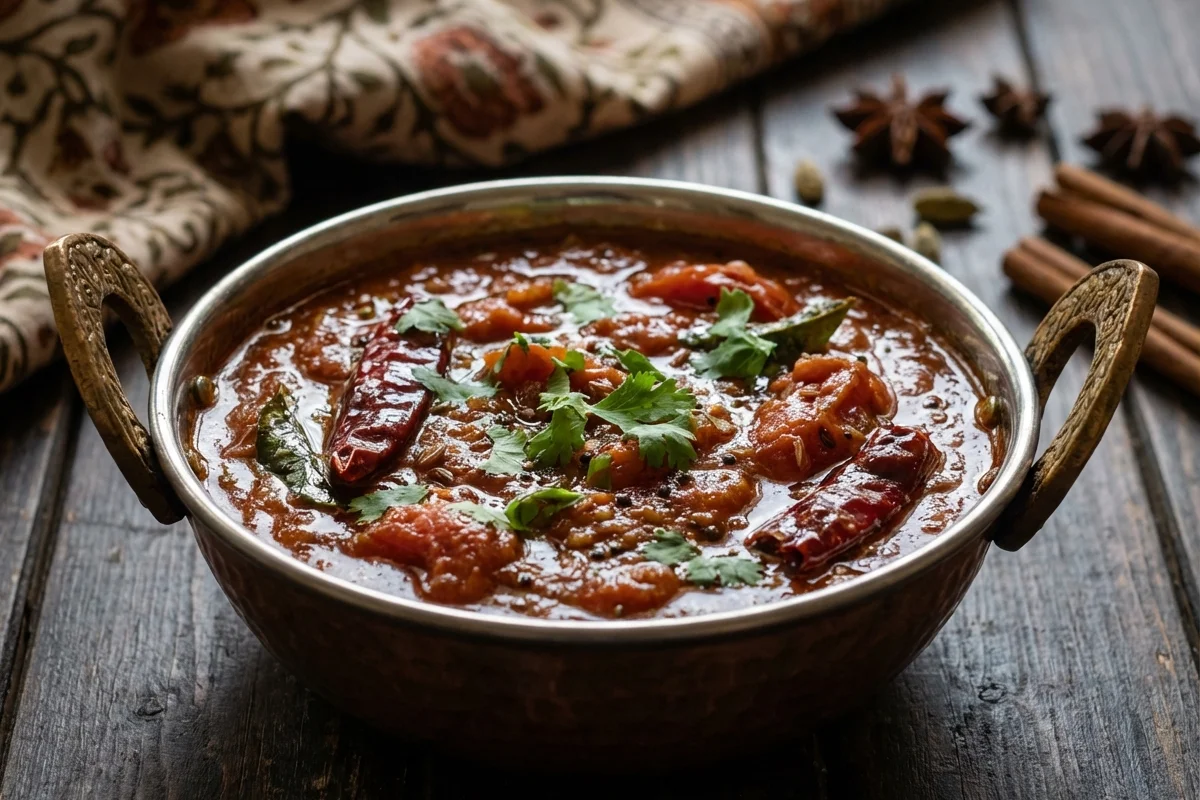
Bagare Tamatar
A rich Hyderabadi tomato curry where ripe tomatoes simmer in a nutty sesame and peanut gravy with gentle spice and tang. It is full of deep, toasty flavor and pairs beautifully with roti, naan, or plain rice.
For 4 servings
- prep · ~10 min
Prepare the tomatoes and masala ingredients.
1.Wash the tomatoes and make a deep slit in each one, keeping the base intact.2.Slice the onion and slit the green chilies.3.Measure the peanuts, sesame seeds, dry coconut, tamarind paste, jaggery, spices, oil, salt, and water. - roast · ~5 min
Roast the nuts and seeds.
1.Heat a dry pan on low heat.2.Roast the peanuts until lightly golden and fragrant.3.Add the sesame seeds and dry coconut, and roast until aromatic without burning.4.Take everything out and cool slightly.TIPKeep the heat low while roasting. Sesame and coconut burn quickly and can make the gravy bitter. - mix · ~3 min
Grind the masala paste.
Blend the roasted peanuts, sesame seeds, dry coconut, tamarind paste, jaggery, red chili powder, turmeric powder, coriander powder, and 1/2 cup water into a smooth paste.
- fry · ~4 min
Lightly fry the tomatoes.
Heat 1 tbsp oil in a wide pan and cook the slit tomatoes gently for 3 to 4 minutes, turning once, until the skins blister slightly but the tomatoes still hold their shape. Remove and keep aside.
TIPDo not overcook the tomatoes at this stage or they will collapse into the gravy. - temper · ~1 min
Make the tempering.
1.Heat the remaining 1 tbsp oil in the same pan over medium heat.2.Add mustard seeds and let them crackle.3.Add cumin seeds, fenugreek seeds, and curry leaves.4.Cook for a few seconds until fragrant. - saute · ~7 min
Cook the onion base.
1.Add the sliced onion and green chilies to the pan.2.Cook until the onion turns soft and light golden.3.Add the ginger-garlic paste and sauté until the raw smell disappears. - simmer · ~8 min
Cook the gravy.
Add the ground masala paste, remaining 1/2 cup water, and salt. Cook on low to medium heat, stirring often, until the gravy thickens slightly and the oil begins to show at the edges.
TIPStir often once the nut paste goes in, or it may catch at the bottom of the pan. - simmer · ~5 min
Finish the curry with the tomatoes.
Slide the fried tomatoes into the gravy, spoon some masala over them, cover, and simmer gently until the tomatoes are tender and the flavors come together.
- garnish
Garnish with coriander leaves.
- serve
Serve hot with roti, naan, or plain rice.
What to keep in mind.
7 tips from the recipe — small details that make a real difference to the final dish.
- 1Choose firm, slightly underripe small tomatoes so they soften without bursting apart in the gravy.
- 2Cool the roasted peanuts, sesame, and coconut before grinding, or the paste can turn oily instead of smooth.
- 3Grind the masala very fine; a gritty paste will make the Bagare Tamatar feel coarse rather than velvety.
- 4Use a wide pan when frying the slit tomatoes so you can turn them gently without tearing the skins.
- 5Keep fenugreek to just a pinch; too much will overpower the sweet-sour balance with bitterness.
- 6If the gravy thickens too much after adding the nut paste, loosen it with a splash of hot water, not cold.
- 7This curry tastes even better after 30 minutes of rest, when the tamarind, jaggery, and roasted nut flavors meld.
Adapt it for your goals.
Low-oil
Skip the separate tomato frying and simmer the slit tomatoes directly in the gravy for a lighter version with less oil.
spicierSpicier
Increase green chilies and red chili powder slightly for a sharper heat that stands up well to the rich nutty masala.
no onionNo-onion
Omit the onion for a simpler, more gravy-forward version where the tomato, tamarind, and roasted seed flavors shine more clearly.
creamierCreamier
Add a little extra dry coconut while grinding for a richer, sweeter gravy that pairs especially well with naan.
Why this is on our healthy list.
Rich in Healthy Fats
Peanuts and sesame seeds contribute satisfying unsaturated fats that make the curry hearty and help carry the spices well.
Tomato Antioxidant Boost
Tomatoes bring vitamin-rich freshness and antioxidant compounds, especially welcome in a dish built around slow-cooked tomato flavor.
Plant-Based Satiety
The combination of peanuts, sesame, and coconut adds staying power, making this curry more filling than a thin tomato gravy.
Digestive Spice Support
Cumin, ginger, garlic, and curry leaves are traditional aromatics that add flavor while making the rich gravy feel more balanced.
Frequently asked questions
Usually the sesame, coconut, or fenugreek cooked too far. Roast on low heat and use only a pinch of fenugreek seeds.