
Loading...
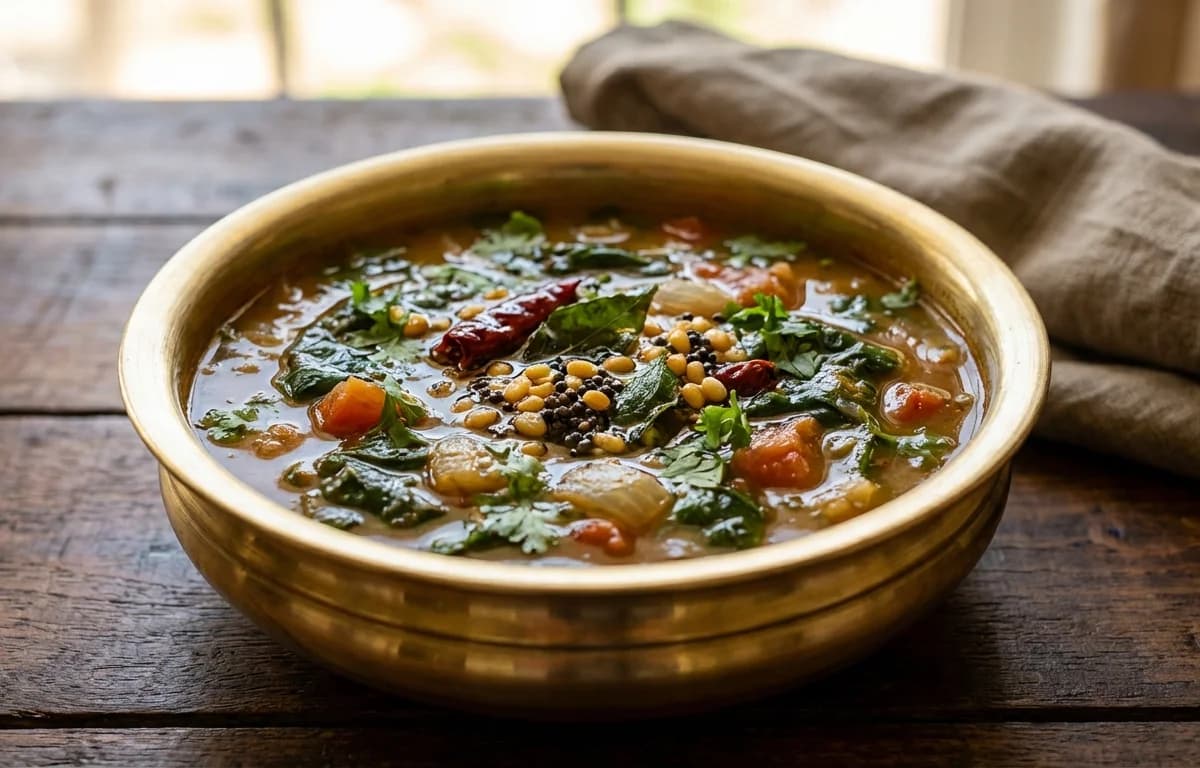
A traditional Karnataka-style sambar featuring tender Malabar spinach in a tangy tamarind and lentil gravy. It's a comforting, nutritious dish that pairs perfectly with steamed rice, idli, or dosa.
Pressure Cook the Dal
Prepare Tamarind and Cook Vegetables
Combine and Simmer the Sambar
Crisp green beans stir-fried with mustard seeds, lentils, and fresh coconut. This simple South Indian side dish, known as poriyal, is light, flavorful, and comes together in just 15 minutes.
A classic Karnataka one-pot meal, reimagined for a low-glycemic diet. This version uses wholesome foxtail millet instead of rice, combined with lentils and vegetables in a fragrant, spicy tamarind broth. It's comfort food that's both hearty and healthy.
A wholesome and savory South Indian pancake made with a low-glycemic blend of millets, brown rice, and mixed lentils. Packed with fiber and protein, this diabetic-friendly adai is a delicious and guilt-free choice for breakfast or dinner.
Crispy, golden crepes made from a fermented rice and lentil batter, filled with a savory spiced potato mixture. A beloved South Indian classic, perfect for a hearty breakfast or light dinner, best served with sambar and coconut chutney.
A traditional Karnataka-style sambar featuring tender Malabar spinach in a tangy tamarind and lentil gravy. It's a comforting, nutritious dish that pairs perfectly with steamed rice, idli, or dosa.
This south_indian recipe takes 45 minutes to prepare and yields 4 servings. At 269.67 calories per serving with 11.4g of protein, it's a moderately challenging recipe perfect for lunch or dinner.
Prepare the Tempering (Tadka)
Finish and Serve
For a richer, creamier sambar, grind 1/4 cup of fresh grated coconut with a little water to a fine paste and add it to the sambar along with the dal. Simmer for 5 more minutes.
Add other vegetables like drumsticks, pumpkin, or carrots along with the basale stems for added nutrition and texture.
Use a mix of toor dal and moong dal (half and half) for a different texture and flavor profile.
Toor dal is an excellent source of protein and essential amino acids, making this dish ideal for vegetarians and vegans to support muscle health and repair.
The combination of lentils and Malabar spinach provides a significant amount of dietary fiber, which aids digestion, promotes gut health, and helps in maintaining stable blood sugar levels.
Malabar spinach (Basale) is a powerhouse of nutrients, including Vitamin A, Vitamin C, iron, and calcium, which are crucial for vision, immunity, and bone health.
Spices like turmeric and asafoetida (hing) used in the sambar are known for their anti-inflammatory and digestive benefits, helping to soothe the digestive system.
One serving (approximately 1 cup or 380g) of Basale Soppu Sambar contains around 250-300 calories. This is an estimate and can vary based on the specific ingredients and amount of oil used.
Yes, it is a very healthy dish. It's rich in plant-based protein from lentils, packed with vitamins and minerals from Malabar spinach, and high in fiber. The spices used also have various health benefits, making it a nutritious and balanced meal.
Basale Soppu is the Kannada name for Malabar Spinach. It has slightly thick, succulent leaves and is known for its mild, earthy flavor. If you cannot find it, you can substitute it with regular spinach (palak), but be sure to add the spinach only in the last 2-3 minutes of cooking as it cooks much faster.
If your sambar is too sour from the tamarind, you can balance it by adding a little more jaggery. You can also dilute it slightly with a bit of hot water and adjust the salt and spice levels accordingly.
Absolutely. You can cook the toor dal in a regular pot. Soak the dal for at least 30 minutes, then cook it in the pot with enough water until it is completely soft and mushy. This will take longer, around 45-60 minutes. Mash it well before proceeding with the recipe.