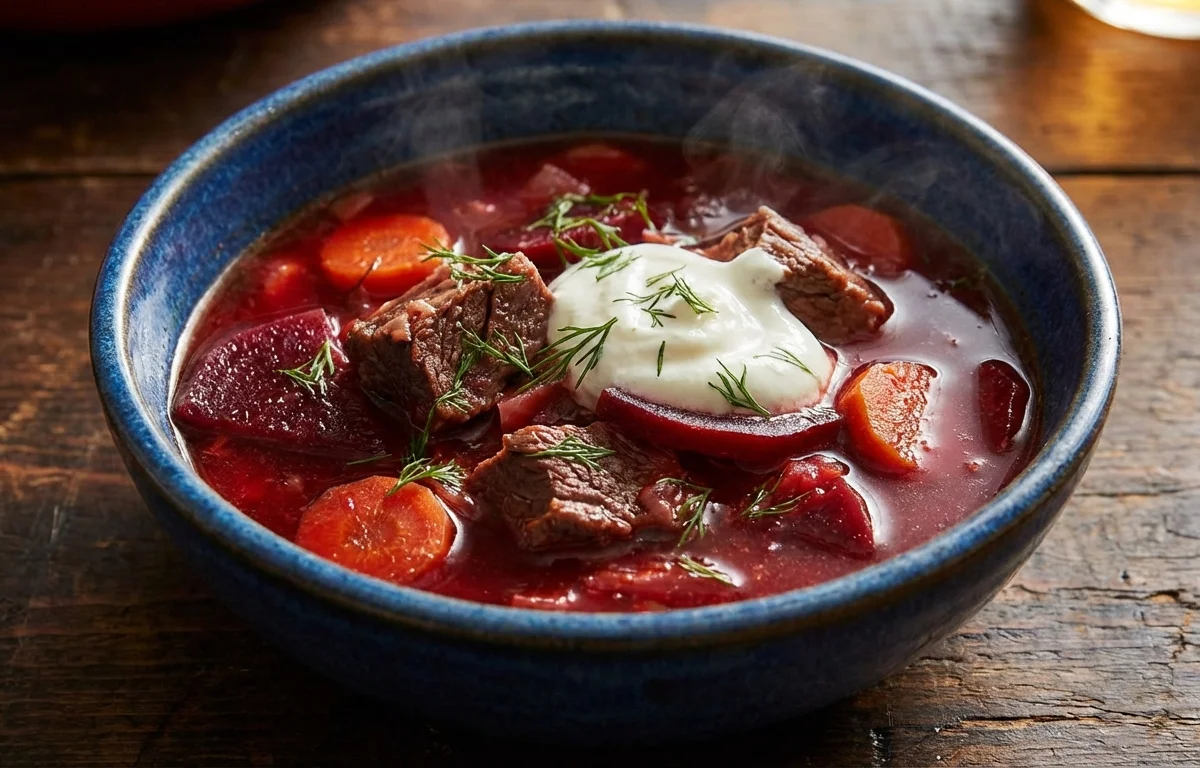
Beef Borscht
A deeply comforting, ruby-red soup loaded with tender chunks of beef, earthy beets, and hearty vegetables. Slowly simmered until rich and flavorful, this Eastern European classic is finished with a dollop of sour cream and fresh dill. Perfect for cold winter nights and surprisingly simple to make.
For 6 servings
- prep · ~12 min
Brown the beef.
Pat the beef cubes dry with paper towels. Heat 1 tablespoon of oil in a large Dutch oven over medium-high heat. Add half the beef in a single layer and sear until deeply browned on all sides, about 5-6 minutes. Transfer to a plate and repeat with the remaining beef.
TIPDon't crowd the pot — browning in batches develops the deep flavor that makes this soup special. - saute · ~10 min
Sauté the aromatics and beets.
Add the remaining 1 tablespoon of oil to the same pot. Add the chopped onion and sauté until softened, about 4 minutes. Stir in the minced garlic and cook until fragrant, 30 seconds. Add the grated beets, grated carrots, and tomato paste. Cook, stirring occasionally, until the vegetables soften and the tomato paste darkens slightly, about 5-7 minutes.
- boil · ~65 min
Simmer the soup base.
Return the browned beef and any accumulated juices to the pot. Add the water, bay leaves, salt, and sugar. Bring to a rolling boil over high heat, then reduce the heat to low. Cover and simmer gently until the beef is fork-tender, about 60-70 minutes.
TIPSkim off any foam that rises to the surface during the first 10 minutes of simmering for a clearer broth. - simmer · ~18 min
Add the potatoes and cabbage.
Once the beef is tender, add the cubed potatoes and shredded cabbage to the pot. Continue to simmer uncovered until the potatoes are easily pierced with a fork, about 15-20 minutes. Stir occasionally to prevent sticking.
TIPAdding cabbage later keeps it from turning mushy — it should have a slight bite. - mix · ~5 min
Finish with vinegar and pepper.
Remove the bay leaves. Stir in the white vinegar and black pepper. Taste and adjust salt if needed. Turn off the heat and let the soup rest for 5 minutes before serving.
TIPThe vinegar brightens the soup and balances the earthy sweetness of the beets. - garnish
Ladle into bowls, top with sour cream and dill, and serve hot.
What to keep in mind.
7 tips from the recipe — small details that make a real difference to the final dish.
- 1Pat beef dry before searing to ensure deep browning, not steaming.
- 2Grate beets and carrots on a box grater for even cooking and a velvety texture.
- 3Skim foam from the broth in the first 10 minutes of simmering for a clearer soup.
- 4Add cabbage late to keep it slightly crisp, not mushy.
- 5Let the soup rest 5 minutes off heat to meld flavors before serving.
- 6For make-ahead, cool completely and refrigerate; flavors improve overnight.
- 7Store leftovers in an airtight container for up to 4 days, or freeze for 3 months.
Adapt it for your goals.
Vegetarian
Omit the beef and replace water with vegetable broth. Add a can of drained kidney beans or chickpeas for protein. The soup remains hearty and flavorful.
low oilLow-oil
Reduce oil to 1 tablespoon for browning, and sauté aromatics in a splash of broth or water. The soup will be lighter but still deeply savory.
high proteinHigh-protein
Add an extra 200g of beef chuck and toss in a diced beef shank for more collagen-rich gelatin. This makes the broth even more luscious and protein-packed.
Why this is on our healthy list.
Rich in Dietary Fiber
Beets, cabbage, carrots, and potatoes provide ample fiber that supports healthy digestion and keeps you full longer.
High in Vitamin A
Carrots and beets are excellent sources of beta-carotene, which the body converts to vitamin A for eye health and immune function.
Good Source of Iron
Beef chuck provides heme iron, which is readily absorbed and helps prevent anemia, while beets contribute non-heme iron.
Supports Gut Health
The cabbage in this borscht contains natural probiotics when fermented, but even raw cabbage offers prebiotic fiber that feeds good gut bacteria.
Frequently asked questions
It likely needs more acid or salt — add a splash of vinegar or pinch of salt and taste again. The vinegar at the end is crucial for balance.