
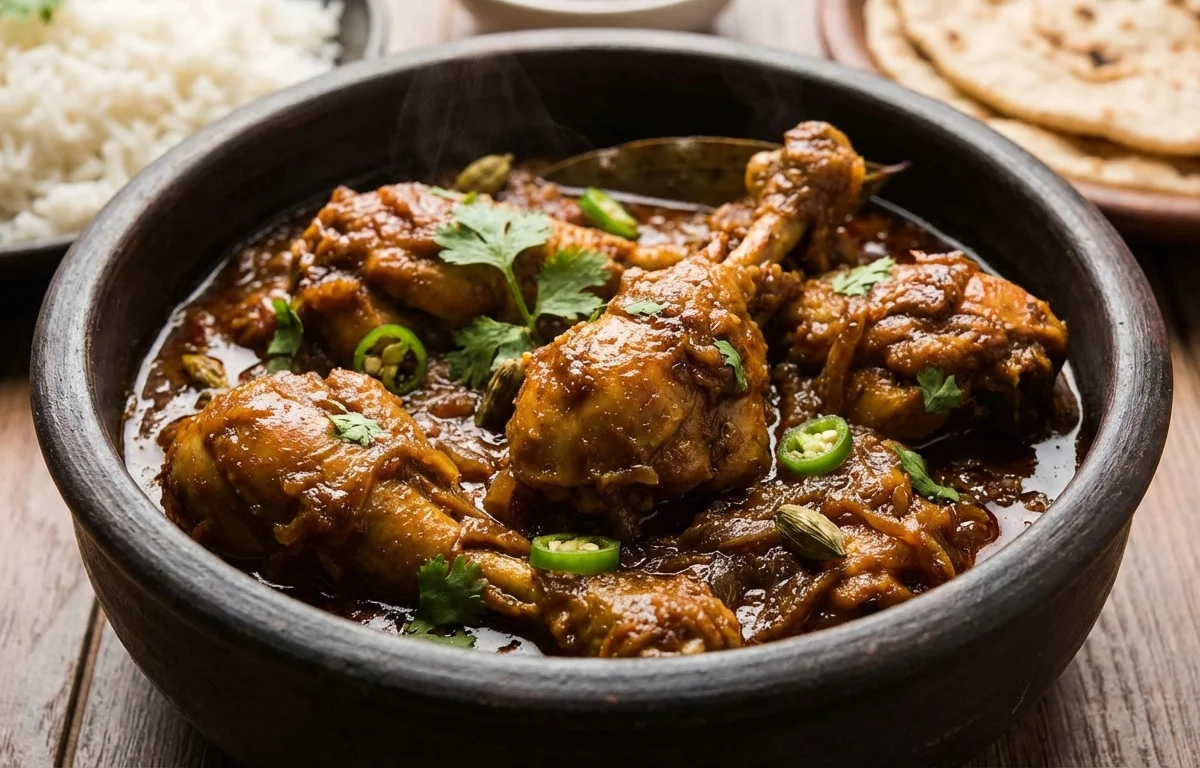
Bengali Chicken Kosha
A rich Bengali-style chicken curry cooked slowly with onions, yogurt, and warm spices until the masala turns deep, glossy, and clingy. It is bold, comforting, and perfect with luchi, paratha, or plain rice.
For 4 servings
- mix · ~20 min
Marinate the chicken.
1.Add chicken, yogurt, turmeric powder, red chili powder, and half of the ginger-garlic paste to a bowl.2.Add half of the salt and mix well so the chicken is evenly coated.3.Set aside for 20 minutes while you prep the other ingredients.TIPA short marinade helps the chicken stay juicy and lets the spices sink in. - fry · ~6 min
Brown the potatoes.
1.Heat mustard oil in a heavy pan until it reaches a light smoking point, then lower the heat.2.Add the potato halves and fry until lightly golden on the edges.3.Take them out and keep aside. - saute · ~12 min
Cook the whole spices and onions.
1.In the same pan, add bay leaf, green cardamom, cloves, and cinnamon.2.Let them sizzle for a few seconds until fragrant.3.Add the sliced onion and sugar, then cook until the onion turns deep golden brown.TIPTake your time here. The dark onion base gives kosha its signature color and depth. - saute · ~8 min
Build the masala.
1.Add the remaining ginger-garlic paste and sauté until the raw smell fades.2.Add tomato and green chili, then cook until the tomato softens.3.Add coriander powder, cumin powder, garam masala, and the remaining salt.4.Cook the masala until it looks thick and glossy. - saute · ~15 min
Kosha the chicken.
1.Add the marinated chicken to the pan and mix well with the masala.2.Cook over medium heat, stirring often, until the chicken changes color and the masala starts clinging to the pieces.3.Keep cooking until oil begins to show at the edges.TIPThis slow bhuna stage is the heart of the dish. Stir often so the masala darkens without catching. - simmer · ~20 min
Simmer until the chicken is tender.
1.Add the fried potato and hot water to the pan.2.Cover and cook on low heat until the chicken is tender and the gravy turns thick.3.Uncover for the last few minutes and cook down if needed to get a rich, clingy finish. - rest · ~5 min
Rest the kosha for 5 minutes.
- serve
Serve hot with rice, luchi, or paratha.
What to keep in mind.
7 tips from the recipe — small details that make a real difference to the final dish.
- 1Heat the mustard oil to just smoking first, then lower the flame to tame its sharp raw taste.
- 2Brown the onions deeply but evenly; they should be dark golden, not burnt, for the right kosha color.
- 3Whisk the yogurt well before marinating so it coats the chicken smoothly and cooks into the masala without splitting.
- 4Use hot water in the simmering stage so the bhuna masala does not seize and lose its glossy texture.
- 5Stir more often once the chicken goes in; the thick onion-yogurt masala can catch at the bottom quickly.
- 6Cook until oil separates at the edges before adding water; that is the key doneness cue for a proper kosha base.
- 7This curry tastes even better after a short rest, and often better the next day once the spices settle into the chicken and potatoes.
Adapt it for your goals.
Low-gravy
Use a little less hot water and cook uncovered longer for an even drier, tighter kosha that clings beautifully to luchi or paratha.
bonelessBoneless
Swap in boneless chicken thigh for easier eating; reduce the final simmer slightly so the pieces stay juicy.
spicierSpicier
Add an extra slit green chili or a bit more red chili powder if you want the kosha hotter without changing its character.
potato freePotato-free
Skip the potatoes for a more meat-forward curry with a slightly richer, more concentrated masala.
Why this is on our healthy list.
Protein-Rich Main Dish
Chicken and yogurt make this curry satisfying and rich in protein, which helps turn it into a filling meal.
Spice-Based Depth
Turmeric, cumin, coriander, ginger, garlic, and whole spices add flavor complexity without relying on heavy cream.
Balanced With Potatoes
The potatoes make the dish more hearty and comforting, helping it pair well with a simple side like plain rice.
Frequently asked questions
The color mostly comes from patiently browning the onions and properly bhuna-ing the masala. If you rush those stages, the curry stays pale.

-curry.webp)
.webp)