
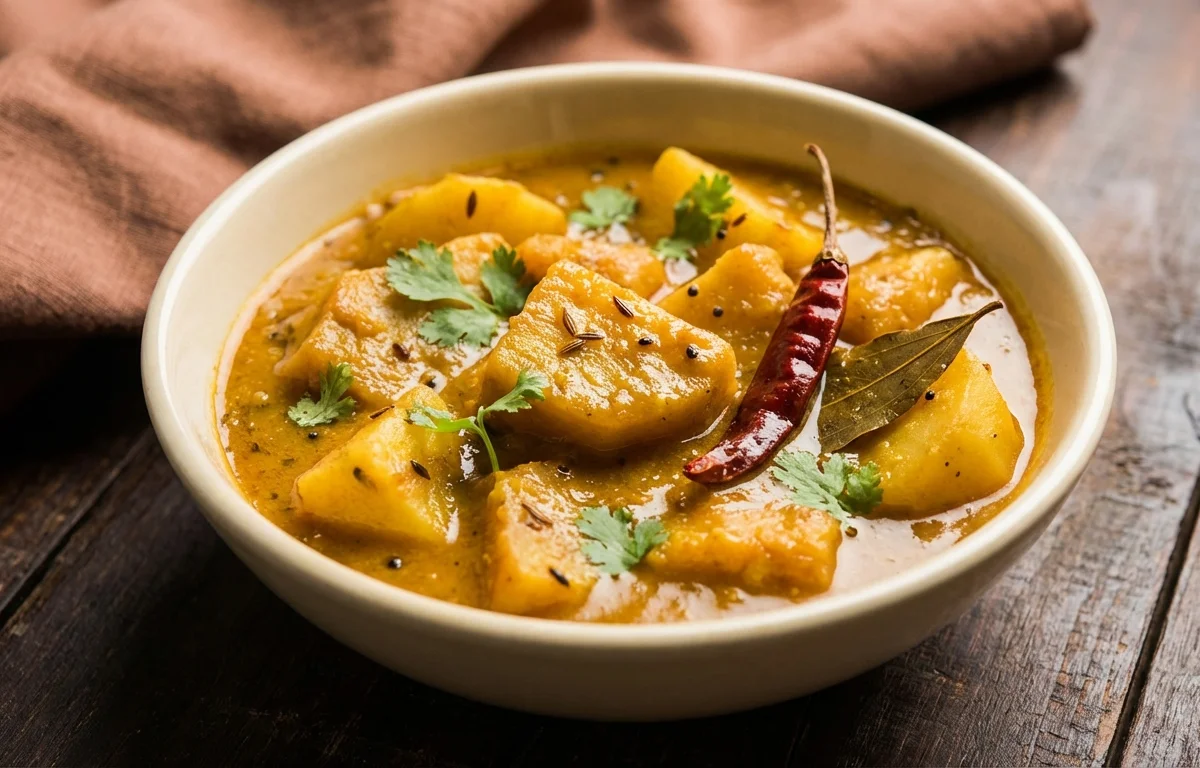
Bengali Yam Curry
A rustic Bengali village-style yam curry that celebrates the earthy subtle sweetness of elephant foot yam. Slow-cooked in a light ginger-spiked gravy with whole spices, the yam absorbs layers of flavour without losing its unique texture. Perfect with steamed rice on a monsoon afternoon.
For 4 servings
- prep · ~10 min
Peel and cube the yam, then boil until just tender.
1.Rub oil on your hands and knife before handling to prevent itching. Peel the yam and cut into 1.5-inch cubes.2.Rinse well and boil in a saucepan with enough water for 8-10 minutes, until a fork slides in with slight resistance.3.Drain immediately and set aside. Do not overcook; yam should hold its shape.TIPElephant foot yam can cause skin irritation. Oil your hands and knife, or wear gloves. - temper · ~2 min
Make the tempering with whole spices.
1.Heat oil in a wok over medium-low heat until shimmering.2.Add bay leaves and dried red chilies. Let them sizzle for 15 seconds.3.Add panch phoran and cumin seeds. Wait for the spices to crackle and pop (30 seconds).TIPKeep the heat medium-low. Panch phoran burns quickly and turns bitter. - saute · ~7 min
Build the aromatic base with ginger, chili, and onions.
1.Add the grated ginger and slit green chilies to the tempered oil. Stir for 30 seconds until fragrant.2.Add the sliced onion and sauté until soft and translucent (5-6 minutes).TIPDon't brown the onions hard. Bengali curries prefer soft, translucent onions for sweetness. - saute · ~6 min
Cook the tomatoes and ground spices.
1.Add the chopped tomatoes, turmeric powder, red chili powder, sugar, and salt.2.Sauté for 5-6 minutes, mashing the tomatoes with the spatula until they break down completely and oil separates at the sides. - simmer · ~15 min
Add the yam and simmer until flavours meld.
1.Gently fold in the boiled yam cubes. Stir carefully to coat each piece with the masala without breaking them.2.Pour in the water and bring to a gentle simmer. Cover and cook on low heat for 12-15 minutes.3.Uncover and check. The curry should be semi-dry with a little thick masala clinging to the yam. If too watery, simmer uncovered for 2-3 more minutes.TIPStir only once or twice. Too much stirring will break the yam cubes. - garnish · ~5 min
Finish with ghee and fresh coriander.
1.Turn off the heat. Drizzle the ghee over the top and let it melt into the hot curry.2.Scatter chopped coriander leaves and let the curry rest for 5 minutes before serving.TIPThat final drizzle of ghee is the Bengali signature. Don't skip it — it rounds out all the spices.
What to keep in mind.
7 tips from the recipe — small details that make a real difference to the final dish.
- 1Rub oil on your hands and knife before peeling the yam to avoid skin irritation from its sap.
- 2Boil the yam cubes only until a fork meets slight resistance — they should hold their shape, not turn mushy.
- 3Keep the heat medium-low when tempering panch phoran; it burns in seconds and turns bitter.
- 4Sauté onions until soft and translucent, not golden brown — Bengali curries rely on that pale sweetness.
- 5Stir the curry gently and only once or twice after adding the yam to keep the cubes intact.
- 6Let the finished curry rest for 5 minutes after adding ghee — it lets the flavours deepen and meld.
- 7If the curry is too watery after simmering, uncover and cook for 2-3 more minutes until it thickens.
Adapt it for your goals.
Vegan
Skip the ghee finish and use a neutral oil with a teaspoon of mustard oil drizzled at the end for a pungent, vegan-friendly twist.
low oilLow-oil
Reduce oil to 1 tablespoon and dry-roast the panch phoran in a hot pan before adding a splash of water to build the masala — lighter but still flavourful.
Why this is on our healthy list.
Rich in Dietary Fiber
Elephant foot yam provides a good source of fiber, which aids digestion and helps maintain steady energy levels.
Ginger for Digestion
Fresh ginger in the curry base stimulates digestion and can help soothe the stomach, making this a comforting monsoon-friendly dish.
Low in Saturated Fat
Made with minimal oil and optional ghee, this curry is low in saturated fat while still delivering deep flavour from spices.
Frequently asked questions
Yes, but the texture will differ. Regular yam or sweet potato cooks faster and is less starchy, so reduce the boiling time to 5-6 minutes and handle gently.


