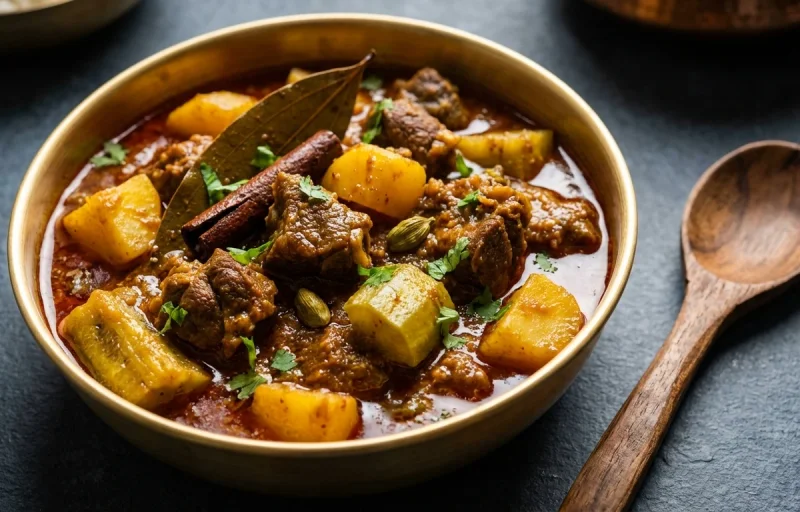
Bhanda Tarkari
A rustic and mildly spiced Odia curry made with tender hyacinth beans (bhanda/simba) simmered with potatoes in a fragrant ginger-cumin gravy. This comforting dish pairs beautifully with steamed rice and dal for a wholesome everyday meal.
For 4 servings
- boil · ~6 min
Parboil the beans and potatoes.
Bring a pot of water to a boil. Add the hyacinth bean pieces and potato cubes with a pinch of salt. Cook until just tender but still firm, about 5-6 minutes. Drain and set aside.
TIPDon't overcook the beans — they should retain a slight crunch before going into the gravy. - temper · ~6 min
Make the tempering.
1.Heat mustard oil in a kadhai over medium heat until it reaches smoking point. Lower the heat.2.Add panch phoron and dried red chilies. Let the spices crackle and sizzle for about 30 seconds.3.Add sliced onions and sauté until translucent with golden edges, about 4-5 minutes.TIPLet the mustard oil smoke briefly — this removes the raw pungency and brings out its earthy aroma. - saute · ~7 min
Build the aromatic gravy base.
1.Add ginger-garlic paste to the pan and sauté until the raw smell disappears, about 1 minute.2.Add chopped tomatoes, turmeric powder, cumin powder, coriander powder, and red chili powder.3.Cook the masala, stirring frequently, until the tomatoes soften and the oil begins to separate from the spices, about 5-6 minutes.TIPLook for oil specks appearing around the edges — that's your cue the masala is cooked through. - simmer · ~10 min
Combine everything and finish the curry.
1.Add the parboiled beans and potatoes to the masala. Sprinkle in the remaining salt.2.Stir gently to coat the vegetables evenly with the spice mixture.3.Pour in the water, stir once, and bring to a gentle simmer. Cover and cook for 8-10 minutes until the vegetables absorb the flavors and the curry reaches a semi-dry consistency. - garnish
Garnish with fresh coriander leaves and serve hot.
Turn off the heat. Scatter chopped coriander leaves over the bhanda tarkari. Rest for a couple of minutes before serving.
TIPA drizzle of raw mustard oil just before serving adds an authentic Odia touch.
What to keep in mind.
6 tips from the recipe — small details that make a real difference to the final dish.
- 1Do not overcook hyacinth beans during parboiling — they should retain a slight bite.
- 2Let the mustard oil reach its smoking point to mellow its pungency and unlock nutty notes.
- 3Watch for oil separating from the masala — that's the sign the gravy base is ready.
- 4Cut potatoes into uniform cubes so they cook evenly with the beans.
- 5For a thicker gravy, mash a few beans and potatoes against the pan before adding water.
- 6This curry thickens as it sits; add a splash of warm water when reheating if needed.
Adapt it for your goals.
Low-oil
Reduce mustard oil to 1 teaspoon and skip the final drizzle to cut fat while keeping the tempering aroma.
veganVegan
This curry is naturally vegan as written — simply ensure no ghee or butter is added.
high proteinHigh-protein
Add 100g of cubed paneer or firm tofu in the final simmer for extra protein without overpowering the beans.
Why this is on our healthy list.
Rich in Dietary Fiber
Hyacinth beans and potatoes provide a good amount of fiber, supporting digestion and promoting satiety.
Good Source of Plant Protein
Hyacinth beans offer a plant-based protein boost, making this curry more nourishing for a vegetarian diet.
Low in Saturated Fat
Made with heart-healthy mustard oil and minimal added fat, this dish is low in saturated fats.
Frequently asked questions
Yes, frozen hyacinth beans work well — just thaw them completely and reduce the parboiling time to 2-3 minutes.