
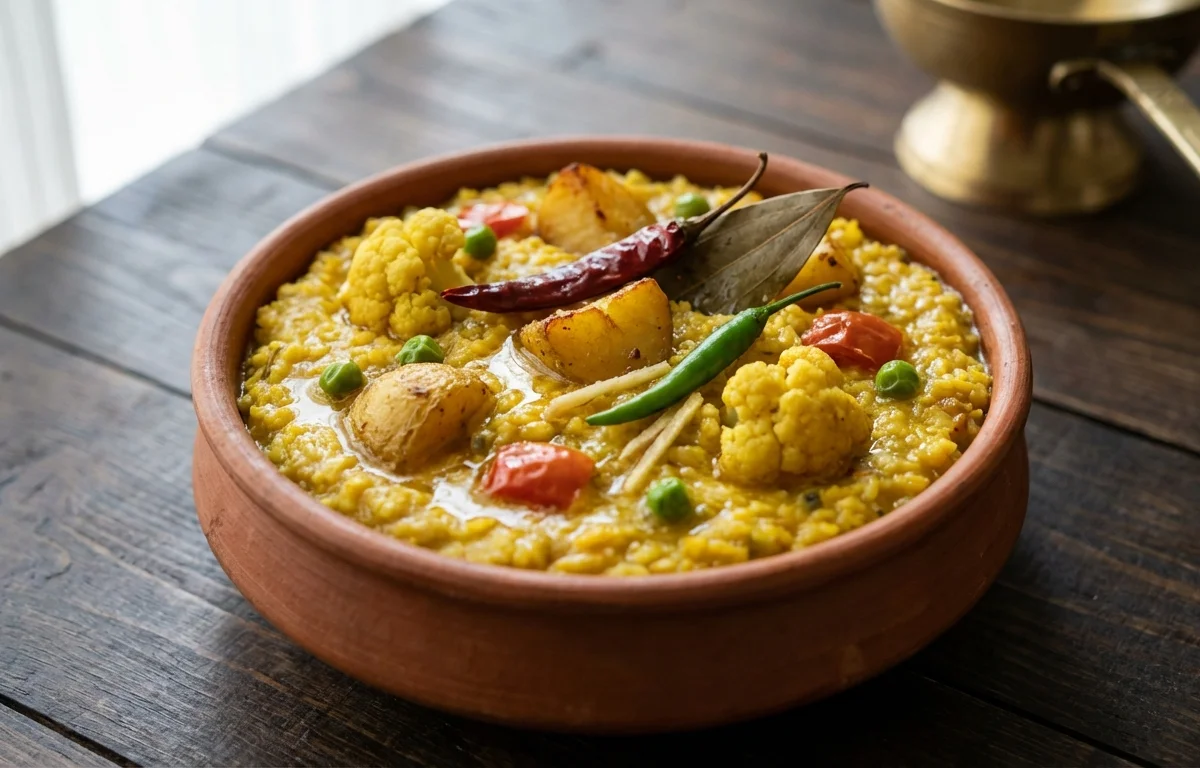
Bhoger Khichuri
A festive Bengali khichuri made with gobindobhog rice, roasted moong dal, vegetables, ghee, and whole spices. Soft, fragrant, and lightly sweet from peas and carrots, it is the comforting centerpiece of a traditional bhog meal.
For 4 servings
- prep · ~20 min
Prepare the rice and dal.
1.Wash the gobindobhog rice until the water runs mostly clear.2.Soak the rice in water for 20 minutes, then drain well.3.Dry roast the moong dal in a pan over medium heat until lightly golden and nutty.4.Rinse the roasted dal once and set aside.TIPRoast the dal gently and keep it moving so it turns aromatic without getting dark. - fry · ~7 min
Lightly fry the vegetables.
1.Heat 1 tbsp ghee in a heavy pot over medium heat.2.Add the potato and cauliflower.3.Fry until the edges turn light golden, about 5 to 6 minutes.4.Take them out to a plate. - temper · ~1 min
Make the whole spice base.
1.Add the remaining 1 tbsp ghee to the same pot.2.Add bay leaf, cumin seeds, cinnamon, green cardamom, and cloves.3.Cook for 20 to 30 seconds until fragrant. - saute · ~5 min
Cook the ginger and tomato.
1.Add the grated ginger and slit green chili.2.Cook for 30 seconds.3.Add the chopped tomato and sauté until soft, about 3 to 4 minutes.4.Stir in turmeric powder and cumin powder. - mix · ~2 min
Add the rice and dal.
Add the drained rice and roasted moong dal to the pot. Mix gently for 1 to 2 minutes so the grains are coated well with the spices and ghee.
- boil · ~8 min
Add water and bring to a boil.
1.Pour in the hot water.2.Add salt and sugar, then mix well.3.Bring everything to a steady boil. - simmer · ~20 min
Cook the khichuri until soft.
1.Add the fried potato and cauliflower along with the green peas and carrot.2.Lower the heat and cover the pot.3.Cook until the rice and dal are soft and the vegetables are tender, about 18 to 20 minutes.4.Stir once or twice during cooking and add a splash of hot water if it looks too thick.TIPBhoger khichuri should be soft and moist, not dry like pulao. - garnish · ~5 min
Finish with garam masala and rest.
Sprinkle in the garam masala and mix gently. Cover and let the khichuri rest for 5 minutes so the flavors settle.
- serve
Serve the bhoger khichuri hot.
What to keep in mind.
7 tips from the recipe — small details that make a real difference to the final dish.
- 1Roast the moong dal only to a light golden color; darker roasting can make the khichuri taste bitter.
- 2Use hot water when adding liquid so the rice and dal keep cooking evenly without turning stodgy.
- 3Fry the potato and cauliflower just until the edges color; they will finish softening during the covered simmer.
- 4Keep the final texture looser than you think you need, because gobindobhog rice thickens more as it rests.
- 5Stir gently once or twice during simmering so the short-grain rice does not break and turn pasty.
- 6Resting for 5 minutes after the garam masala helps the ghee and whole-spice aroma settle into the khichuri.
- 7If reheating leftovers, add a splash of hot water and warm covered to bring back the soft bhog-style consistency.
Adapt it for your goals.
No-onion-no-garlic festive
Keep it exactly in the bhog style, but add a few more peas and a touch more ginger for a brighter, cleaner festive flavor.
pressure cookerPressure-cooker
Use a pressure cooker for a softer, quicker khichuri; it is helpful for busy cooking days while keeping the same ingredient profile.
milderMilder
Reduce or skip the green chilies if serving children or anyone who prefers the sweet, gentle vegetable notes to stand out.
veganVegan
Replace ghee with a neutral oil or coconut oil; the dish loses some classic bhog richness but stays comforting and fully plant-based.
Why this is on our healthy list.
Balanced Rice and Dal Meal
The combination of gobindobhog rice and moong dal makes this a filling one-pot dish with carbohydrates for energy and plant protein from the lentils.
Vegetable-Rich Comfort Food
Potato, cauliflower, peas, carrot, tomato, and ginger add fiber, varied micronutrients, and freshness to an otherwise soft, soothing dish.
Easy-on-the-Stomach Dal
Roasted moong dal is often considered lighter and more digestible than many other dals, which suits the soft texture of khichuri well.
Frequently asked questions
Yes, use another aromatic short-grain rice if possible. The texture may be slightly less creamy and the fragrance will not be exactly the same.


