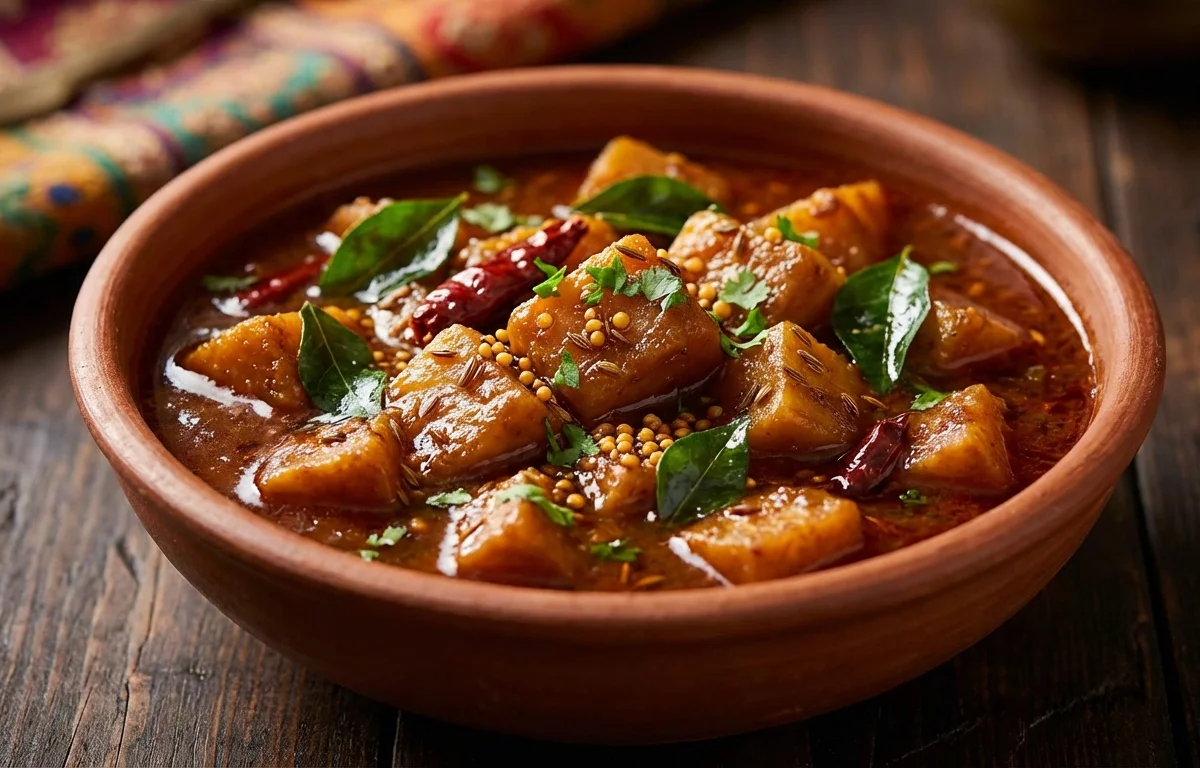
Chamadumpa Pulusu
A comforting Andhra-style tamarind curry made with tender colocasia simmered in a lightly spiced, tangy gravy. It has a homely balance of sour, savory, and gentle heat that pairs especially well with hot rice.
For 4 servings
- prep · ~15 min
Soak the tamarind and prepare the colocasia.
1.Soak tamarind in 1 cup warm water for 15 minutes.2.Wash the colocasia well to remove any dirt.3.Keep the rice flour mixed with 2 tbsp water ready for later.TIPHandling colocasia after boiling is easier and less itchy than peeling it raw. - boil · ~15 min
Boil the colocasia until just tender.
Add colocasia and enough water to cover to a pot. Boil until just cooked through but not falling apart, about 12 to 15 minutes. Drain, cool slightly, peel, and cut into thick rounds or halves.
TIPDo not overboil the colocasia or it will break down in the pulusu. - mix · ~3 min
Extract the tamarind pulp.
Mash the soaked tamarind well with your fingers and strain to get a smooth pulp. Add the remaining water to the pulp and keep it aside.
- temper · ~2 min
Make the tempering.
1.Heat oil in a wide pan over medium heat.2.Add mustard seeds and let them splutter.3.Add cumin seeds, fenugreek seeds, dried red chili, and curry leaves.4.Stir for a few seconds until fragrant.TIPKeep the heat medium so the fenugreek seeds do not burn and turn bitter. - saute · ~5 min
Cook the onion, chili, and garlic.
Add sliced onion, green chili, and crushed garlic. Sauté until the onion turns soft and lightly golden, about 4 to 5 minutes.
- saute · ~2 min
Add the spices and colocasia.
Add turmeric powder, red chili powder, and coriander powder. Stir briefly, then add the boiled colocasia and toss gently so the pieces are coated without breaking.
- simmer · ~12 min
Simmer the pulusu.
Pour in the tamarind pulp, add salt and jaggery, and bring to a gentle simmer. Cook uncovered for 10 to 12 minutes so the gravy slightly thickens and the colocasia absorbs the tangy flavor.
- mix · ~3 min
Thicken the gravy lightly.
Stir the rice flour slurry once and pour it into the simmering pulusu. Mix gently and cook for 2 to 3 minutes until the gravy looks glossy and lightly thickened.
- garnish
Finish with cilantro.
- serve
Serve hot with rice.
What to keep in mind.
7 tips from the recipe — small details that make a real difference to the final dish.
- 1Boil the colocasia only until a knife slips in; overcooked pieces will crumble in the pulusu.
- 2Cool the boiled colocasia slightly before peeling to make it easier to handle and less itchy.
- 3Keep the fenugreek to a pinch and fry it briefly, or the gravy can turn noticeably bitter.
- 4After adding tamarind, simmer uncovered so the raw sourness cooks off and the gravy concentrates.
- 5Stir the rice flour slurry just before pouring; it settles quickly and can form lumps otherwise.
- 6Let the pulusu rest for 10 minutes before serving so the colocasia absorbs the tangy gravy better.
- 7This curry tastes even better the next day; reheat gently so the taro pieces stay intact.
Adapt it for your goals.
Low-oil
Use 1 tablespoon oil and a good nonstick pan for the tempering and sauté; the curry stays flavorful but lighter.
spicierSpicier
Increase green chilies or red chili powder for a sharper Andhra-style heat that stands up well to the tangy tamarind base.
no onionNo-onion
Skip the onion for a simpler pulusu where the tamarind, garlic, and tempering spices come through more clearly.
garlic freeGarlic-free
Omit the crushed garlic for a milder version that still gets plenty of aroma from curry leaves, cumin, and mustard seeds.
Why this is on our healthy list.
Fiber From Colocasia
Colocasia adds filling starch and fiber, making the curry satisfying when served with plain rice.
Antioxidant-Rich Spices
Turmeric, chilies, coriander, curry leaves, garlic, and cumin contribute plant compounds along with aroma and flavor.
Balanced Sour-Savory Profile
Tamarind provides tartness that brightens the dish, which can help keep the curry lively without relying on heavy fats.
Frequently asked questions
Colocasia can cause itchiness if undercooked or handled raw for too long. Boiling it well, peeling after cooking, and simmering it in tamarind helps reduce that issue.



.webp)