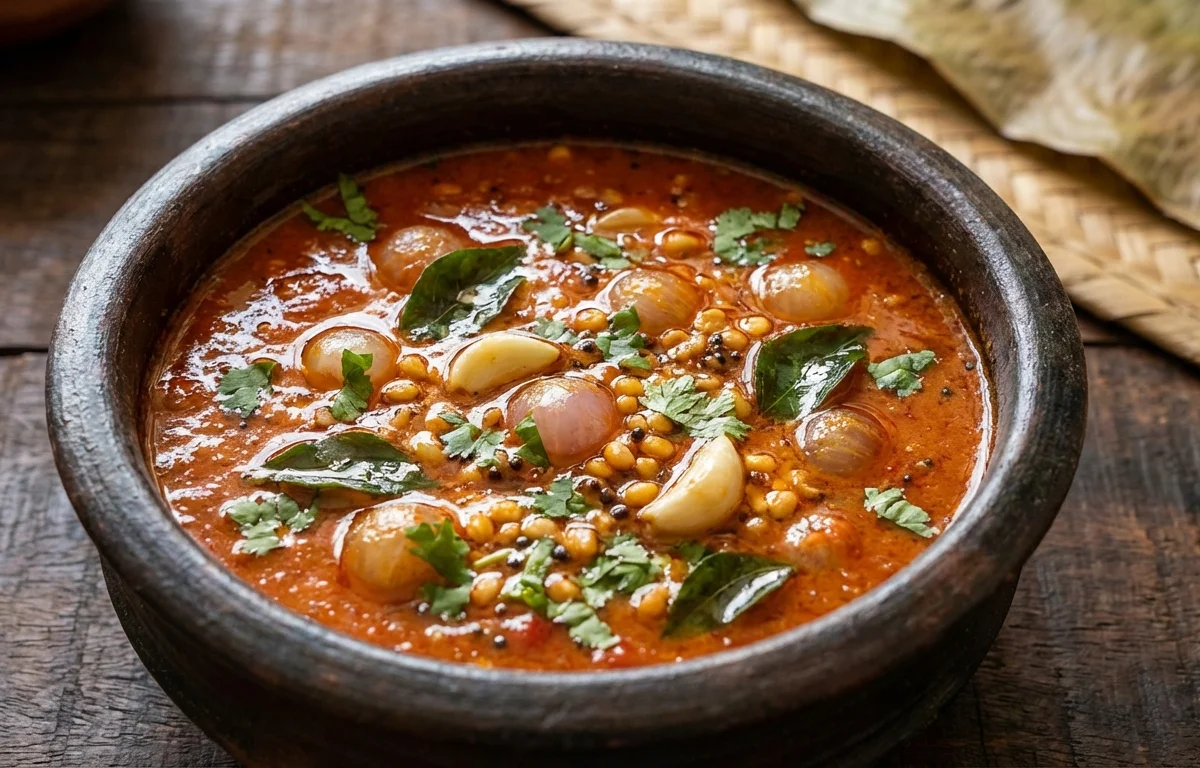
Chettinad Thakkali Kuzhambu
A fiery, tangy tomato-based curry from the Chettinad region of Tamil Nadu. Ripe tomatoes are simmered in a freshly ground spice paste with garlic, shallots, and a crackling tempering of mustard, fenugreek, and curry leaves. The gravy is bold, slightly thick, and intensely flavorful — best mopped up with steamed rice and a drizzle of sesame oil.
For 4 servings
- prep · ~10 min
Soak tamarind and extract pulp.
Soak the tamarind in 1/2 cup warm water for 10 minutes. Squeeze well to extract the pulp, discard the fibres, and set the tamarind water aside.
- saute · ~6 min
Sauté shallots and garlic.
1.Heat 1 tbsp oil in a heavy-bottomed pan over medium heat.2.Add quartered shallots and garlic cloves; sauté until shallots turn translucent and lightly golden at the edges (5-6 minutes).3.Remove from pan and let cool slightly.TIPDon't let the garlic burn — it turns bitter. Keep the heat steady at medium. - mix · ~2 min
Grind the spice paste.
Transfer the sautéed shallots and garlic to a blender. Add chili powder, coriander powder, and turmeric powder. Grind to a smooth paste, adding 2-3 tablespoons of water if needed.
- simmer · ~15 min
Cook tomatoes with spice paste.
1.In the same pan, add the quartered tomatoes and ground spice paste.2.Pour in 1 cup of water and add salt. Stir well.3.Bring to a boil, then reduce heat to low. Cover and simmer until tomatoes are completely soft and broken down (12-15 minutes).4.Mash the tomatoes gently with the back of your ladle.TIPSimmer with the lid on so the tomatoes steam and soften faster. Stir once or twice to prevent sticking. - simmer · ~7 min
Add tamarind and finish gravy.
1.Pour in the extracted tamarind water and stir to combine.2.Adjust consistency with additional water if the gravy is too thick — it should coat the back of a spoon but still flow.3.Bring back to a gentle simmer and cook uncovered for 5-7 minutes until the raw tamarind smell mellows and the gravy thickens slightly.TIPTaste and balance — if it's too sour, add a pinch of sugar. Chettinad cuisine leans into the tang, so trust the tamarind. - temper · ~1 min
Make the final tempering.
1.Heat the remaining 1 tbsp oil in a small tempering pan over medium heat.2.Add mustard seeds and let them splutter (30 seconds).3.Reduce heat to low; add fenugreek seeds, cumin seeds, dried red chilies, curry leaves, and asafoetida. Fry until fragrant (15-20 seconds).TIPFenugreek seeds turn bitter if they darken too much — pull the pan off the heat the moment they turn light golden. - mix
Pour tempering over the gravy.
Immediately pour the sizzling tempering over the simmering tomato gravy. Stir once to swirl it in — don't over-mix. Turn off the heat.
- rest · ~5 min
Rest before serving.
Cover and let the kuzhambu rest for 5 minutes. This lets the tempering infuse into the gravy and the flavors settle.
TIPChettinad gravies taste even better after sitting for an hour. Make it ahead if you can. - garnish
Garnish with cilantro and serve hot.
Transfer to a serving bowl, scatter chopped cilantro on top, and serve hot with steamed rice and a drizzle of raw sesame oil.
What to keep in mind.
7 tips from the recipe — small details that make a real difference to the final dish.
- 1Use ripe, deep-red tomatoes for maximum natural sweetness and tang.
- 2Don't skip the rest time after tempering — it lets the flavors meld beautifully.
- 3If the gravy tastes too sour, balance with a tiny pinch of jaggery or sugar.
- 4Simmer the tomatoes covered so they soften quickly and release their juices.
- 5Make the kuzhambu a few hours ahead — the flavor deepens significantly.
- 6Use Indian sesame oil (nallennai) for the most authentic taste.
- 7When grinding the spice paste, add water sparingly to keep it thick.
Adapt it for your goals.
Low-oil
Use only 1 tbsp oil for the initial sauté and skip the final tempering; instead, dry-roast mustard and fenugreek seeds and sprinkle them as garnish — this reduces oil while retaining aroma.
high proteinHigh-protein
Add 200 grams of paneer cubes (lightly fried) or boiled chickpeas along with the tomatoes — this turns the kuzhambu into a hearty, protein-rich main dish.
jainJain
Replace garlic and shallots with an equal quantity of asafoetida (a generous pinch) and finely chopped raw banana or yam — this keeps the dish Jain-friendly while mimicking the allium texture.
veganVegan
The recipe is naturally vegan — simply ensure the sesame oil is pure and no ghee is substituted. For extra richness, stir in a tablespoon of coconut milk before serving.
Why this is on our healthy list.
Rich in Lycopene
Fresh ripe tomatoes are loaded with lycopene, a powerful antioxidant that supports heart health and reduces inflammation.
Digestive Aid
Fenugreek seeds and asafoetida in the tempering are known in Ayurveda to aid digestion and reduce bloating.
Anti-Inflammatory Spices
Turmeric, coriander, and cumin provide curcumin and essential oils that combat oxidative stress and support joint health.
Low in Calories
This tomato-based curry is naturally low in calories, making it a wholesome choice for lighter meals without compromising flavor.
Frequently asked questions
Yes, use 2 cups of crushed canned tomatoes. Reduce the water slightly and skip the initial simmer time, as canned tomatoes are already soft.