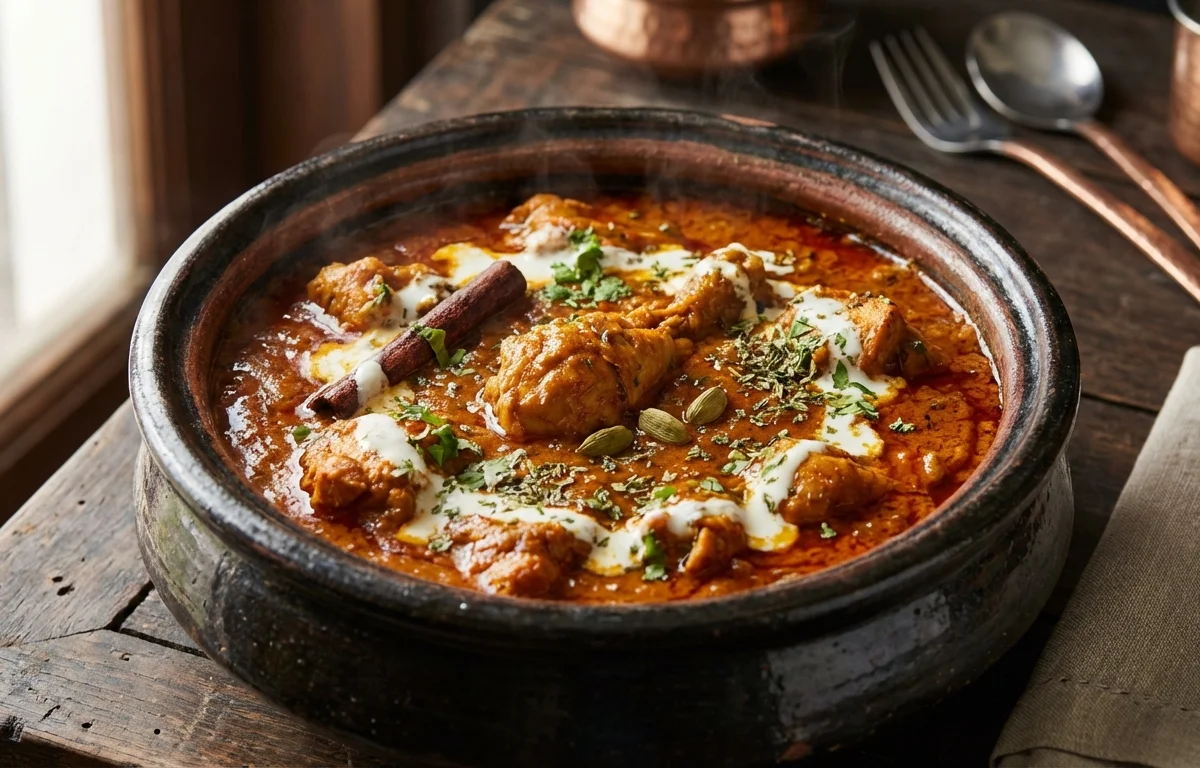
Chicken Handi
A rich North Indian chicken curry with a silky tomato-yogurt gravy, gentle warmth from whole spices, and tender pieces of chicken cooked until juicy. It is hearty, comforting, and made for scooping up with naan or spooning over rice.
For 4 servings
- prep · ~10 min
Prep the chicken and gravy ingredients.
1.Wash and drain the chicken pieces well.2.Slice the onions finely and chop the tomatoes.3.Whisk the yogurt until smooth so it mixes easily into the gravy.4.Slit the green chilies and keep the chopped coriander leaves ready. - saute · ~9 min
Cook the whole spices and onions.
1.Heat oil in a handi or heavy pan over medium heat.2.Add cumin seeds, bay leaf, green cardamom, cinnamon, and cloves.3.Let the spices sizzle for 30 seconds until fragrant.4.Add the sliced onions and cook until light golden, 6 to 8 minutes.TIPKeep the heat at medium so the whole spices bloom without burning. - saute · ~7 min
Build the masala base.
1.Add ginger-garlic paste and slit green chilies.2.Cook for 1 minute until the raw smell fades.3.Add chopped tomatoes and cook until soft and pulpy, 5 to 6 minutes.4.Stir in turmeric powder, red chili powder, coriander powder, cumin powder, and salt. - saute · ~3 min
Add the yogurt and cook it in.
Lower the heat and add the whisked yogurt a little at a time, stirring constantly so it does not split. Cook for 2 to 3 minutes until the masala looks smooth and glossy.
TIPLow heat and constant stirring help the yogurt stay creamy. - saute · ~7 min
Coat the chicken in the masala.
Add the chicken pieces and mix well so every piece is covered with the masala. Cook on medium heat for 6 to 8 minutes, stirring now and then, until the chicken changes color and starts releasing juices.
- simmer · ~18 min
Simmer the chicken until tender.
Pour in the hot water, cover, and cook on low heat for 15 to 18 minutes until the chicken is tender and the gravy thickens. Stir once or twice so the masala does not catch at the bottom.
TIPThe chicken is done when the meat is tender and reaches 165°F or 74°C at the thickest part. - garnish · ~2 min
Finish with cream, kasuri methi, and coriander.
Stir in the fresh cream, garam masala, crushed kasuri methi, and chopped coriander leaves. Cook uncovered for 2 minutes so the flavors come together and the gravy stays rich and thick.
- serve
Serve the Chicken Handi hot.
What to keep in mind.
7 tips from the recipe — small details that make a real difference to the final dish.
- 1Drain the chicken well before cooking so the masala fries instead of steaming.
- 2Cook the onions only to light golden; very dark onions can make this handi taste bitter.
- 3Add the whisked yogurt in small additions on low heat to keep the gravy smooth and prevent splitting.
- 4Use hot water for simmering so the pan temperature stays steady and the chicken cooks evenly.
- 5If the gravy looks too sharp from tomatoes, let it simmer uncovered for a few extra minutes before adding cream.
- 6Crush the kasuri methi between your palms right before adding for a stronger, fresher aroma.
- 7Rest the curry 10 minutes after cooking; the gravy thickens slightly and the whole-spice flavor settles.
Adapt it for your goals.
Boneless
Use boneless chicken thigh pieces for easier eating and slightly quicker cooking; thighs still stay juicy in the rich gravy.
low creamLow-cream
Skip the fresh cream and finish with a spoonful of extra whisked yogurt off the heat for a lighter but still creamy curry.
spicierSpicier
Add an extra green chili or a little more red chili powder if you want a hotter handi with the same tomato-yogurt base.
dhaba styleDhaba-style
Use a little ghee along with the oil and cook the masala slightly longer for a deeper, restaurant-style richness.
Why this is on our healthy list.
Protein-Rich Main Dish
Chicken makes this curry satisfying and protein-forward, helping turn it into a filling main course.
Tomato and Onion Base
The gravy gets body and flavor from tomatoes and onions rather than relying only on cream or butter.
Digestive Spice Support
Cumin, ginger, garlic, coriander, and fenugreek bring aroma while traditionally supporting hearty savory dishes.
Frequently asked questions
Yes. Boneless thighs work best because they stay tender; reduce the simmering time slightly so the meat does not dry out.



.webp)