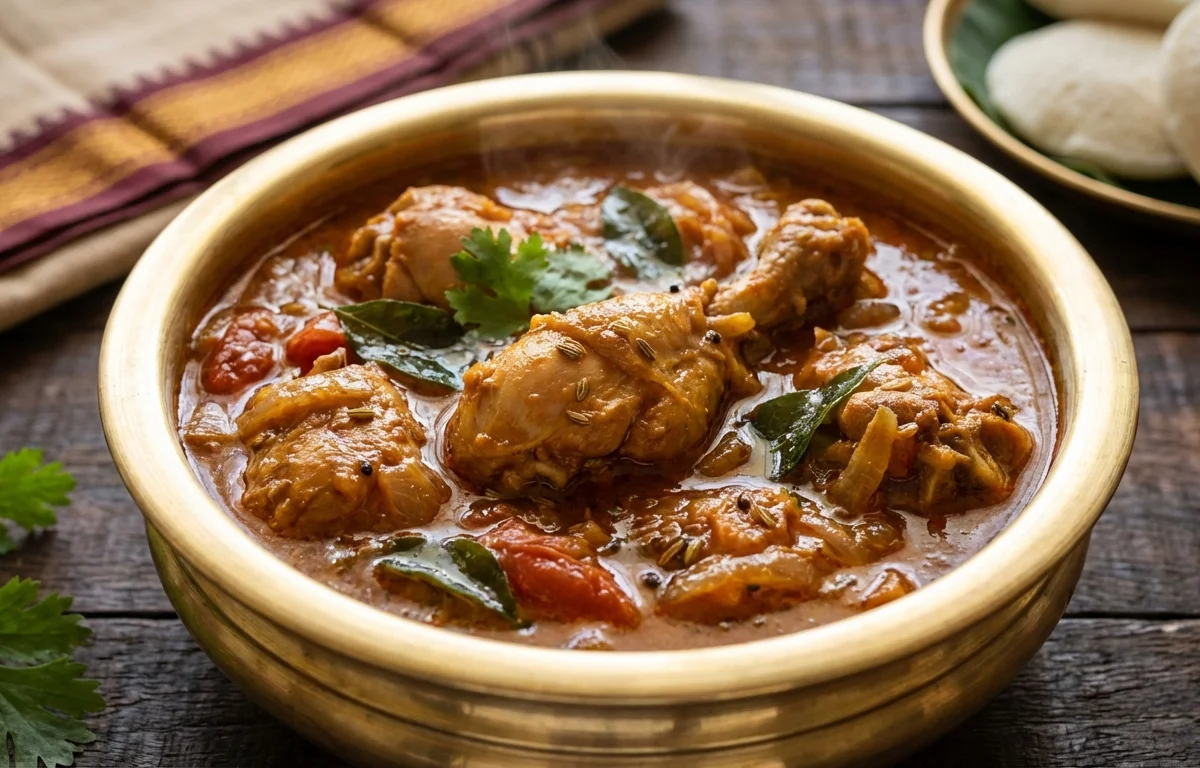
Chicken Kuzhambu
A homestyle South Indian chicken curry with onions, tomatoes, coconut, and warm spices simmered into a rich, comforting gravy. It tastes especially good with steamed rice, idiyappam, dosa, or flaky parotta.
For 4 servings
- roast · ~5 min
Roast the spices and coconut.
1.Heat a small pan over low heat.2.Add coriander seeds, cumin seeds, black peppercorns, fennel seeds, and dried red chili.3.Roast until fragrant, 1 to 2 minutes.4.Add grated coconut and roast until lightly golden, 2 to 3 minutes.TIPKeep the heat low so the coconut browns evenly and the spices do not turn bitter. - mix · ~3 min
Grind the masala.
Cool the roasted mixture slightly, then grind it with ginger, garlic, and a little water to a smooth paste.
- saute · ~8 min
Cook the whole spices and onions.
1.Heat oil in a kadai or heavy pan over medium heat.2.Add cinnamon, cloves, and curry leaves.3.Add sliced onions and green chili.4.Cook until the onions turn soft and light golden, 6 to 8 minutes. - saute · ~6 min
Cook the tomatoes and spice powders.
1.Add chopped tomatoes and cook until they break down, 4 to 5 minutes.2.Add turmeric powder, red chili powder, and salt.3.Mix well and cook for 1 minute. - saute · ~5 min
Coat the chicken with the masala.
Add the chicken pieces and stir for 4 to 5 minutes until they are well coated and the outside turns opaque.
- simmer · ~20 min
Simmer the kuzhambu.
1.Add the ground masala paste and mix well.2.Stir in tamarind paste and water.3.Bring the curry to a gentle boil.4.Cover and simmer until the chicken is tender and the gravy thickens, 18 to 20 minutes.TIPBone-in chicken gives the gravy better flavor and body than boneless pieces. - garnish
Garnish with coriander leaves.
- serve
Serve hot with rice, dosa, idiyappam, or parotta.
What to keep in mind.
8 tips from the recipe — small details that make a real difference to the final dish.
- 1Roast the coconut on low heat until just light golden; dark brown coconut can make the kuzhambu bitter.
- 2Let the roasted spices cool slightly before grinding so the masala turns smoother and less oily.
- 3Cook the onions to light golden, not just soft, for a deeper gravy base and better sweetness.
- 4After adding chicken, saute until the raw pink is gone on the outside; this helps the pieces hold flavor in the curry.
- 5Simmer gently rather than boiling hard, or the chicken can toughen before the gravy thickens properly.
- 6If the tamarind paste is very strong, start with a little less and adjust at the end so it does not overpower the coconut masala.
- 7This kuzhambu tastes even better after 2 to 4 hours of resting, when the roasted spice and tamarind flavors meld.
- 8Reheat on low heat with a splash of water if needed, as the coconut-based gravy thickens after cooling.
Adapt it for your goals.
Low-oil
Reduce the oil slightly and use a heavy pan so the onions and tomatoes soften slowly without sticking; good if you want a lighter everyday curry.
spicierSpicier
Add 1 to 2 extra dried red chilies in the roast or a little more chili powder for a hotter kuzhambu that still keeps the coconut-spice depth.
bonelessBoneless
Use boneless chicken for quicker cooking and easier serving, though the gravy will be a bit lighter than with bone-in pieces.
thicker gravyThicker-gravy
Use slightly less water or simmer uncovered for the last few minutes if you want a richer kuzhambu for parotta or dosa.
Why this is on our healthy list.
Protein-Rich Main Dish
Chicken makes this curry filling and satisfying, helping turn the meal into a substantial main course.
Aromatic Spice Support
Ginger, garlic, cumin, fennel, pepper, and coriander seeds add flavor complexity while contributing traditional digestive-friendly spices.
Balanced With Tomatoes and Tamarind
Tomatoes and tamarind bring acidity that brightens the dish and balances the richness of coconut and chicken.
Frequently asked questions
Yes, but reduce the simmering time because boneless pieces cook faster. Bone-in chicken gives a fuller, more flavorful gravy.