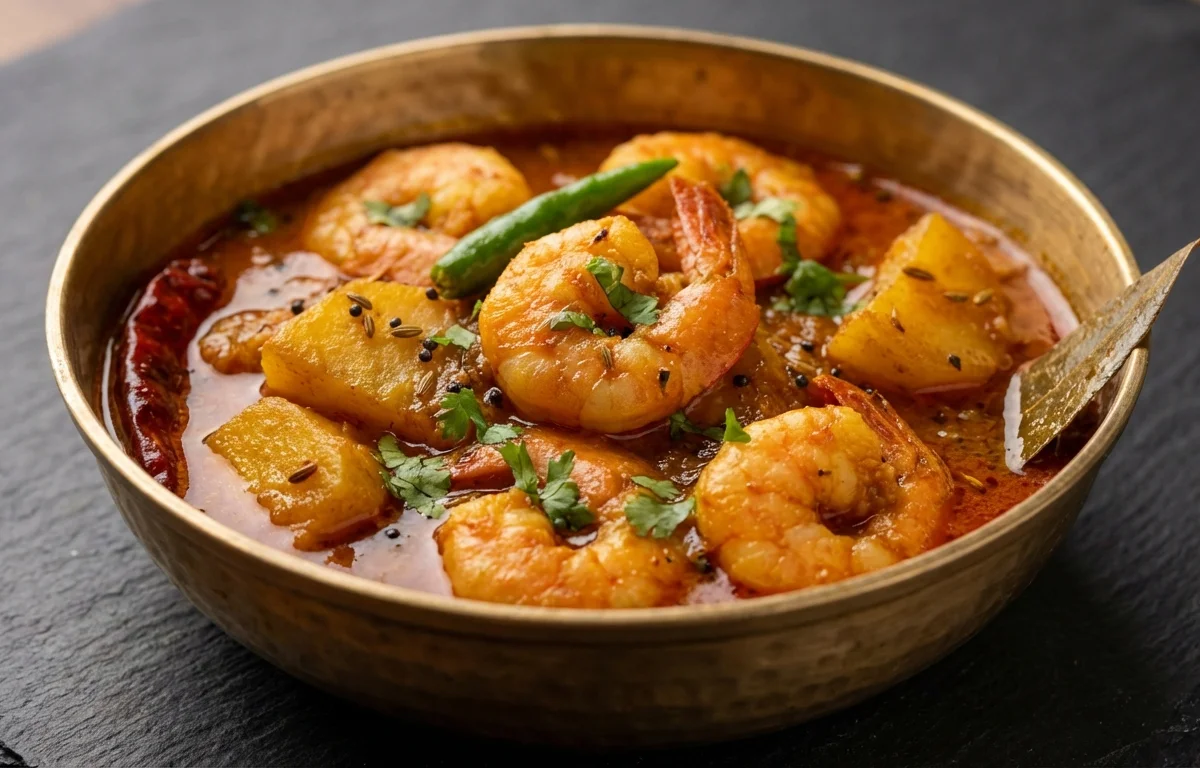
Chingudi Jhola
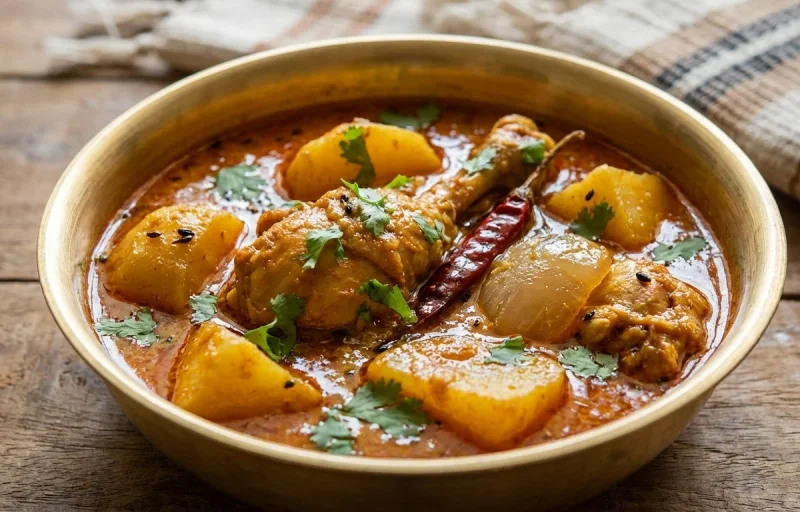
A light, home-style Odia prawn curry with potatoes, onion, and warm whole spices in a thin, comforting gravy. It is simple, fragrant, and especially good with plain steamed rice on everyday lunch tables.
For 4 servings
- prep · ~10 min
Clean and season the prawns.
1.Wash the prawns well and drain completely.2.Rub them with half the turmeric powder and a small pinch of the salt.3.Set aside for 10 minutes while you prepare the vegetables.TIPDrain the prawns well so they sear instead of steaming in the pan. - fry · ~7 min
Lightly fry the prawns and potatoes.
1.Heat the mustard oil in a kadai until it just begins to smoke lightly, then lower the heat.2.Add the prawns and cook for 1 minute per side until lightly colored. Remove to a plate.3.Add the potato cubes to the same pan and fry for 4 to 5 minutes until the edges turn light golden.TIPDo not overcook the prawns here; they will finish cooking in the gravy. - saute · ~7 min
Cook the whole spices and onion base.
1.Add bay leaf, cumin seeds, green cardamom, and cinnamon to the pan.2.Let them sizzle for 20 to 30 seconds until fragrant.3.Add the chopped onion and cook over medium heat until soft and light golden, 5 to 6 minutes. - saute · ~6 min
Add ginger-garlic paste, tomato, and spices.
1.Add the ginger-garlic paste and cook for 1 minute until the raw smell fades.2.Add tomato, red chili powder, coriander powder, the remaining turmeric powder, and the remaining salt.3.Cook, stirring often, until the tomato softens and the masala looks thick and glossy, 4 to 5 minutes. - simmer · ~14 min
Simmer the curry.
1.Return the fried potatoes to the pan and mix well with the masala.2.Pour in the water and bring to a gentle boil.3.Cover and cook for 8 to 10 minutes until the potatoes are almost tender.4.Add the fried prawns and simmer uncovered for 3 to 4 minutes more.TIPKeep the gravy light and slightly runny; jhola is meant to be a thin curry. - garnish · ~1 min
Finish with garam masala and cilantro.
Sprinkle in the garam masala and chopped cilantro. Give the curry a gentle stir and turn off the heat.
- serve
Serve hot with plain rice.
What to keep in mind.
7 tips from the recipe — small details that make a real difference to the final dish.
- 1Heat the mustard oil until it just smokes, then reduce the flame to mellow its sharp raw taste before frying the prawns.
- 2Pat the prawns dry before rubbing with turmeric and salt so they fry quickly and do not water down the pan.
- 3Only lightly fry the prawns at first; they should be just colored, not fully cooked, or they will turn rubbery in the final simmer.
- 4Cut the potatoes into even medium cubes so they finish cooking in the thin gravy at the same time.
- 5Cook the onion-tomato masala until glossy and the oil starts separating slightly; that keeps the jhola flavorful even with extra water.
- 6Keep the gravy thin and pourable rather than reduced; this curry is meant to soak into plain steamed rice.
- 7Rest the curry for 5 minutes after adding garam masala and cilantro so the whole-spice aroma settles into the broth.
Adapt it for your goals.
Low-oil
Skip the separate potato frying and simmer the potatoes directly in the gravy; use just enough mustard oil to temper the spices and sauté the masala.
spicierSpicier
Add slit green chilies with the whole spices for a sharper heat that suits the light, brothy style of this Odia curry.
fish jholaFish-jhola
Replace prawns with firm fish pieces and follow the same method for a similar light curry with a softer, sweeter seafood flavor.
no onionNo-onion
Omit the onion and cook the tomato-ginger-garlic base a little longer for a lighter, simpler jhola closer to some home-style fasting-friendly versions.
Why this is on our healthy list.
Protein from Prawns
Prawns make this curry filling and provide lean seafood protein in a light, broth-based preparation.
Light, Brothy Preparation
Because jhola is a thin gravy rather than a heavy cream-based curry, the dish feels comforting without being overly rich.
Vegetable Support from Potato and Tomato
Potato adds substance, while tomato and onion contribute plant compounds and natural sweetness to the curry base.
Digestive Spice Profile
Ginger, garlic, cumin, coriander, and turmeric bring aroma along with traditional warming spices often used in everyday home cooking.
Frequently asked questions
Yes. Thaw them fully, rinse if needed, and drain very well before marinating so they fry instead of releasing excess water.