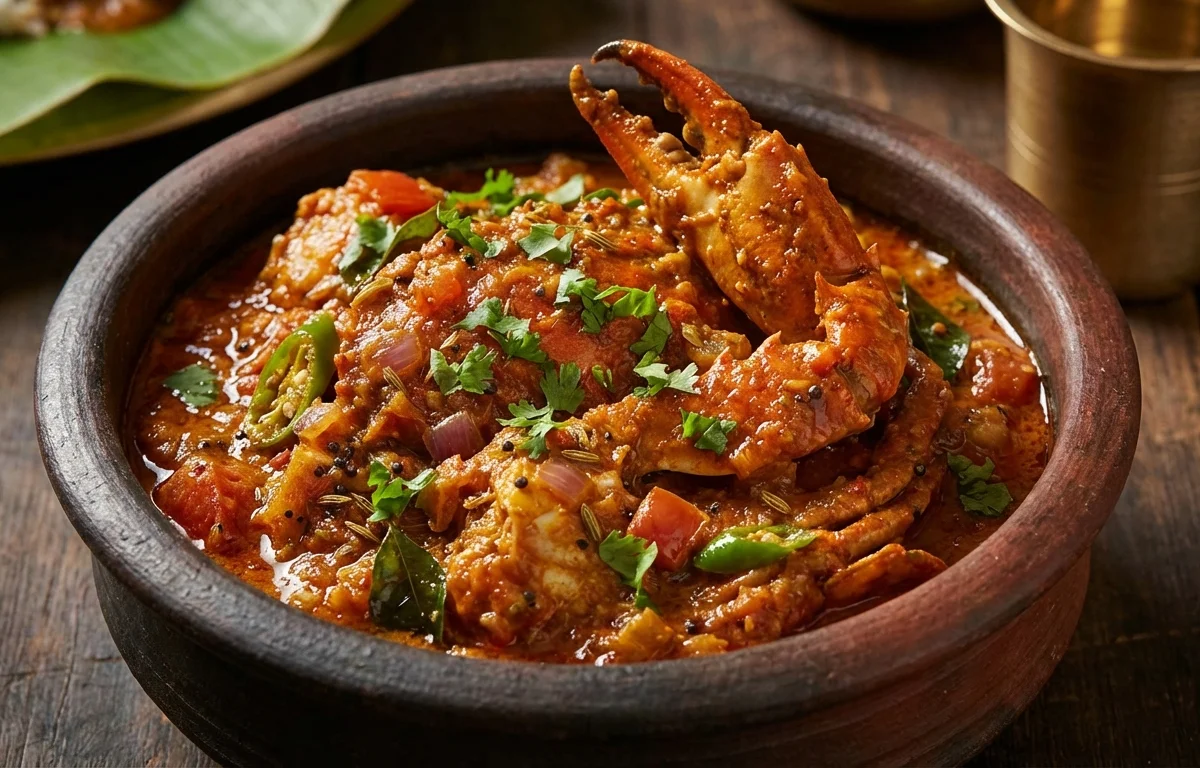
Crab Masala
Sweet, delicate crab meat coated in a bold onion-tomato masala with ginger, garlic, and warm spices. This coastal Indian favorite is rich, messy, and deeply satisfying with rice, neer dosa, or soft chapati.
For 4 servings
- prep · ~10 min
Clean and season the crab.
1.Rinse the crab pieces well and drain thoroughly.2.Crack the claws and thicker shell pieces slightly so the masala can get in.3.Rub the crab with turmeric powder and 1 pinch of the salt.4.Set aside for 10 minutes while you prepare the masala base.TIPCracking the shell lightly helps the crab cook evenly and absorb more flavor. - mix · ~2 min
Make a quick coconut masala.
Grind the grated coconut with a little of the water into a coarse paste. Keep it slightly textured for a rustic finish.
- saute · ~8 min
Cook the onions and whole spices.
1.Heat oil in a wide pan over medium heat.2.Add cumin seeds and curry leaves and let them sizzle for 20 to 30 seconds.3.Add the chopped onions and sauté until light golden, about 6 to 7 minutes.4.Add green chili, ginger, and garlic and cook until the raw smell fades, about 1 minute.TIPUse a wide pan so the crab sits in a single layer and cooks gently without breaking up. - saute · ~7 min
Build the masala base.
1.Add the tomatoes and the remaining salt.2.Cook until the tomatoes soften and turn pulpy, about 5 to 6 minutes.3.Stir in coriander powder, red chili powder, black pepper, and garam masala.4.Cook for 1 minute, stirring often so the spices do not scorch. - simmer · ~12 min
Add the crab and simmer gently.
1.Add the crab pieces to the pan and coat them well in the masala.2.Pour in the coconut paste and remaining water.3.Mix gently, cover, and simmer on low heat until the crab turns bright and cooks through, about 10 to 12 minutes.4.Open the lid once or twice and stir carefully so the masala does not catch at the bottom.TIPDo not overcook the crab or the meat will turn stringy and lose its sweetness. - garnish · ~2 min
Finish with lemon juice and coriander leaves.
Turn off the heat and drizzle in the lemon juice. Sprinkle chopped coriander leaves over the top and let the masala sit for 2 minutes before serving.
- serve
Serve the crab masala hot.
What to keep in mind.
7 tips from the recipe — small details that make a real difference to the final dish.
- 1Crack the claws and thicker shell pieces well so the masala seeps inside instead of just coating the surface.
- 2Cook the onions only to light golden; very dark onions can overpower the crab’s natural sweetness.
- 3Keep the coconut paste slightly coarse for a coastal-style texture that clings better to the shell pieces.
- 4Use a wide pan and arrange the crab in a mostly single layer so it cooks evenly without breaking apart.
- 5Simmer on low once the crab goes in; vigorous boiling can toughen the meat and split the masala.
- 6Add the lemon juice only after switching off the heat so its brightness stays fresh.
- 7This dish tastes even better after resting 5 to 10 minutes, which helps the crab absorb the onion-tomato masala.
Adapt it for your goals.
Spicier
Add extra green chili or a little more red chili powder for a hotter coastal-style crab masala.
dry styleDry-style
Reduce the water and cook uncovered for the last few minutes if you want a thicker masala to serve with chapati.
more coconutMore-coconut
Increase the fresh coconut slightly for a richer, softer masala with a more distinct coastal flavor.
pepper forwardPepper-forward
Use more freshly crushed black pepper and slightly less red chili powder for a warmer, sharper finish.
Why this is on our healthy list.
Protein-Rich Seafood
Crab provides quality protein, making this masala filling and satisfying without relying on heavy dairy.
Aromatics With Antioxidants
Onion, tomato, ginger, garlic, and spices bring plant compounds that add both flavor depth and nutritional value.
Moderate Coconut Use
A small amount of fresh coconut gives body and richness, so the dish feels luscious without being overly creamy.
Frequently asked questions
The shell turns bright and the meat cooks through in about 10 to 12 minutes of gentle simmering. Avoid cooking much longer or it can become stringy.