
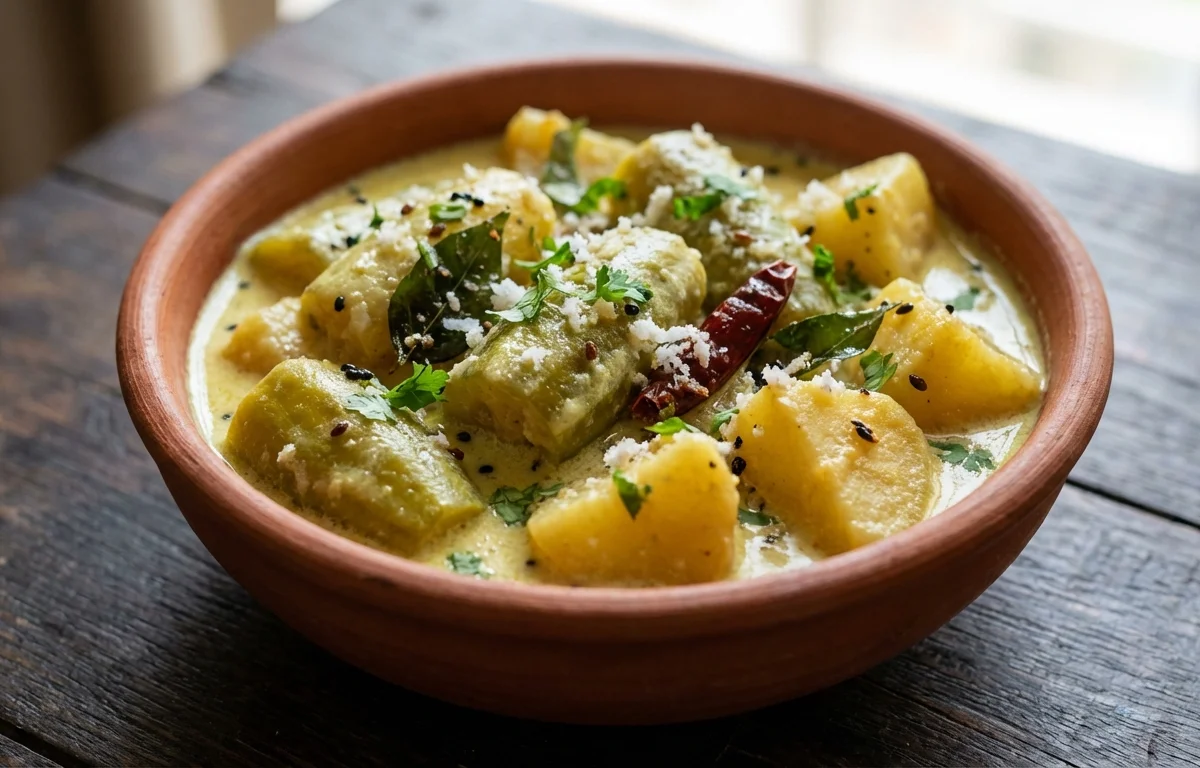
Dahi Nadia Tarkari
A delicate and creamy curry from Odisha where tender coconut pieces are simmered in a lightly spiced yogurt-based gravy. The natural sweetness of fresh coconut balances beautifully with the tang of yogurt, finished with a simple tempering of mustard seeds and curry leaves. A light, comforting dish best enjoyed with steamed rice.
For 4 servings
- prep
Prepare the yogurt mixture and coconut.
1.Whisk the yogurt in a bowl until smooth and lump-free.2.Peel and cut the tender coconut into small cubes, about 1-inch pieces.TIPMake sure yogurt is at room temperature; cold yogurt may curdle when heated. - saute · ~4 min
Cook the coconut with whole spices.
1.Heat 2 tsp oil in a pan over medium heat.2.Add bay leaf, crushed cardamom, cloves, and cinnamon stick. Sauté until fragrant (30 seconds).3.Add cumin seeds and let them crackle briefly.4.Add ginger paste and slit green chilies. Cook for 1 minute until the raw aroma disappears.5.Stir in the coconut cubes and sauté gently for 2 minutes.TIPDo not brown the coconut; sauté just to warm it and coat with spices. - simmer · ~9 min
Simmer the coconut in spiced yogurt.
1.Lower the heat to the lowest setting.2.Add turmeric, coriander powder, and cumin powder. Stir for 30 seconds.3.Add the whisked yogurt in a steady stream, stirring constantly to prevent curdling.4.Pour in 0.5 cup water, add salt and sugar, and stir.5.Simmer on low heat for 7 to 8 minutes until the gravy thickens slightly and the coconut absorbs the flavor.TIPKeep the flame on the lowest setting while the yogurt is in the pan. High heat will split the yogurt instantly. - temper · ~2 min
Make the final tempering.
1.In a small tadka pan, heat 1 tsp ghee over medium heat.2.Add mustard seeds and wait for them to splutter completely.3.Toss in dried red chili and curry leaves, then immediately pour the sizzling tempering over the simmering curry.TIPPour the tempering as soon as the curry leaves turn crisp and aromatic to lock in the flavor. - garnish · ~2 min
Finish and serve.
1.Sprinkle garam masala on top and switch off the flame.2.Cover and let it rest for 2 minutes for the flavors to meld.3.Remove the bay leaf and cinnamon stick before serving.4.Serve warm with steamed white rice.
What to keep in mind.
7 tips from the recipe — small details that make a real difference to the final dish.
- 1Use tender, young coconut for the best natural sweetness and soft texture.
- 2Whisk the yogurt thoroughly until completely smooth to prevent curdling.
- 3Keep the heat on the lowest setting when adding yogurt; stir constantly.
- 4Do not sauté the coconut until browned; just warm it gently to coat with spices.
- 5Add the tempering while the ghee is sizzling for maximum aroma.
- 6Let the curry rest for 2 minutes after tempering to let flavors meld.
- 7Remove bay leaf and cinnamon stick before serving to avoid bitterness.
Adapt it for your goals.
Vegan
Replace yogurt with thick coconut milk or cashew cream (thinned with water) to keep the dish creamy and dairy-free, perfect for vegan diets.
low oilLow-oil
Skip the tempering ghee and use only 1 tsp oil; the coconut's natural fats still provide richness for a lighter version.
high proteinHigh-protein
Add 1/2 cup boiled chickpeas or paneer cubes along with the coconut for extra protein, while keeping the creamy yogurt base.
Why this is on our healthy list.
Rich in Probiotics
The yogurt base provides live cultures that support gut health and digestion.
Healthy Fats from Coconut
Fresh tender coconut offers medium-chain triglycerides, which are easily metabolized for quick energy.
Anti-Inflammatory Spices
Turmeric, ginger, and cinnamon are known for their anti-inflammatory and antioxidant properties.
Low in Calories
This dish uses minimal oil and ghee, making it a light yet satisfying curry option.
Frequently asked questions
Fresh tender coconut is preferred for its sweetness and softness, but you can use thawed frozen coconut in a pinch; dried coconut will be chewier and less creamy.


