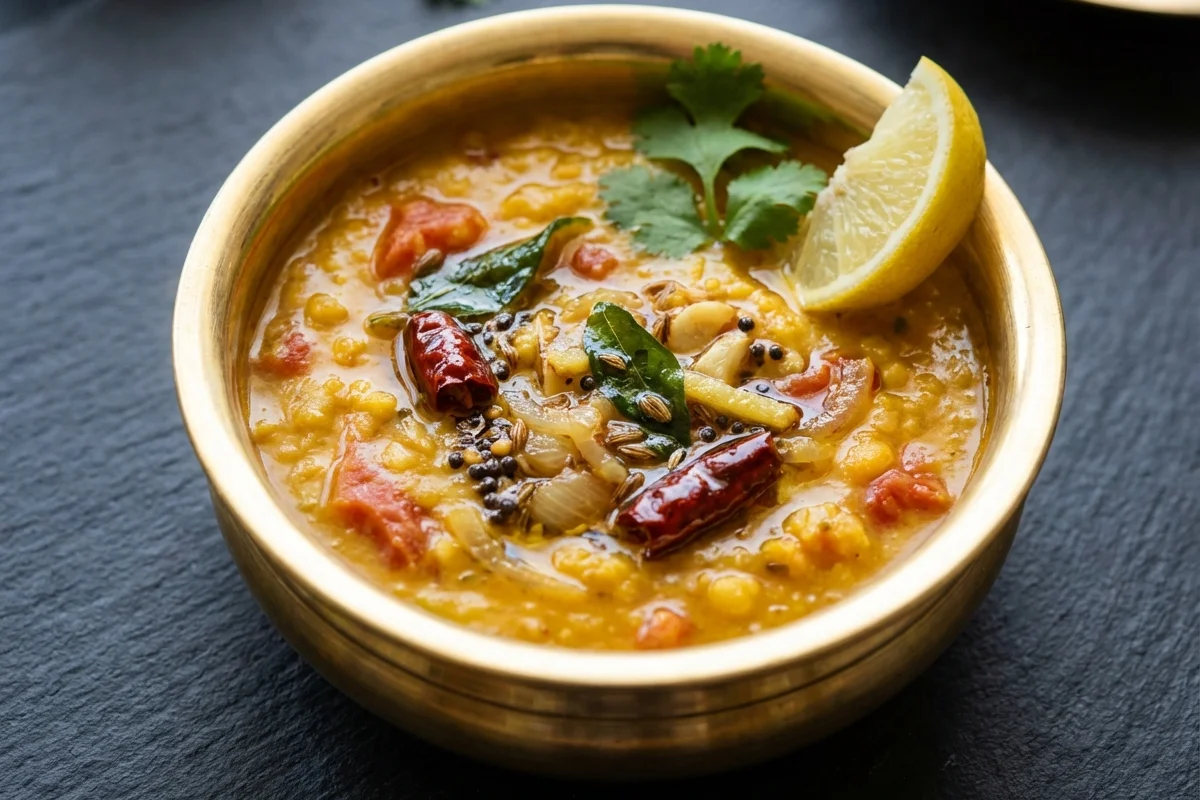
Dal Curry
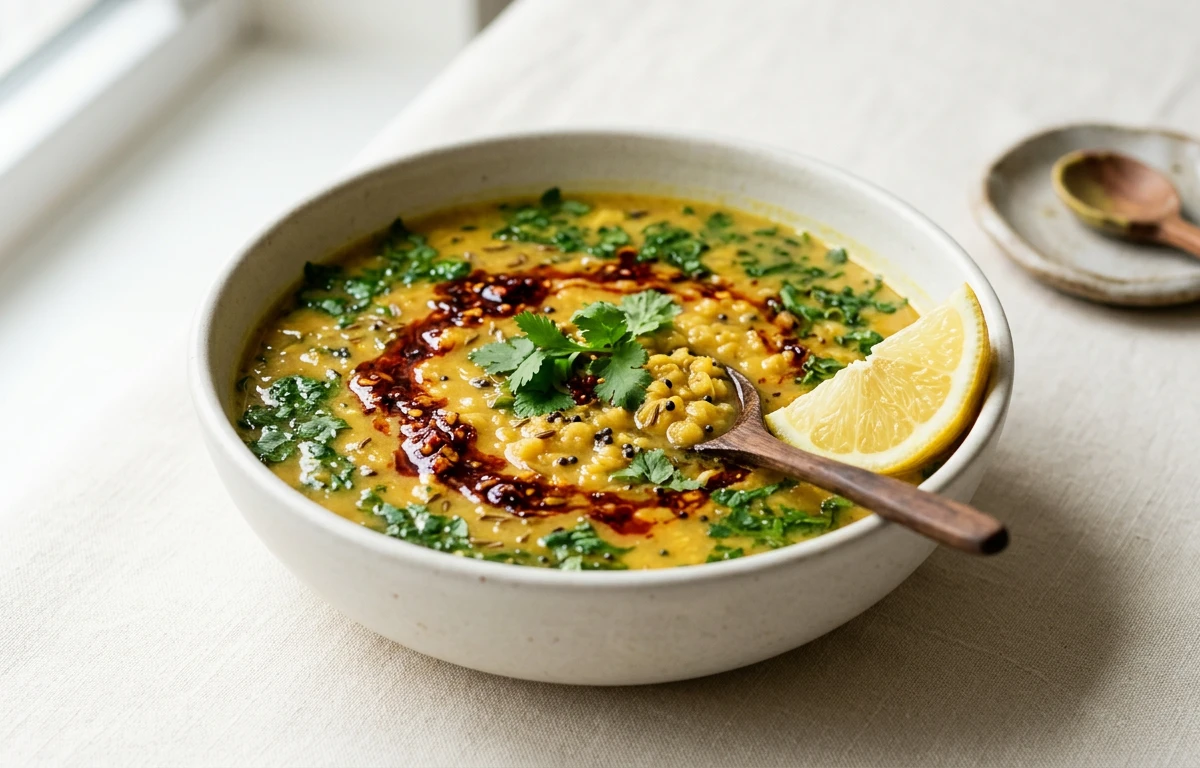
A simple Indian lentil curry with soft cooked dal, onion, tomato, and a light tempering of cumin and garlic. It is comforting, everyday food that pairs easily with rice or roti without feeling too heavy.
For 4 servings
- prep · ~30 min
Rinse and soak the dal.
Wash the toor dal well until the water runs clearer. Soak it in fresh water for 30 minutes, then drain.
TIPA short soak helps the dal cook faster and gives a smoother texture. - pressure cook · ~20 min
Pressure cook the dal.
1.Add the soaked dal to a pressure cooker with 3 cups water, turmeric powder, and salt.2.Close the cooker and cook on medium heat for 4 whistles.3.Let the pressure drop naturally before opening.4.Mash the cooked dal lightly with the back of a ladle. - temper · ~3 min
Make the tempering.
1.Heat oil in a pan over medium heat.2.Add cumin seeds and let them crackle for 20 to 30 seconds.3.Add chopped garlic, grated ginger, and green chili.4.Cook for about 1 minute until fragrant.TIPKeep the heat moderate so the garlic turns fragrant, not bitter. - saute · ~10 min
Cook the onion and tomato base.
1.Add chopped onion and cook until soft and light golden, 4 to 5 minutes.2.Add tomato and cook until soft and pulpy, 4 minutes.3.Stir in coriander powder, red chili powder, and garam masala.4.Cook the masala for 1 minute. - simmer · ~7 min
Combine the dal and simmer.
Pour the cooked dal into the pan and mix well with the masala. Simmer for 5 to 7 minutes, adding a splash of water if the curry looks too thick.
- garnish
Finish with lemon juice and cilantro.
Turn off the heat and stir in the lemon juice. Scatter cilantro on top just before serving.
- serve
Serve the dal curry hot.
What to keep in mind.
7 tips from the recipe — small details that make a real difference to the final dish.
- 1Mash the pressure-cooked toor dal while it is still hot for a naturally creamy texture without extra fat.
- 2Let the pressure release naturally so the dal grains finish softening and do not stay chalky in the center.
- 3Cook the onion only to light golden, not deep brown, to keep this dal tasting light and everyday-style.
- 4When tomatoes turn pulpy and the oil starts to separate slightly, the masala is ready for the dal.
- 5Add lemon juice only after switching off the heat so its brightness stays fresh instead of turning dull.
- 6If the dal thickens as it sits, loosen it with hot water while reheating and simmer for a minute to bring it back together.
- 7This dal tastes even better after a few hours, so it is a good make-ahead dish for lunch boxes or next-day meals.
Adapt it for your goals.
Vegan
This recipe is already vegan; serve with jeera rice or phulka for a fully plant-based Indian meal.
low oilLow-oil
Reduce the oil in the tempering and add a splash of water while cooking the onion-tomato masala for a lighter everyday dal.
spicierSpicier
Use an extra green chili or a little more red chili powder if you want a sharper heat profile with the same base method.
no onion no garlicNo-onion-no-garlic
Skip onion and garlic, increase ginger slightly, and let the tomato-cumin base cook down well for a simpler sattvic-style dal.
Why this is on our healthy list.
Good Plant Protein Base
Toor dal provides plant protein and makes the curry filling while still feeling lighter than many richer gravies.
Fiber-Rich Comfort Food
Lentils, onion, and tomato add fiber that supports a satisfying meal and pairs well with simple rice or roti.
Packed with Aromatic Ingredients
Ginger, garlic, cumin, cilantro, and lemon bring flavor and freshness, helping the dish taste vibrant without needing heavy cream.
Frequently asked questions
Yes, but the dal may take a little longer in the pressure cooker and may not turn quite as smooth as soaked dal.