Dum Aloo
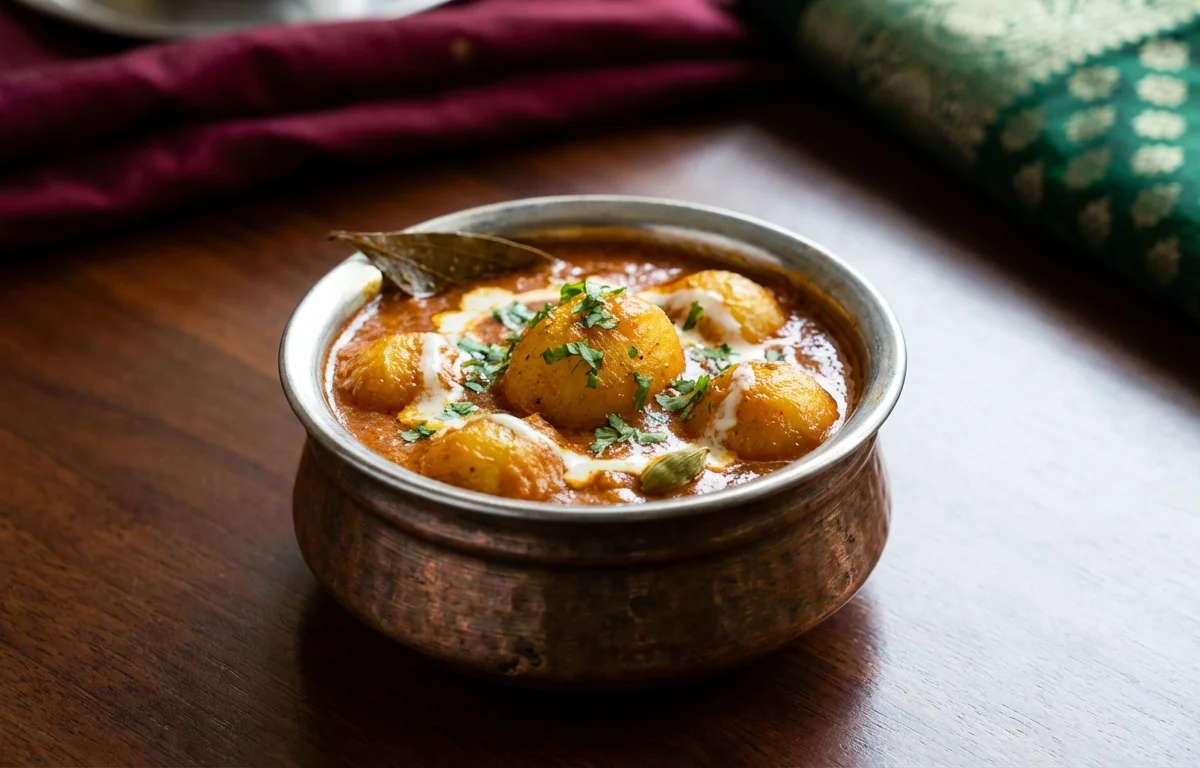
Baby potatoes are lightly fried, then gently cooked in a spiced onion-tomato yogurt gravy until they soak up all the flavor. This classic Indian curry is rich, warming, and perfect with roti, naan, or jeera rice.
For 4 servings
- boil · ~15 min
Boil the potatoes until just tender.
1.Place the baby potatoes in a pot and cover with water.2.Bring to a boil and cook until just tender but not falling apart, about 12-15 minutes.3.Drain the potatoes, let them cool slightly, and peel them.TIPDo not overboil the potatoes or they may break when fried and simmered. - fry · ~8 min
Fry the potatoes lightly.
1.Heat 2 tbsp oil in a pan over medium heat.2.Add the peeled potatoes and fry until lightly golden on most sides, 6-8 minutes.3.Take them out and set aside. - saute · ~9 min
Cook the base masala.
1.Heat the remaining 1 tbsp oil in the same pan.2.Add cumin seeds and bay leaf and let them sizzle for 20-30 seconds.3.Add the chopped onions and cook until golden, 6-7 minutes.4.Add the ginger-garlic paste and sauté until the raw smell goes, about 1 minute.TIPCook the onions well for a deeper gravy and better color. - saute · ~8 min
Add tomatoes and spices.
1.Add the tomato puree and mix well.2.Stir in turmeric powder, red chili powder, coriander powder, cumin powder, and salt.3.Cook until the masala thickens and the oil starts to leave the sides, 6-8 minutes. - mix · ~2 min
Blend in the yogurt.
Lower the heat and add the whisked yogurt a little at a time, stirring continuously so it stays smooth and does not split.
TIPKeep the heat low while adding yogurt to prevent curdling. - simmer · ~12 min
Cook the potatoes in the gravy.
1.Add the fried potatoes and mix to coat them in the masala.2.Pour in the water and stir well.3.Cover and cook on low heat for 10-12 minutes so the potatoes absorb the gravy.4.Sprinkle in garam masala and crushed kasuri methi in the last minute. - garnish
Garnish with coriander leaves.
- serve
Serve hot with roti, naan, or rice.
What to keep in mind.
7 tips from the recipe — small details that make a real difference to the final dish.
- 1Prick the boiled baby potatoes lightly with a fork before frying so the gravy seeps in better during dum cooking.
- 2Let the potatoes dry for a few minutes after peeling; surface moisture can make them splutter and prevent even browning.
- 3Cook the onion-tomato masala until oil separates at the edges, or the gravy can taste raw and flat.
- 4Whisk the yogurt until completely smooth and add it off or on very low heat to keep the gravy from splitting.
- 5Crush kasuri methi between your palms just before adding; this releases more aroma into the finished curry.
- 6Rest the Dum Aloo for 10 minutes after cooking so the potatoes absorb more of the spiced gravy.
- 7If the gravy thickens too much on standing, loosen it with a splash of hot water rather than cold water.
Adapt it for your goals.
Kashmiri-style
Skip onion and tomato for a more traditional Kashmiri profile, and lean on yogurt, fennel, and ginger for a brighter, tangier gravy.
low oilLow-oil
Air-fry or roast the boiled potatoes instead of pan-frying them to cut back on oil while keeping some color and texture.
veganVegan
Replace yogurt with unsweetened plant yogurt or cashew yogurt, added on low heat, for a dairy-free version with similar creaminess.
dhaba styleDhaba-style
Add a little cream or butter at the end for a richer, silkier gravy that pairs especially well with naan.
Why this is on our healthy list.
Comforting energy from potatoes
Baby potatoes make this curry satisfying and filling, providing carbohydrates that pair well with the protein and fat in the gravy.
Antioxidant-rich spice base
Tomatoes, turmeric, cumin, coriander, and fenugreek contribute plant compounds and deep flavor without needing heavy cream.
Some protein and calcium from yogurt
The yogurt adds tang, body, and a modest nutritional boost while helping create a creamy gravy without excessive richness.
Frequently asked questions
This usually happens if the pan is too hot or the yogurt is added too quickly. Lower the heat, whisk the yogurt well, and stir continuously as you add it.



.webp)