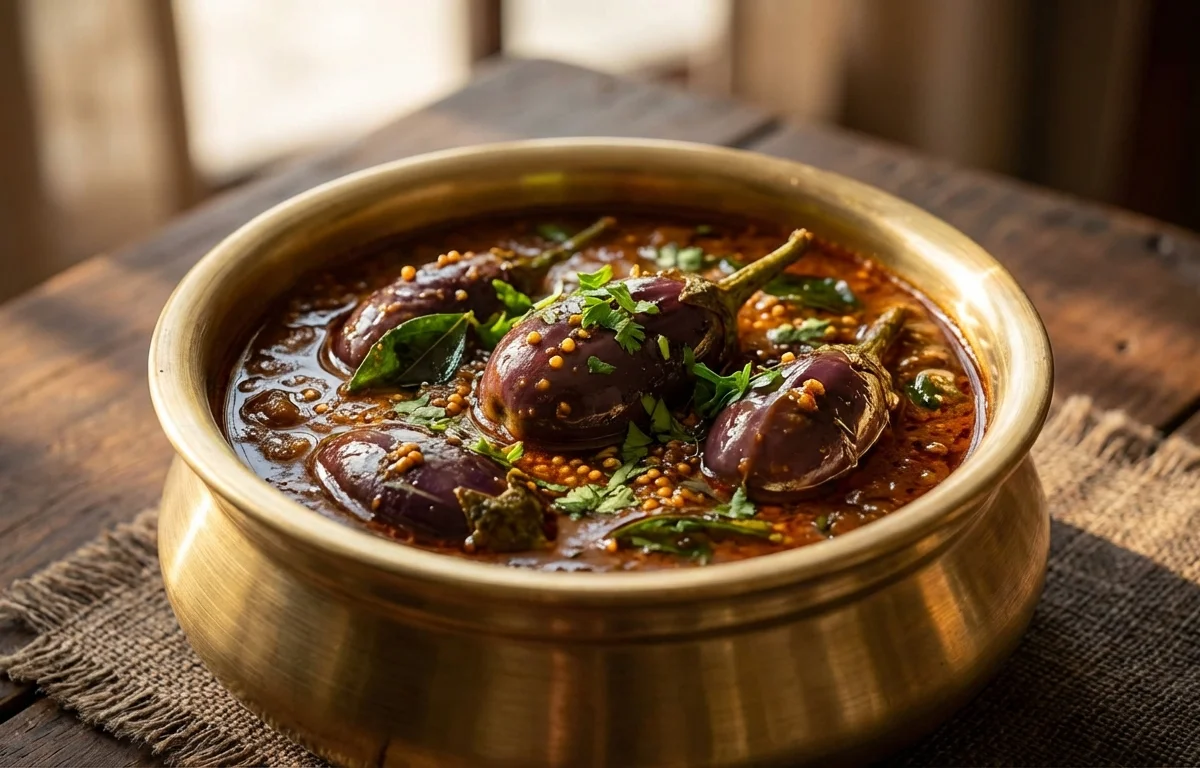
Ennai Kathirikai Kuzhambu
Small brinjals are slit and simmered in a rich tamarind gravy with roasted spices, sesame, and a little jaggery. This Tamil Nadu kuzhambu is deeply savory, tangy, and best served in small bowls alongside hot rice.
For 4 servings
- prep · ~15 min
Soak the tamarind and slit the brinjals.
1.Soak the tamarind in a little warm water for 15 minutes.2.Trim the eggplants and make a deep cross slit from the base, keeping each one whole.3.Keep the slit eggplants in water until needed so they do not darken.TIPKeep the stem end intact so the brinjals hold their shape while cooking. - roast · ~5 min
Roast the spice mix.
1.Heat a small pan over low heat.2.Add sesame seeds, coriander seeds, chana dal, urad dal, dried red chili, fenugreek seeds, and asafoetida.3.Roast until fragrant and lightly golden, stirring often so the spices do not burn.4.Cool completely, then grind to a fine powder.TIPRoast on low heat for an even color and a deeper, nuttier flavor. - mix · ~3 min
Make the tamarind base.
Squeeze the soaked tamarind well and strain it. Add water to make a slightly strong tamarind extract, then stir in turmeric powder, red chili powder, salt, jaggery, and the roasted spice powder.
- temper · ~5 min
Make the tempering.
1.Heat sesame oil in a wide kadai over medium heat.2.Add mustard seeds and let them splutter.3.Add curry leaves, shallots, and garlic.4.Cook until the shallots soften and the raw smell of garlic fades.TIPUse a wide pan so the brinjals cook in one layer and do not break. - saute · ~7 min
Cook the brinjals in oil.
Add the slit eggplants and turn them gently in the oil. Cook for 5 to 7 minutes until the skins wrinkle slightly and the brinjals begin to soften.
- simmer · ~15 min
Simmer the kuzhambu.
Pour in the tamarind mixture and bring it to a steady simmer. Cook uncovered until the brinjals are tender, the raw tamarind smell is gone, and the gravy thickens and turns glossy.
TIPStir gently once or twice only; too much stirring can split the soft brinjals. - rest · ~10 min
Let the kuzhambu rest for 10 minutes.
- serve
Serve hot with rice.
What to keep in mind.
7 tips from the recipe — small details that make a real difference to the final dish.
- 1Choose small, evenly sized brinjals so they soften at the same rate without collapsing.
- 2Keep the cross slits deep enough for the gravy to seep in, but leave the stem end intact.
- 3Cool the roasted spices fully before grinding, or the powder can turn pasty instead of fine.
- 4Do not rush the uncovered simmer; the kuzhambu tastes best once the raw tamarind smell completely disappears.
- 5If the gravy thickens before the brinjals are tender, add a splash of hot water and continue simmering gently.
- 6This kuzhambu often tastes even better after a few hours, once the brinjals absorb the tamarind-spice gravy.
- 7Store refrigerated for up to 2 days and reheat on low heat to keep the brinjals from breaking.
Adapt it for your goals.
Stuffed-brinjal
Use the roasted spice powder as a stuffing inside the slit brinjals before sauteing for a more intense, restaurant-style ennai kathirikai.
no garlicNo-garlic
Skip the garlic for a simpler Tamil-style kuzhambu that still keeps its depth from shallots, tamarind, and roasted spices.
jainJain
Omit shallots, garlic, and asafoetida, then lean on extra curry leaves and coriander for aroma while keeping the tamarind-sesame profile.
extra spicyExtra-spicy
Increase dried red chilies or chili powder for a sharper heat that stands up especially well to hot rice and ghee.
Why this is on our healthy list.
Vegetable-rich main dish
Small brinjals make this kuzhambu a good way to include more vegetables in a rice meal without needing a separate curry.
Contains beneficial spices
Tamarind, turmeric, garlic, fenugreek, and curry leaves bring layers of flavor along with traditional pantry ingredients valued in South Indian cooking.
Includes seeds and lentils
Sesame seeds, chana dal, and urad dal add nuttiness, body, and a little extra plant-based nourishment to the gravy.
Frequently asked questions
They usually break from overcooking or frequent stirring. Saute them first, simmer gently, and turn them only once or twice.