
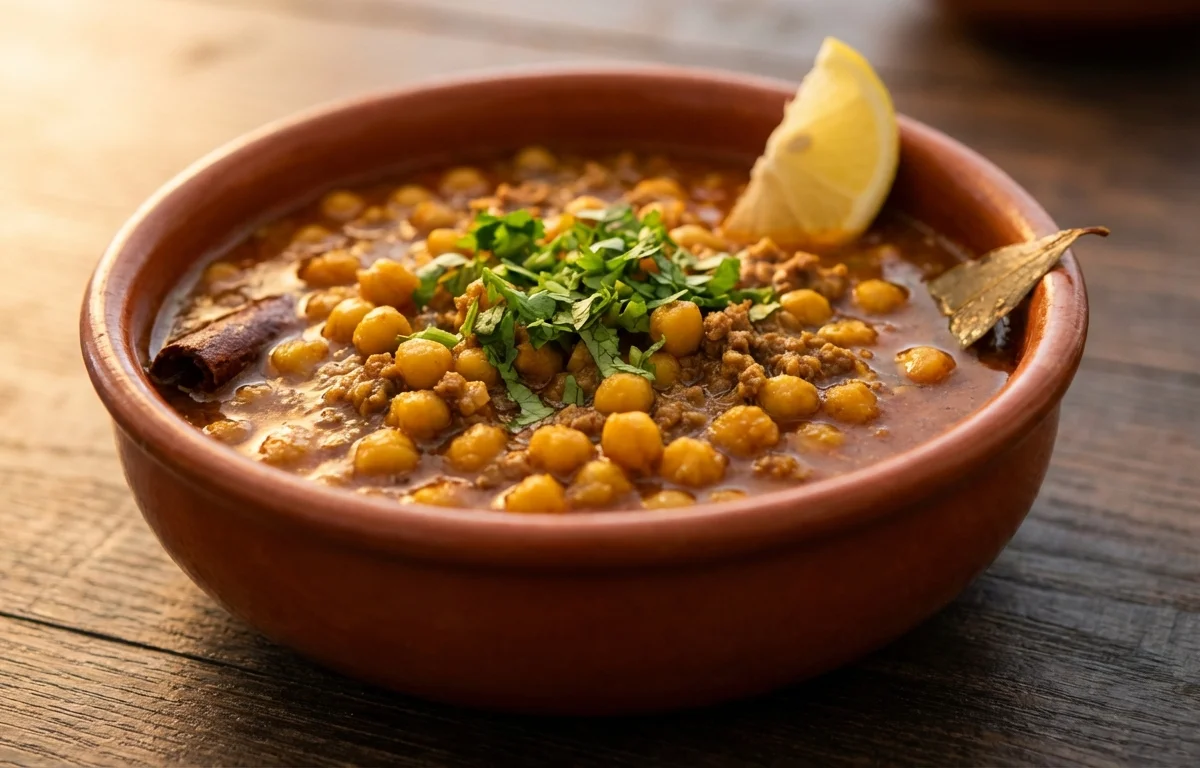
Ghugni with Mutton Keema
A hearty Bengali-style bowl of dried yellow peas simmered until tender and topped with spiced mutton keema. It is rich, comforting, and full of street-food character without being too heavy for a shared meal.
For 4 servings
- prep · ~10 min
Prepare the peas and vegetables.
1.Drain the soaked dried yellow peas.2.Peel and cube the potato.3.Chop the onion and tomato finely.4.Grate the ginger, mince the garlic, and slit the green chili. - pressure cook · ~18 min
Cook the peas and potato.
Add the dried yellow peas, potato, 3 cups water, 1 pinch turmeric powder, and 0.25 tsp salt to a pressure cooker. Cook until the peas are soft but still hold some shape, about 4 whistles or 18 minutes.
TIPDo not overcook the peas into a puree. Ghugni tastes best when the peas stay distinct. - saute · ~15 min
Cook the keema masala.
1.Heat oil in a pan over medium heat.2.Add cumin seeds and bay leaf; let them sizzle for 20 to 30 seconds.3.Add onion and cook until light golden, 6 to 7 minutes.4.Add ginger, garlic, and green chili; cook for 1 minute.5.Add tomato, red chili powder, coriander powder, cumin powder, 1 pinch turmeric powder, and the remaining 0.25 tsp salt. Cook until the tomatoes soften and the oil begins to separate, 5 to 6 minutes. - saute · ~10 min
Brown the mutton keema.
Add the mutton keema to the pan and break it up well with a spoon. Cook on medium heat until it loses its raw color and starts to brown lightly, 8 to 10 minutes.
TIPKeep stirring and breaking the mince so you get a loose topping instead of clumps. - simmer · ~12 min
Combine the ghugni and keema.
Add the cooked peas and potato with their cooking liquid to the pan. Stir in the remaining 1 cup water and tamarind paste, then simmer 10 to 12 minutes until thick and spoonable.
- garnish
Finish with garam masala, coriander leaves, and lemon juice.
- serve
Serve the ghugni with mutton keema hot.
What to keep in mind.
7 tips from the recipe — small details that make a real difference to the final dish.
- 1Soak the yellow peas overnight so they cook evenly and stay plump instead of splitting too much.
- 2After pressure cooking, the peas should press soft between fingers but still look whole for proper ghugni texture.
- 3Brown the keema until the moisture cooks off and the oil reappears; that is when the meat tastes fuller and less boiled.
- 4Mash just a few potato cubes into the simmering gravy to thicken the ghugni without turning it pasty.
- 5Add tamarind only after the peas are fully cooked, since early acidity can slow softening.
- 6Rest the finished ghugni for 5 minutes before serving so the keema and pea gravy settle into a spoonable consistency.
- 7This dish reheats well; add a splash of hot water when warming because the peas absorb liquid as it sits.
Adapt it for your goals.
Spicier-street-style
Add extra slit green chilies and a little more red chili powder for a sharper, Kolkata-chaat style heat.
low oilLow-oil
Reduce the oil slightly and cook the onion-tomato masala more slowly with splashes of water; useful if you want a lighter bowl.
keema topping styleKeema-topping-style
Keep the ghugni and mutton separate, then ladle the peas into bowls and spoon the browned keema on top for stronger texture contrast.
vegetarianVegetarian
Skip the mutton keema and increase potato or add more peas for a classic meat-free ghugni with the same tangy-spiced profile.
Why this is on our healthy list.
Protein from Peas and Mutton
Yellow peas and minced mutton together make this dish filling and satisfying, with both plant and animal protein in one bowl.
Fiber-Rich Legume Base
The dried yellow peas provide fiber that supports fullness and gives the ghugni its hearty, slow-simmered body.
Aromatic Spices and Herbs
Ginger, garlic, cumin, coriander, chili, and fresh coriander leaves add flavor without needing heavy cream or butter.
Frequently asked questions
Yes. Simmer the soaked yellow peas and potato in a covered pot until tender; it will simply take longer than pressure cooking.



-curry.webp)
.webp)