
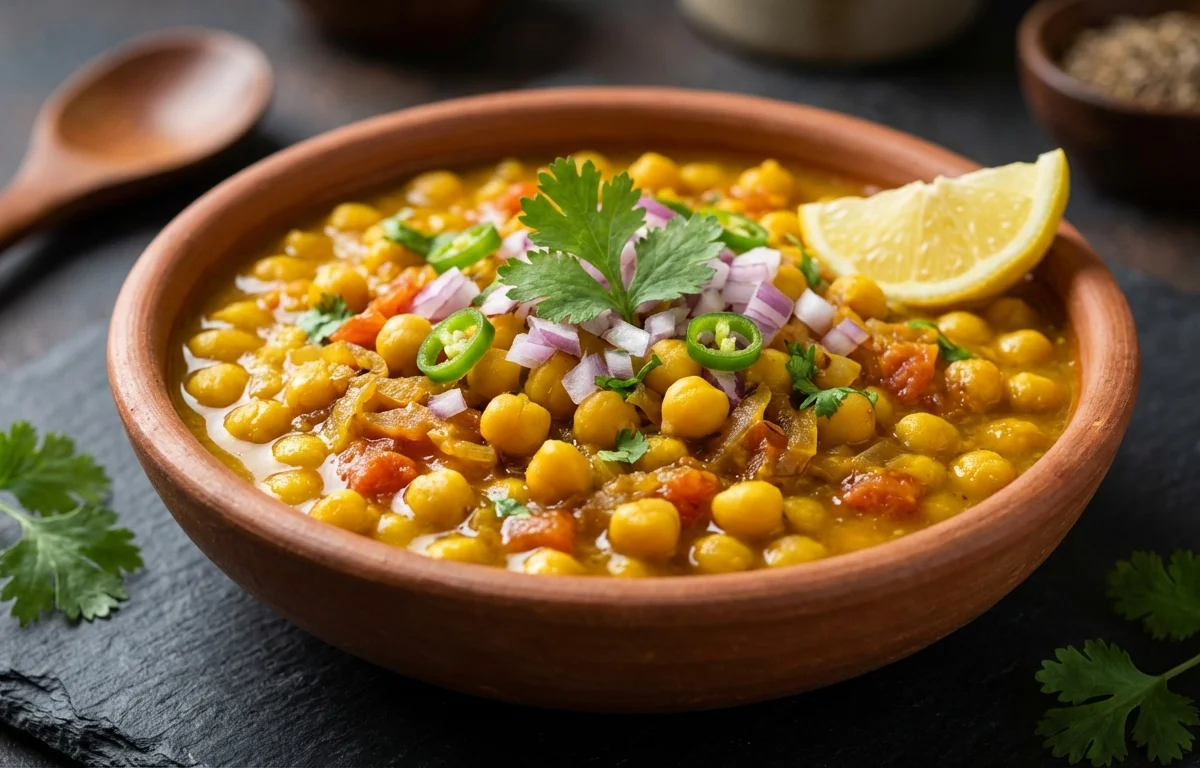
Ghuguni
A comforting bowl of yellow peas simmered with onion, tomato, ginger, and warm spices. This eastern Indian street-style curry is hearty, gently spicy, and perfect as a small meal or side.
For 4 servings
- prep · ~480 min
Soak the yellow peas.
Wash the dried yellow peas well, cover with plenty of water, and soak overnight. Drain before cooking.
- pressure cook · ~20 min
Pressure cook the peas.
1.Add soaked yellow peas and 3 cups water to a pressure cooker.2.Cook over medium heat until the peas are soft but still holding their shape, about 4 to 5 whistles.3.Let the pressure release naturally, then open and lightly mash a spoonful to help thicken the curry.TIPDo not overcook the peas into a paste; ghuguni tastes best when most of the peas stay whole. - saute · ~10 min
Cook the potato and aromatics.
1.Heat oil in a pan over medium heat.2.Add cumin seeds and bay leaf, and let them sizzle for a few seconds.3.Add cubed potato and cook for 3 to 4 minutes until lightly coated in oil.4.Add onion, ginger, and green chili, and cook until the onion turns soft and lightly golden.5.Add tomato and cook until soft and pulpy. - saute · ~1 min
Add the spices.
Add turmeric powder, red chili powder, cumin powder, coriander powder, garam masala, and salt. Mix well and cook for 1 minute so the spices bloom without burning.
TIPIf the masala looks dry, splash in a little water so the powdered spices do not scorch. - simmer · ~15 min
Simmer the ghuguni.
1.Add the cooked yellow peas along with their cooking liquid to the pan.2.Stir in tamarind paste and mix well.3.Add up to 1 cup water if needed for a loose curry consistency.4.Simmer uncovered until the potato is tender and the gravy thickens slightly. - garnish · ~1 min
Finish with coriander leaves.
Sprinkle chopped coriander leaves over the ghuguni and give it a final stir.
- serve · ~1 min
Serve hot.
Serve the ghuguni warm as a snack, light breakfast, or side dish.
What to keep in mind.
7 tips from the recipe — small details that make a real difference to the final dish.
- 1Soak the yellow peas fully overnight; under-soaked peas cook unevenly and stay chalky in ghuguni.
- 2Pressure cook until the peas are soft yet intact, since mushy peas turn the curry pasty instead of street-style.
- 3Lightly fry the potato cubes before adding onion so they hold their shape during the final simmer.
- 4Cook the tomatoes down until pulpy before adding powdered spices, or the masala will taste raw.
- 5If the masala starts sticking after the dry spices go in, add a small splash of water right away.
- 6Mash only a spoonful of cooked peas to thicken the gravy naturally without adding flour or extra starch.
- 7Ghuguni often tastes even better after 30 minutes of resting, when the tamarind and spices settle into the peas.
Adapt it for your goals.
Street-style
Serve it looser and top with extra chopped onion, green chili, and coriander for a more Kolkata snack-stall feel.
no potatoNo-potato
Skip the potato for a peas-forward bowl with a slightly lighter texture and more pronounced spice and tamarind flavor.
low oilLow-oil
Reduce the oil and add splashes of water while sautéing; you still get a good masala base with a lighter finish.
extra spicyExtra-spicy
Add another slit green chili or a little more red chili powder if you want a sharper, hotter street-food style heat.
Why this is on our healthy list.
Legume-Based Protein
Yellow peas provide plant protein and make this curry filling enough for a light meal or substantial snack.
Good Fiber Support
The yellow peas, potato, onion, and tomato contribute fiber, which helps make the dish hearty and satisfying.
Spice-Rich and Aromatic
Ginger, cumin, coriander, and chili add flavor without relying on heavy cream or rich sauces.
Plant-Forward Comfort Food
This recipe is built from legumes, vegetables, herbs, and spices, making it a wholesome vegetarian Bengali-style dish.
Frequently asked questions
Yes. Simmer the soaked yellow peas on the stovetop until tender but not falling apart; it will just take longer than pressure cooking.



-curry.webp)
.webp)