Goan Chicken Ros Curry
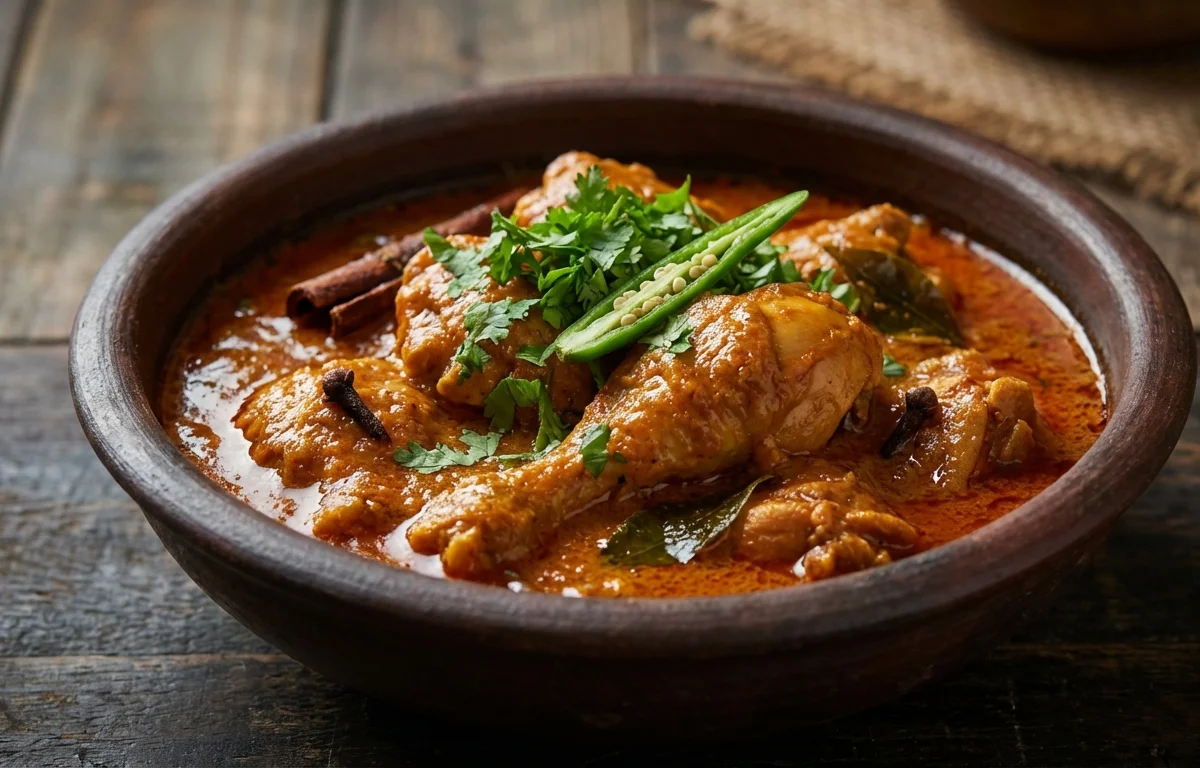
A gorgeous rust-red chicken curry from the coast of Goa, where dried red chilies and fresh coconut come together in a tangy, aromatic gravy. Slow-simmered with warm spices and a splash of toddy vinegar, this is the real taste of a Goan home kitchen — bold, comforting, and absolutely unforgettable with steamed rice.
For 4 servings
- prep · ~15 min
Marinate the chicken.
Wash and pat dry the chicken pieces. Mix with turmeric powder and half the salt. Set aside for 15 minutes.
- saute · ~6 min
Roast the spices and coconut for the masala paste.
1.Heat 1 tablespoon coconut oil in a pan over medium heat.2.Add dried red chilies, coriander seeds, cumin seeds, peppercorns, cardamom, cloves, and cinnamon. Sauté until fragrant (1-2 min).3.Add grated coconut and sauté, stirring constantly, until it turns a deep golden brown (3-4 min).4.Take off the heat and let the mixture cool completely.TIPDon't walk away — coconut burns fast. Keep the heat medium and stir continuously. - mix · ~3 min
Grind the roasted masala into a smooth paste.
1.Transfer the cooled roasted spice-coconut mixture to a blender.2.Add garlic, ginger, and a splash of water (about 2-3 tablespoons).3.Blend to a thick, smooth paste. Scrape down the sides as needed.TIPAdd water just a little at a time. The paste should be thick, not runny. - saute · ~12 min
Brown the onions and tomatoes.
1.Heat the remaining 1 tablespoon coconut oil in a deep pot or kadai over medium heat.2.Add 2 sliced onions and cook until soft and light golden (5-7 min).3.Add chopped tomatoes. Cook, mashing them down, until they turn mushy and the oil starts to separate (4-5 min).TIPCook the tomatoes really well — raw tomato taste has no place in this curry. - fry · ~9 min
Fry the masala paste with the onion-tomato base.
Add the ground masala paste to the pot. Cook on medium-low heat, stirring frequently, until the paste darkens in color and releases a roasted aroma (8-10 min). The oil will separate from the sides.
TIPThis is the bhunai — the soul of the curry. Don't rush it; the deeper the paste fries, the richer the final curry. - fry · ~5 min
Sear the chicken pieces in the masala.
Add the marinated chicken pieces to the pot. Turn up the heat to high and sear, turning often, until the chicken is well-coated and lightly browned on all sides (5 min).
- boil · ~30 min
Add water and bring to a boil, then simmer.
1.Pour in 1.5 cups water and the remaining salt. Stir well and bring to a rolling boil.2.Once boiling, lower the heat to a gentle simmer. Cover and cook until the chicken is tender and falling off the bone (25-30 min). Stir once or twice in between.TIPIf using a pressure cooker, close the lid and cook for 2 whistles on medium heat, then let the pressure release naturally. - saute · ~8 min
Add the vinegar and make the final tempering.
1.Uncover the pot. Stir in the coconut vinegar and let the curry bubble for 2 minutes.2.In a separate small pan, heat a teaspoon of oil. Sauté the finely chopped onion until deep golden brown, then pour this tempering over the curry.3.Simmer for 1 more minute, then switch off the heat.TIPThe vinegar is what makes this 'Ros' — don't skip it. The sharp tang balances the rich coconut and spices. - rest · ~10 min
Rest the curry before serving.
Let the curry sit, covered, for 10 minutes. This resting time allows the flavors to meld and the gravy to thicken beautifully.
- garnish
Garnish with fresh coriander leaves and serve hot.
Transfer to a serving bowl, scatter chopped coriander leaves on top, and serve with steamed rice or poi (Goan bread).
What to keep in mind.
6 tips from the recipe — small details that make a real difference to the final dish.
- 1Use bone-in chicken for deeper flavor and better texture; the marrow enriches the gravy.
- 2Toast the grated coconut until deep golden brown but stop before it turns dark — burnt coconut makes the curry bitter.
- 3For an authentic Goan tang, use coconut vinegar (toddy vinegar) — distilled white vinegar changes the flavor profile.
- 4Don't skip the resting time after cooking; the curry thickens and the flavors meld significantly in 10 minutes.
- 5When grinding the masala, add water only a spoonful at a time — a thick paste fries better than a runny one.
- 6To check doneness, the chicken should be tender enough to pull apart easily with a spoon; the gravy should cling to the meat.
Adapt it for your goals.
Vegetarian
Replace chicken with 400g paneer (cubed and pan-fried) or mixed vegetables like cauliflower, potatoes, and carrots. The masala and technique remain the same; adjust simmering time to 15 minutes for vegetables.
low oilLow-oil
Reduce coconut oil to 1 tablespoon; use a non-stick pan for browning. Omit the final tempering or replace it with a dry-fried onion garnish for a lighter version without sacrificing flavor.
seafoodSeafood
Swap chicken with 500g firm fish (like kingfish or pomfret) or prawns. Add fish in the last 8-10 minutes of simmering to avoid overcooking. The tangy coconut gravy pairs beautifully with seafood.
Why this is on our healthy list.
Rich in Anti-Inflammatory Spices
Turmeric, ginger, and cumin in this curry contain active compounds that help reduce inflammation and support overall immunity.
Good Source of Coconut Healthy Fats
Fresh grated coconut provides medium-chain triglycerides (MCTs), a type of fat that may boost energy and support metabolism.
High-Quality Protein from Chicken
Bone-in chicken supplies lean protein essential for muscle repair and maintenance, along with minerals like calcium from the bones.
Contains Metabolism-Supporting Black Pepper
Black peppercorns contain piperine, which enhances nutrient absorption and may improve digestive efficiency.
Frequently asked questions
Yes, but soak ¾ cup desiccated coconut in ¼ cup warm water for 10 minutes before roasting to rehydrate it; fresh yields a creamier paste.