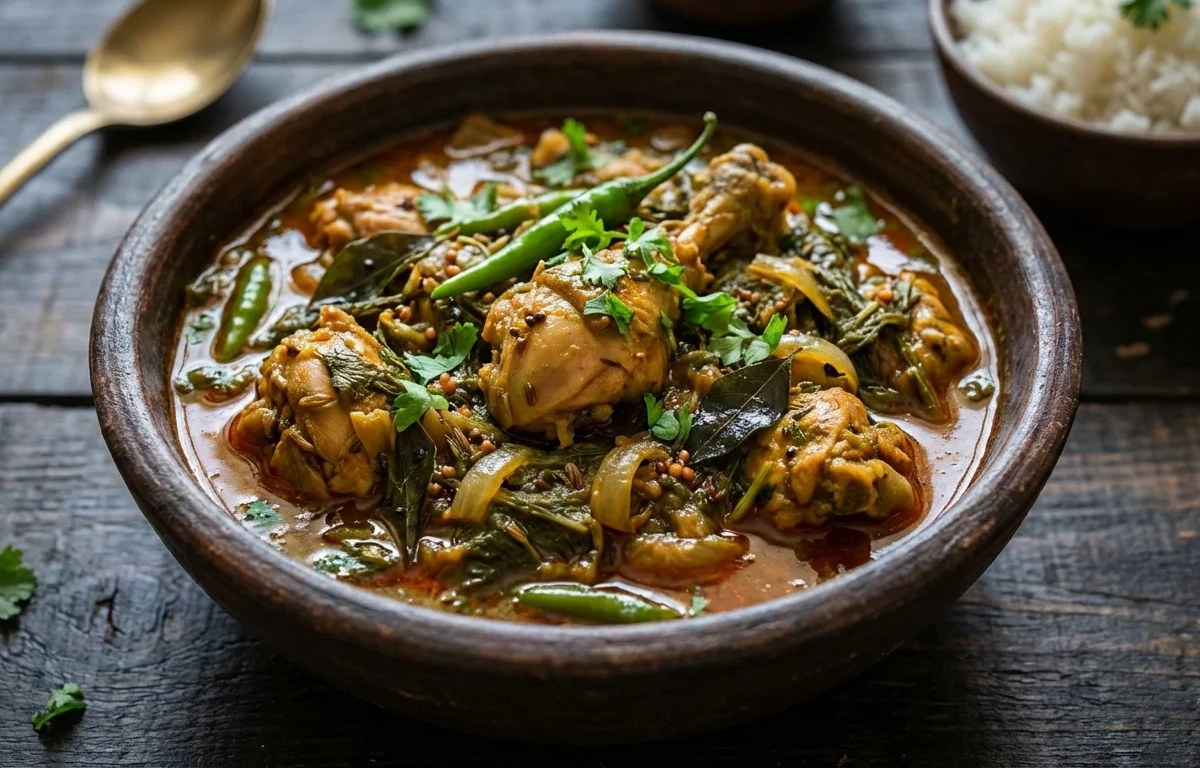
Gongura Chicken
A tangy Andhra-style chicken curry where sorrel leaves bring a sharp, earthy flavor that clings beautifully to the meat. Warm spices, onions, and green chilies balance the sourness for a bold dish that pairs especially well with rice or roti.
For 4 servings
- prep · ~10 min
Prep the chicken and gongura.
1.Wash the chicken pieces and drain well.2.Remove thick stems from the gongura leaves and wash them thoroughly.3.Slice the onions, slit the green chilies, and keep the remaining ingredients ready.TIPDrain the chicken well so it sears instead of steaming in the pan. - saute · ~6 min
Cook the gongura leaves.
1.Heat 1 tsp oil in a pan over medium heat.2.Add the gongura leaves and cook until wilted and soft (4-5 min).3.Cool slightly and crush them lightly with a spoon or pulse into a coarse paste.TIPDo not add water while cooking the leaves; they release enough moisture on their own. - temper · ~9 min
Make the base.
1.Heat the remaining oil in a heavy pan over medium heat.2.Add mustard seeds and cumin seeds; let them crackle (20-30 sec).3.Add curry leaves and green chilies.4.Add the sliced onions and cook until light golden (6-8 min).TIPKeep the heat medium so the spices bloom without burning. - saute · ~2 min
Build the masala.
1.Add ginger-garlic paste and cook until the raw smell fades (1 min).2.Add turmeric powder, red chili powder, coriander powder, and cumin powder.3.Mix quickly for 20-30 seconds so the spices coat the onions well. - saute · ~8 min
Cook the chicken with the masala.
1.Add the chicken pieces and salt to the pan.2.Mix well to coat the chicken in the onion-spice mixture.3.Cook on medium-high heat until the chicken changes color and releases some moisture (6-8 min). - simmer · ~18 min
Simmer until the chicken is tender.
Add water, cover, and cook on low heat until the chicken is tender and the gravy reduces, about 15-18 minutes. Stir once or twice so the masala does not catch at the bottom.
TIPBone-in chicken gives the best flavor here and stays juicy during simmering. - mix · ~7 min
Add the gongura and finish the curry.
Add the cooked gongura and garam masala. Mix well and cook uncovered for 5-7 minutes until the sour leaves blend into the masala and the curry turns thick and glossy.
- garnish
Garnish with cilantro.
- serve
Serve hot with rice or roti.
What to keep in mind.
7 tips from the recipe — small details that make a real difference to the final dish.
- 1Cook the gongura separately first; this tames its raw sharpness and keeps the final curry from turning grassy.
- 2Let the onions reach light golden, not dark brown, so they balance the sorrel's sourness without making the masala bitter.
- 3After adding the chicken, fry until it releases moisture and loses its pink color before adding water for a deeper base flavor.
- 4Keep the gongura slightly coarse rather than fully smooth so it clings to the chicken and gives the curry its rustic Andhra texture.
- 5Finish uncovered until the oil lightly separates and the curry looks glossy; that is the cue the gongura has blended properly.
- 6Taste only after the gongura goes in, because the sour leaves can make the dish seem saltier or hotter than it was earlier.
- 7This curry tastes even better the next day, once the chicken absorbs the sour-spicy gongura masala.
Adapt it for your goals.
Spicier
Add more slit green chilies or a little extra red chili powder for a hotter, more fiery Andhra-style curry.
bonelessBoneless
Use boneless chicken thigh pieces if you want faster cooking and easier serving, though the gravy will be slightly less rich.
dry styleDry-style
Reduce the water and cook longer after adding gongura for a thicker, almost pickle-like coating that pairs especially well with hot rice.
muttonMutton
Swap chicken for mutton for a deeper, meatier version; increase simmering time until the meat is fully tender.
Why this is on our healthy list.
Protein-Rich Main Dish
Chicken provides satisfying protein, making this curry hearty and useful for a filling meal with rice or roti.
Leafy Greens in the Curry
Gongura adds leafy green goodness along with its signature sour taste, bringing more plant components into the dish.
Aromatic Spice Support
Ginger, garlic, cumin, coriander, and curry leaves add flavor depth without needing heavy cream or butter.
Frequently asked questions
Yes, boneless thigh works well and cooks faster, but bone-in chicken gives a fuller flavor and stays juicier during simmering.


.webp)