Gongura Royyala
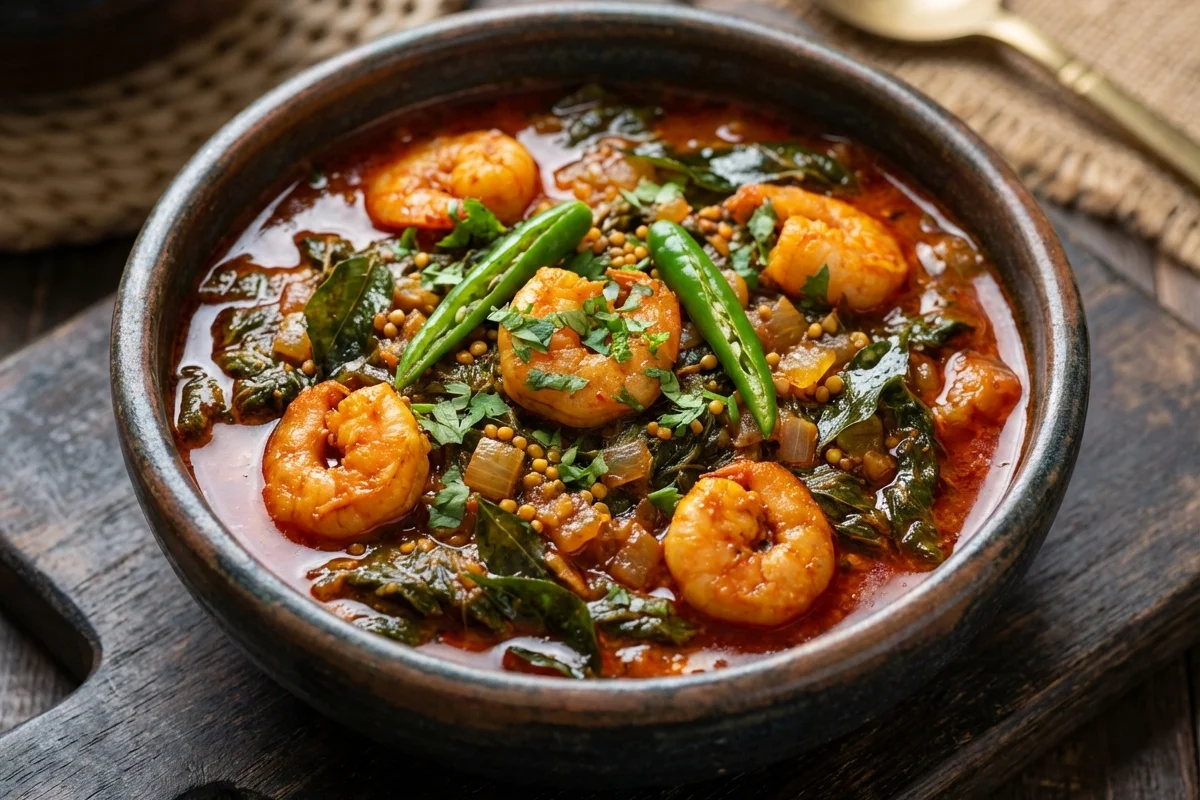
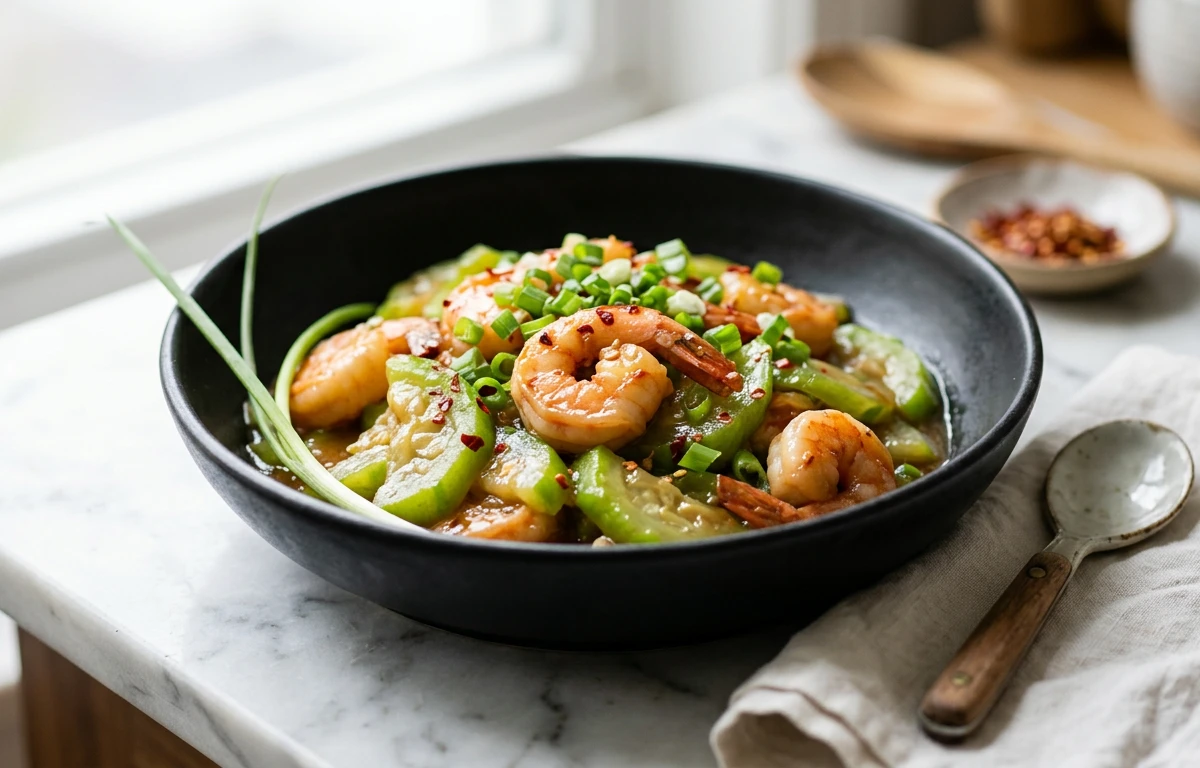
Tangy gongura leaves and juicy prawns come together in this classic Andhra curry with bold spices, onion, and garlic. It has a punchy, savory flavor that tastes especially good with hot rice.
For 4 servings
- prep
Prep the prawns and gongura.
1.Wash the prawns and pat them dry.2.Wash the gongura leaves well and trim any thick stems.3.Chop the onion and tomato, crush the garlic, chop the ginger, and slit the green chilies. - boil · ~8 min
Cook the gongura leaves.
Add the gongura leaves to a pan with the water and cook on medium heat until the leaves wilt fully and turn soft, 6 to 8 minutes. Cool slightly, then mash them lightly with a spoon.
TIPCook just until soft so the leaves stay bright and tangy. - saute · ~8 min
Start the masala base.
1.Heat the oil in a pan over medium heat.2.Add mustard seeds, cumin seeds, and fenugreek seeds and let them crackle for 20 to 30 seconds.3.Add the onion and cook until light golden, 5 to 6 minutes.4.Add the garlic, ginger, and green chilies and cook for 1 minute. - saute · ~5 min
Cook the tomato and spices.
Add the tomato, turmeric powder, red chili powder, coriander powder, and salt. Cook until the tomato breaks down and the masala looks thick and glossy, 4 to 5 minutes.
TIPKeep the heat medium so the spices cook without burning. - saute · ~4 min
Cook the prawns.
Add the prawns to the masala and cook for 3 to 4 minutes, stirring gently, until they just turn opaque and curl.
TIPDo not overcook the prawns or they will turn rubbery. - simmer · ~6 min
Add the gongura and simmer.
Stir in the cooked gongura and mix well with the prawns. Simmer for 5 to 6 minutes until the flavors come together and the curry turns thick.
- garnish
Garnish with coriander leaves.
- serve
Serve hot with rice.
What to keep in mind.
7 tips from the recipe — small details that make a real difference to the final dish.
- 1Pat the prawns very dry before they hit the masala so they sear lightly instead of releasing water.
- 2Do not overboil the gongura; once fully wilted and soft, stop cooking to keep its sharp tang intact.
- 3Use only a pinch of fenugreek seeds, as too much will make the curry noticeably bitter.
- 4Cook the tomato masala until oil begins to separate slightly; this removes raw spice taste before adding prawns.
- 5Add the prawns only after the onion-tomato base is ready, since they cook in just a few minutes.
- 6If the curry tastes too sour, simmer it a minute longer with the masala rather than adding extra water.
- 7This dish tastes even better after a short rest, so let it sit 10 minutes before serving with hot rice.
Adapt it for your goals.
Spicier-andhra
Increase green chilies and red chili powder for a fiercer, more traditional Andhra heat that stands up to the tart gongura.
less oilLess-oil
Use slightly less oil and cook the onion-tomato masala a bit longer; good if you want a lighter everyday version.
fishFish
Replace prawns with firm fish pieces and simmer gently for a similar tangy seafood curry with softer, flaky texture.
dry styleDry-style
Reduce the water and cook longer after adding gongura for a thicker, almost pickle-like prawn gongura to serve with rice.
Why this is on our healthy list.
Protein-Rich Seafood
Prawns make this curry filling and satisfying while providing lean seafood protein in a relatively light dish.
Leafy Green Goodness
Gongura leaves add the benefits of leafy greens along with a strong natural sourness that reduces the need for heavy sauces.
Aromatic Spice Support
Garlic, ginger, cumin, coriander, and chilies bring flavor depth along with the traditional benefits associated with spice-based cooking.
Frequently asked questions
Yes, thaw them fully, rinse if needed, and pat them very dry before cooking so the masala does not turn watery.


.webp)