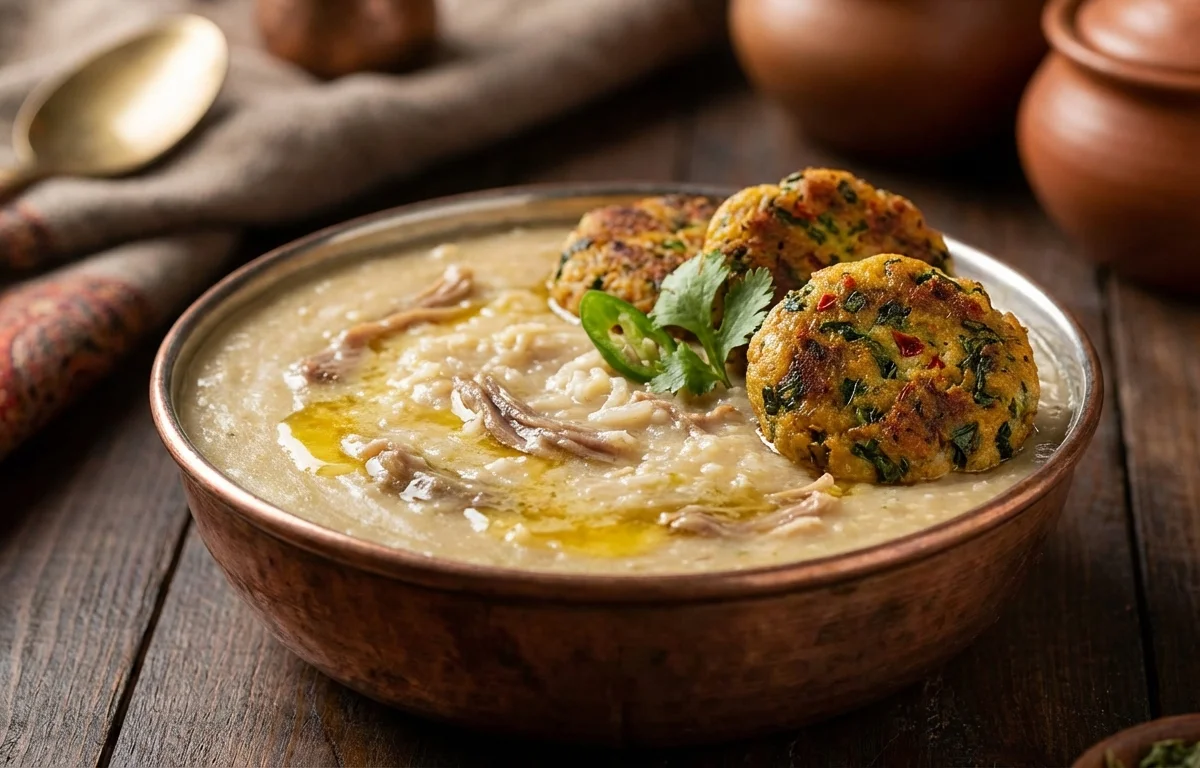
Harisa with Methi Kabab
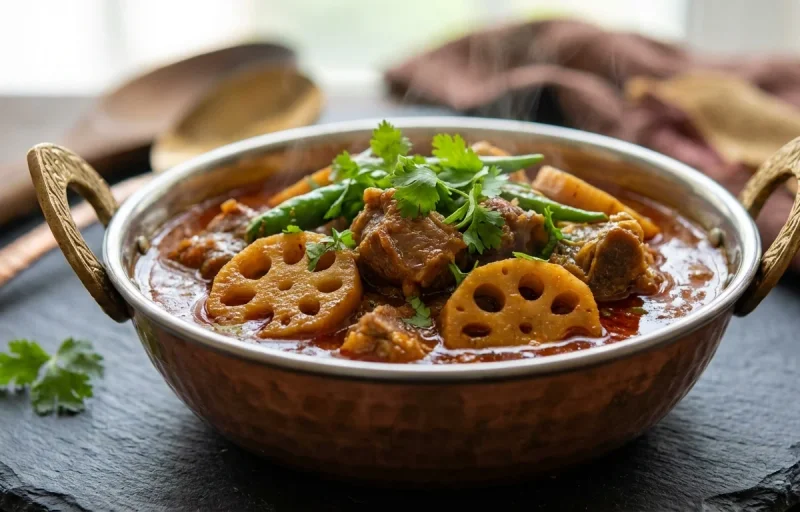
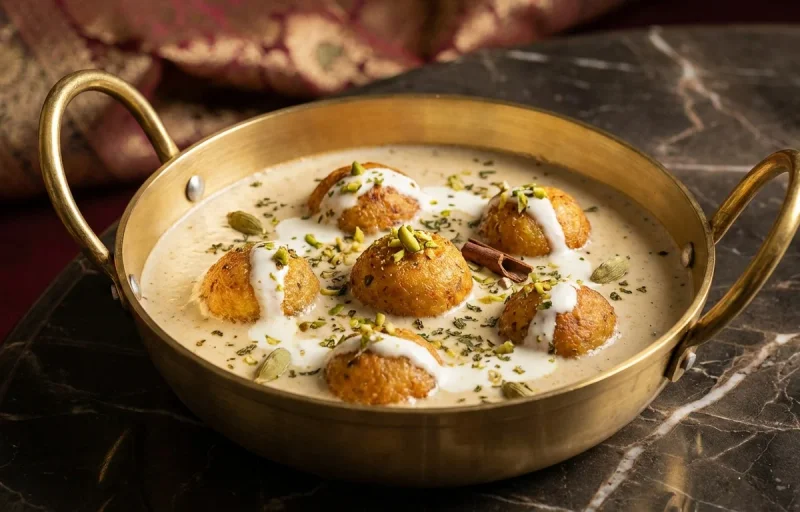
A comforting Kashmiri-style wheat and mutton porridge served with fragrant fenugreek kababs. Slow cooking gives the harisa its silky texture, while the pan-cooked kababs add a savory, herb-filled bite.
For 4 servings
- prep · ~480 min
Soak the broken wheat.
Wash the broken wheat well, cover with enough water, and soak overnight. Drain it before cooking.
TIPA long soak helps the wheat break down into the smooth, porridge-like texture harisa is known for. - boil · ~120 min
Cook the mutton and wheat.
1.Add mutton, soaked broken wheat, water, crushed ginger, crushed garlic, and green cardamom to a heavy pot.2.Bring to a boil over medium-high heat and skim any foam from the top.3.Lower the heat, cover loosely, and cook until the mutton is very tender and the wheat is soft. - other · ~20 min
Shred and mash the harisa.
1.Lift out the mutton pieces and discard the bones and cardamom pods.2.Shred the meat finely and return it to the pot.3.Mash and stir the mixture with a wooden spoon until the meat and wheat blend into a thick, smooth mass.4.Add fennel powder, dry ginger powder, black pepper, and half of the salt.TIPKeep stirring as you mash so the wheat does not catch at the bottom. - simmer · ~30 min
Slow cook the harisa.
Cook on low heat, stirring often, until the mixture turns silky, thick, and spreadable. Finish with ghee and keep warm.
- mix · ~5 min
Make the methi kabab mixture.
1.Place mutton mince, chopped fenugreek leaves, onion, green chili, grated ginger, and minced garlic in a bowl.2.Add coriander powder, garam masala, the remaining salt, and the beaten egg.3.Mix well until the mixture holds together.TIPIf the mixture feels too loose, chill it for 15 minutes before shaping. - prep · ~5 min
Shape the kababs.
Divide the mixture into 8 small flat kababs of even thickness so they cook evenly.
- fry · ~10 min
Shallow fry the methi kababs.
1.Heat oil in a wide pan over medium heat.2.Place the kababs in the pan without crowding.3.Cook until browned on one side, then turn gently and cook the other side until done through.TIPCook on medium heat so the kababs brown nicely before the fenugreek leaves start to darken too much. - assemble · ~2 min
Serve the harisa with methi kabab.
Spoon the hot harisa into katoris and top or side each serving with 2 methi kababs. Serve right away while both are hot.
What to keep in mind.
7 tips from the recipe — small details that make a real difference to the final dish.
- 1Skim the foam well when the mutton first boils so the harisa stays cleaner-tasting and smoother.
- 2Use a heavy-bottomed pot for the long simmer; the wheat thickens fast and can scorch at the base.
- 3Shred the cooked mutton very finely before returning it to the pot so it blends into the wheat instead of sitting in strands.
- 4If the harisa gets too thick while slow cooking, loosen it with a splash of hot water, not cold, to keep it silky.
- 5Chill the kabab mixture if the onion releases too much moisture; colder mince shapes and flips more cleanly.
- 6Make the kababs flat and evenly thick so the center cooks through before the methi on the outside overbrowns.
- 7Reheat leftover harisa gently with a little water and stir well; it firms up a lot as it cools.
Adapt it for your goals.
Low-oil
Pan-sear the kababs in a lightly greased nonstick skillet or bake them on a tray to reduce added oil while keeping the same methi flavor.
spicierSpicier
Add extra green chili to the kababs and a little more black pepper to the harisa for a warmer, sharper finish.
boneless harisaBoneless-harisa
Use boneless mutton for easier shredding and serving if you want less picking around bones after simmering.
chicken versionChicken-version
Swap both mutton and mutton mince for chicken for a lighter, quicker-cooking version with the same wheat-and-methi profile.
Why this is on our healthy list.
Protein-Rich Main Dish
Mutton in the harisa and mince in the kababs provide substantial protein, making this a filling, hearty meal.
Whole Grain From Broken Wheat
Broken wheat adds grain-based fiber and a slow-cooked, sustaining base that balances the richness of the meat.
Herb and Spice Support
Fenugreek leaves, ginger, garlic, fennel, and cardamom bring plant compounds and bold flavor without needing heavy sauces.
Frequently asked questions
Yes. Harisa reheats well; add a little hot water while warming because it thickens considerably after cooling.