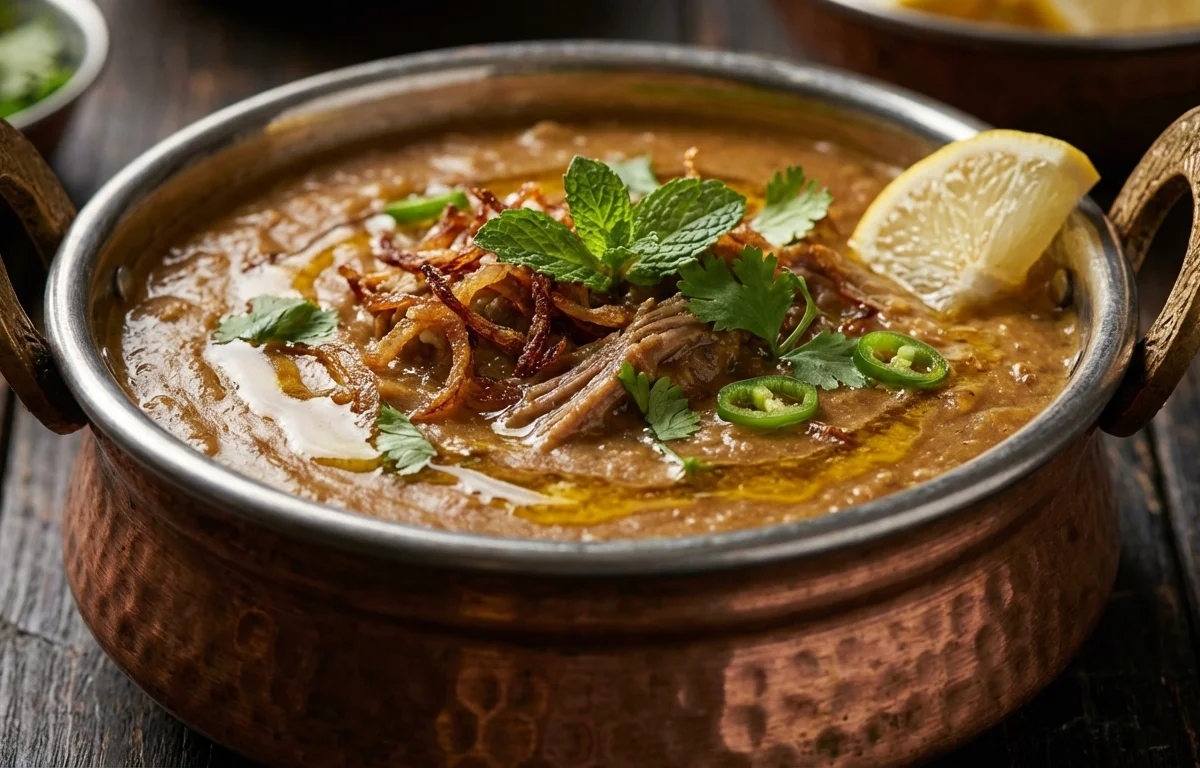
Hyderabadi Haleem
A slow-cooked Hyderabadi classic made with mutton, wheat, lentils, fragrant spices, and ghee. The meat turns tender enough to mash into the grains, giving haleem its rich, silky texture and deep savory flavor.
For 4 servings
- prep · ~8 min
Soak the wheat, lentils, and rice.
Wash the broken wheat, toor dal, chana dal, moong dal, masoor dal, urad dal, and rice well. Soak them together in enough water for 8 hours or overnight.
TIPA long soak helps the grains and lentils break down into the smooth, pasty texture haleem is known for. - fry · ~20 min
Fry the onions until golden.
1.Heat oil for frying in a deep pan over medium heat.2.Add the sliced onion in batches.3.Fry until deep golden and crisp, 8 to 10 minutes per batch.4.Drain and set aside. Reserve a small handful for garnish.TIPDo not darken the onions too much or they will taste bitter in the finished haleem. - saute · ~17 min
Build the mutton masala base.
1.Heat ghee in a pressure cooker over medium heat.2.Add cumin seeds, black peppercorns, cloves, green cardamom, cinnamon, and bay leaf.3.Add ginger-garlic paste and slit green chili; cook for 1 minute.4.Add mutton and cook for 5 to 6 minutes until the meat loses its raw color.5.Add yogurt, red chili powder, turmeric powder, coriander powder, salt, and half of the fried onion.6.Mix well and cook until the masala looks glossy, 4 to 5 minutes. - pressure cook · ~40 min
Cook the mutton until tender.
Add 3 cups water to the cooker, lock the lid, and pressure cook the mutton on medium heat for 35 to 40 minutes, until very tender and easy to shred.
TIPThe meat should be soft enough to mash with a spoon. Tough meat will not give haleem its signature texture. - pressure cook · ~25 min
Cook the soaked grains and lentils.
Drain the soaked broken wheat, lentils, and rice. Add them to a second cooker with 2 cups water and cook for 20 to 25 minutes until completely soft and mushy.
- mix · ~12 min
Mash the meat and grains.
1.Open the mutton cooker and remove the whole spices if easy to spot.2.Shred or pound the cooked mutton in the pot until the meat fibers break apart.3.Open the grain and lentil cooker and mash the mixture until smooth.4.Add the mashed grain mixture to the mutton pot and mix well.TIPA hand masher or sturdy whisk helps create the thick, stretchy texture without needing a blender. - simmer · ~45 min
Slow cook the haleem until thick.
1.Add the remaining 2 cups water if needed to loosen the mixture.2.Cook over low heat, stirring often so it does not stick.3.Mash and stir for 35 to 45 minutes until the haleem turns thick, smooth, and slightly stretchy.4.Stir in garam masala near the end.TIPKeep the heat low and stir the bottom well. Haleem catches quickly once it starts thickening. - garnish · ~2 min
Finish with herbs, fried onion, and lemon.
Top the haleem with the reserved fried onion, mint, coriander leaves, and lemon juice just before serving.
- serve
Serve the haleem hot.
What to keep in mind.
8 tips from the recipe — small details that make a real difference to the final dish.
- 1Soak the wheat, rice, and dals the full 8 hours; under-soaked grains stay coarse and the haleem will not turn silky.
- 2Fry onions in batches and pull them out at deep golden, not dark brown, so they add sweetness without bitterness.
- 3Whisk the yogurt before adding and keep the heat moderate so it blends into the masala instead of splitting.
- 4Cook the mutton until it crushes easily with the back of a spoon; chewy meat ruins haleem's smooth body.
- 5Remove obvious whole spices before mashing so you do not bite into cardamom pods or cloves later.
- 6During the final simmer, stir from the bottom corners of the pot every few minutes because haleem catches there first.
- 7If the haleem thickens too much on standing, loosen it with hot water and simmer briefly to bring back the right consistency.
- 8Haleem tastes even better after a short rest; make it a few hours ahead and reheat gently before garnishing.
Adapt it for your goals.
Low-oil
Use air-fried or oven-browned onions instead of deep-fried ones for a lighter haleem with less oil but similar sweetness.
spicierSpicier
Increase green chilies and red chili powder, then finish with extra black pepper for a sharper, more robust Hyderabadi heat.
bonelessBoneless
Use boneless mutton if you want easier shredding and serving, though bone-in pieces usually give deeper flavor to the pot.
chickenChicken
Swap mutton for chicken for a faster, lighter version; reduce pressure-cooking time since chicken softens much sooner.
Why this is on our healthy list.
Protein-Rich Main Dish
Mutton, yogurt, and the mix of lentils make this haleem filling and rich in protein for a hearty meal.
Good Source of Fiber
Broken wheat and multiple dals add fiber, which makes the dish more satisfying than a meat-only preparation.
Contains Iron-Rich Ingredients
Mutton and lentils contribute iron, while the lemon added at the end can complement these ingredients well.
Herb-Forward Finish
Mint, coriander, ginger, garlic, and whole spices add aroma and plant compounds along with freshness and depth.
Frequently asked questions
Yes. Simmer the mutton and the soaked grains separately on the stovetop until both are extremely soft, but expect a much longer cooking time.