Kalva Sukke
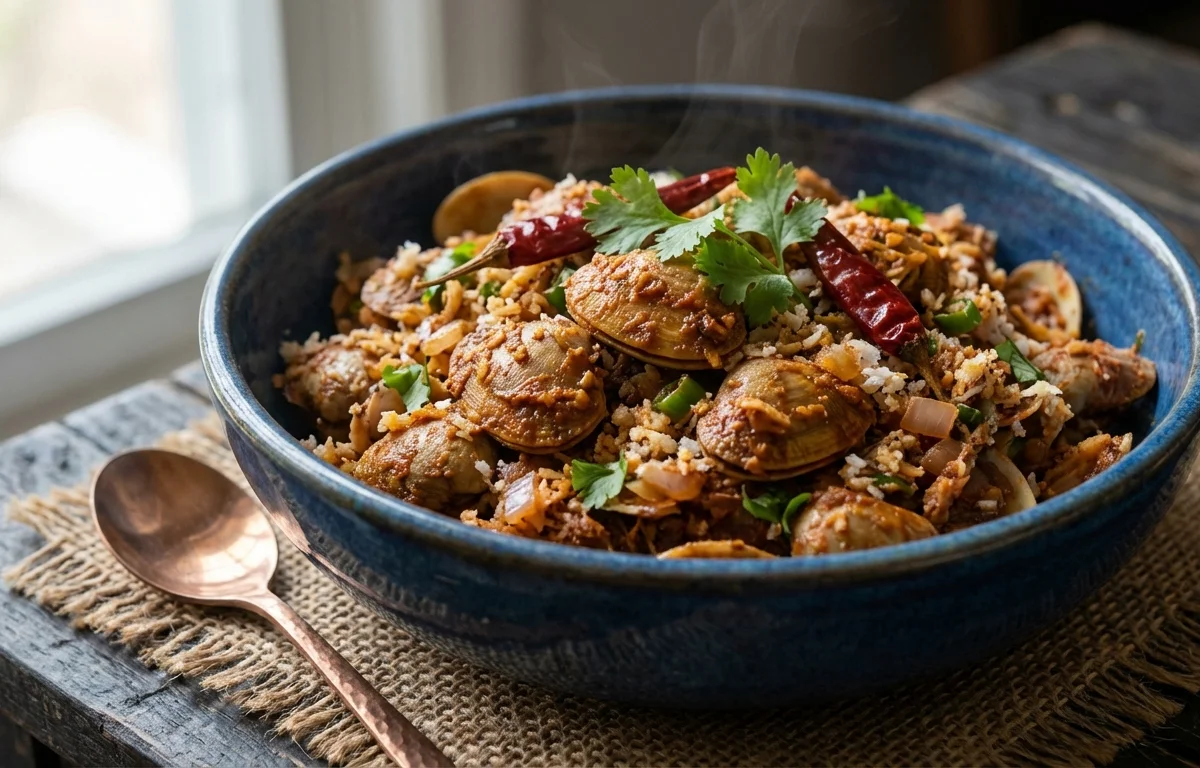
Fresh clams stir-fried in a rustic, aromatic blend of roasted coconut, whole spices, and tangy tamarind. This coastal Karnataka classic is dry, intensely flavorful, and best sopped up with steamed rice or neer dosa. Ready in under 40 minutes, it captures the essence of Mangalorean home cooking.
For 4 servings
- prep · ~10 min
Clean and prepare the clams.
1.Scrub the clamshells thoroughly under running water to remove all grit and mud.2.Check each clam — discard any that are cracked or stay open when tapped.3.Soak cleaned clams in fresh water with a pinch of salt for 10 minutes to purge sand. - roast · ~5 min
Roast the spices and coconut.
1.Heat a small pan over low heat and dry roast the coriander seeds, cumin seeds, peppercorns, and fenugreek seeds until fragrant (1-2 min).2.Add the dried red chilies and roast for another 30 seconds.3.Finally add the grated fresh coconut and roast, stirring constantly, until it turns light golden brown (2-3 min).4.Take off the heat and let cool completely.TIPKeep the heat low — coconut burns quickly and turns bitter. - mix · ~3 min
Grind the masala paste.
1.Transfer the cooled roasted mix to a grinder jar.2.Add turmeric powder and the soaked tamarind along with its water.3.Add 2 tbsp water and grind to a smooth, thick paste. Set aside. - saute · ~10 min
Sauté the aromatics.
1.Heat coconut oil in a heavy-bottomed pan over medium heat.2.Add the curry leaves and let them crackle (10 sec).3.Add chopped onions and sauté until translucent (4-5 min).4.Add the minced garlic, grated ginger, and slit green chilies. Sauté until the raw smell disappears (1-2 min).5.Add the chopped tomatoes and cook until soft and mushy (3-4 min). - simmer · ~10 min
Cook the masala with clams.
1.Add the ground masala paste to the pan and stir well.2.Add 0.25 cup water and salt. Bring to a gentle simmer.3.Add the cleaned clams, give it a good stir, and cover with a lid.4.Cook on medium-low heat until all clams open up (6-8 min). Discard any that stay closed.5.Stir occasionally, and cook uncovered for the last 2 minutes to dry out any excess moisture.TIPShake the pan occasionally instead of stirring too much — it prevents breaking the clam meat. - garnish
Finish and serve hot.
Once the masala is semi-dry and clinging to the clams, turn off the heat. Garnish with a few fresh curry leaves and a drizzle of raw coconut oil if desired.
TIPServe immediately — clams turn rubbery if left to sit.
What to keep in mind.
6 tips from the recipe — small details that make a real difference to the final dish.
- 1Soak cleaned clams in salted water for 10 minutes to help purge any remaining sand.
- 2Roast coconut on low heat and stir constantly — it burns quickly and turns bitter.
- 3Shake the pan occasionally instead of stirring vigorously to avoid breaking the clam meat.
- 4Discard any clams that remain closed after cooking — they are unsafe to eat.
- 5Serve immediately after cooking; clams become tough and rubbery if left to sit.
- 6For a stronger coastal flavor, finish with a drizzle of raw coconut oil before serving.
Adapt it for your goals.
Low-oil
Reduce coconut oil to 1 teaspoon and use a non-stick pan. The roasted coconut masala still provides plenty of moisture and flavor, making this a lighter version without sacrificing taste.
high proteinHigh-protein
Swap half the clams with small, cleaned shrimp or squid for a mixed seafood sukke. This boosts protein variety and adds different textures while keeping the same aromatic base.
jainJain
Replace clams with firm, cubed paneer or boiled potatoes. Omit onion and garlic, and add a pinch of asafoetida (hing) for a similar savory depth. This version stays within Jain dietary restrictions while preserving the dish's character.
veganVegan
Substitute clams with oyster mushrooms or hearts of palm for a plant-based alternative that mimics the tender, briny bite. The masala and coconut oil are naturally vegan, so no other changes needed.
spicierSpicier
Add 2 extra slit green chilies and use 6 Kashmiri red chilies (instead of 4). For heat lovers, this cranks up the spice level while keeping the dish balanced with coconut and tamarind.
Why this is on our healthy list.
Rich in Lean Protein
Clams provide high-quality, low-fat protein essential for muscle repair and overall health.
Packed with Iron
Clams are a natural source of heme iron, which supports healthy blood and energy levels.
Good Source of Vitamin B12
Clams are one of the best food sources of vitamin B12, crucial for nerve function and red blood cell formation.
Contains Anti-Inflammatory Spices
Turmeric, ginger, and curry leaves in this dish offer natural anti-inflammatory and antioxidant properties.
Heart-Friendly Fats
Coconut oil contains medium-chain triglycerides (MCTs) that may support heart health when used in moderation.
Frequently asked questions
Fresh clams should be tightly closed or close when tapped. Discard any that are cracked, broken, or remain open after tapping — they may be dead and unsafe to eat.