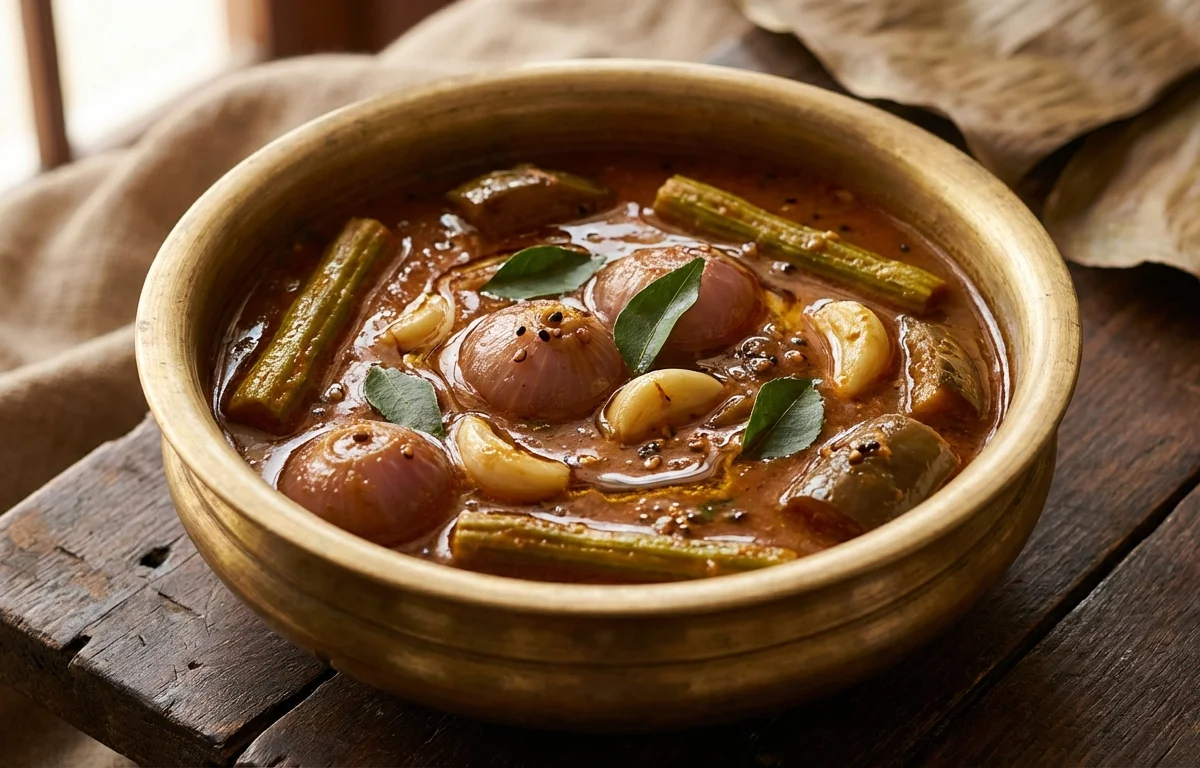
Kara Kuzhambu
A bold, tangy Tamil-style tamarind gravy with shallots, garlic, and a roasted spice base. It cooks down into a deep, glossy kuzhambu that tastes even better after a little rest and pairs beautifully with hot rice.
For 4 servings
- prep · ~15 min
Soak the tamarind and get the ingredients ready.
1.Soak the tamarind in 200 ml warm water for 15 minutes.2.Peel the shallots and garlic.3.Chop the tomato into small pieces.4.Squeeze and strain the tamarind to make a smooth extract.TIPA smooth tamarind extract gives the kuzhambu a cleaner texture without fibrous bits. - roast · ~4 min
Roast the spices for the masala.
1.Heat a small pan over low heat.2.Add dried red chili, coriander seeds, cumin seeds, black peppercorns, toor dal, and chana dal.3.Roast until the dals turn golden and the spices smell fragrant, about 2 to 3 minutes.4.Add grated coconut and roast briefly for 30 seconds without burning.TIPKeep the heat low; burnt fenugreek or coconut will make the gravy bitter. - mix · ~2 min
Grind the roasted spices.
Cool the roasted mixture slightly, then grind it with a little water into a smooth, thick paste.
- temper · ~1 min
Make the tempering.
1.Heat sesame oil in a kadai over medium heat.2.Add mustard seeds and let them splutter.3.Add fenugreek seeds, curry leaves, and asafoetida.4.Stir for a few seconds until fragrant.TIPAdd fenugreek after the mustard splutters so it toasts gently instead of turning dark. - saute · ~9 min
Cook the shallots, garlic, and tomato.
1.Add the shallots and garlic to the pan.2.Sauté until the shallots soften and lightly color, about 5 minutes.3.Add the chopped tomato and turmeric powder.4.Cook until the tomato breaks down and turns pulpy, about 4 minutes. - simmer · ~10 min
Simmer the tamarind gravy.
Pour in the tamarind extract and the remaining 400 ml water. Add salt and jaggery, then bring to a steady simmer for 8 to 10 minutes so the raw tamarind smell cooks away.
- simmer · ~10 min
Add the ground paste and cook until glossy.
Stir in the ground masala paste and simmer on low heat for 8 to 10 minutes, stirring now and then, until the kuzhambu thickens slightly and a layer of oil shows on top.
TIPIf the gravy gets too thick, loosen it with a splash of hot water; kara kuzhambu should be pourable, not pasty. - rest · ~10 min
Let the kuzhambu rest for 10 minutes.
- serve
Serve hot with rice.
Serve the kara kuzhambu warm with steamed rice and a simple poriyal or papad on the side.
What to keep in mind.
7 tips from the recipe — small details that make a real difference to the final dish.
- 1Roast the dal-spice mix on low heat only; even slightly dark coconut or fenugreek can turn the kuzhambu bitter.
- 2Sauté the shallots until their edges lightly color; that sweetness balances the sharp tamarind.
- 3Simmer the tamarind liquid before adding the ground paste so the raw sour smell cooks off fully.
- 4Grind the roasted masala to a smooth, thick paste for a silkier gravy without gritty spice bits.
- 5Stop reducing when a thin sheen of sesame oil appears on top and the kuzhambu coats the ladle lightly.
- 6This kuzhambu tastes better after resting, and is often even deeper in flavor the next day.
- 7If refrigerating, reheat gently with a splash of hot water to bring back the right pourable consistency.
Adapt it for your goals.
Jain
Skip garlic and shallots; add more tomato and a little extra roasted coconut for body while keeping the tangy tamarind base intact.
vegetable richVegetable-rich
Add drumstick, brinjal, or okra during the tamarind simmer for a heartier kuzhambu that turns into a full meal with rice.
no coconutNo-coconut
Omit coconut and increase the roasted dals slightly for a lighter gravy with a longer shelf life and a more spice-forward taste.
extra spicyExtra-spicy
Increase dried red chilies and a few more peppercorns if you want a sharper, more fiery kara kuzhambu.
Why this is on our healthy list.
Digestive Spice Base
Cumin, pepper, asafoetida, garlic, and curry leaves are traditional ingredients often used to make rich meals feel lighter and more balanced.
Plant-Based Aromatics
Shallots, tomato, garlic, tamarind, and spices create intense flavor from pantry ingredients without needing cream or animal products.
Natural Satiety From Dals
The small amount of toor dal and chana dal in the masala adds body and some plant protein, helping the gravy feel more satisfying.
Frequently asked questions
Usually the tamarind has not simmered long enough, or the extract is too strong. Let it cook longer before adding the masala, and balance with a little jaggery.