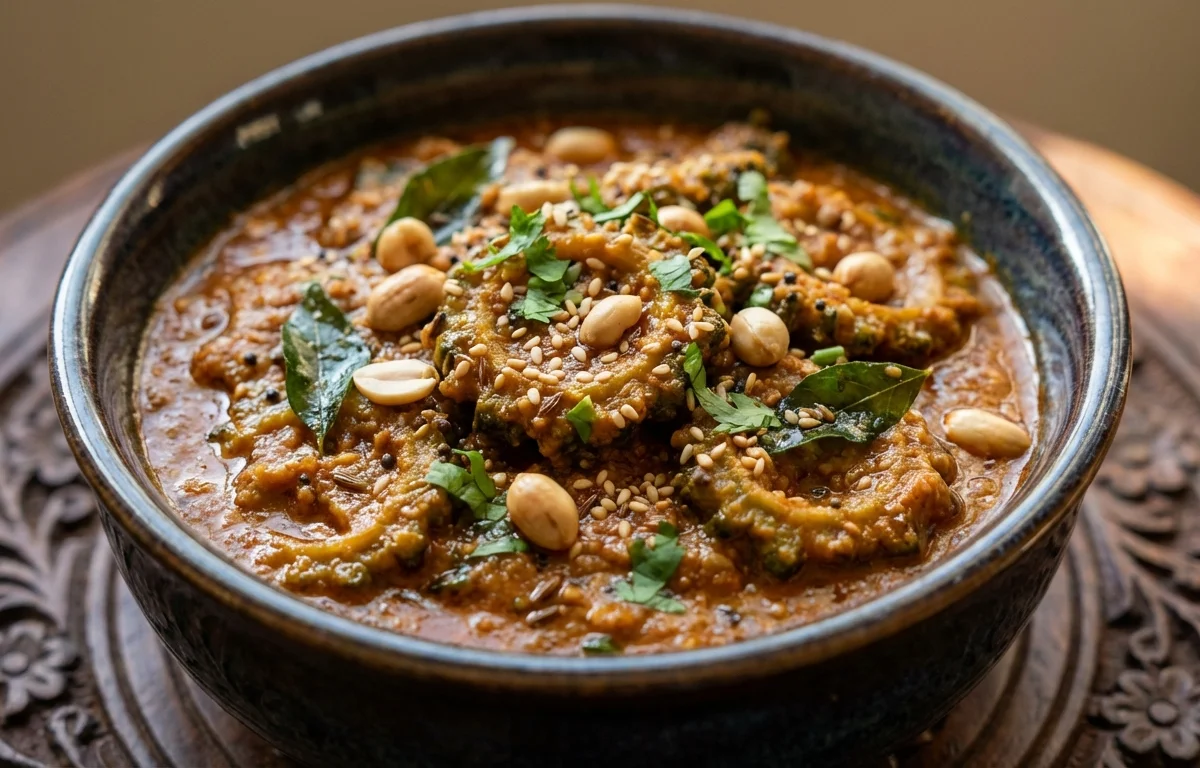
Karela ka Salan
A traditional Hyderabadi-style bitter gourd curry that transforms the sharp bitterness of karela into a rich, tangy, and nutty gravy. The karela is salted and pan-fried first to mellow its bite, then simmered in a luscious blend of peanuts, sesame, coconut, and tamarind. This dish pairs beautifully with steamed rice or roti.
For 4 servings
- prep · ~20 min
Salt the karela to remove bitterness.
Toss the sliced karela with 1 teaspoon salt in a bowl. Let it rest for 15-20 minutes, then squeeze out the bitter juices and rinse thoroughly under running water. Pat dry with a clean kitchen towel.
TIPSqueeze the karela firmly after salting. This step removes the majority of the bitterness and is essential for the final taste. - fry · ~5 min
Pan-fry the karela until golden.
1.Heat 2 tablespoons of oil in a heavy-bottomed pan over medium heat.2.Add the dried karela slices in a single layer.3.Pan-fry for 4-5 minutes, stirring occasionally, until the slices are lightly browned and slightly crisp.4.Remove from the pan and set aside on a plate.TIPDon't crowd the pan; cook in batches if needed to ensure the karela fries, not steams. - saute · ~4 min
Roast the peanut-sesame-coconut masala.
1.In the same pan, add the peanuts. Dry roast on low heat for 2 minutes until fragrant.2.Add the sesame seeds and dry roast for another 1 minute.3.Finally, add the desiccated coconut and roast for 30 seconds until lightly golden.4.Transfer the roasted mixture to a plate to cool.TIPKeep the heat low and stir continuously. The coconut can burn very quickly and become bitter itself. - mix · ~2 min
Grind into a smooth masala paste.
1.Once the roasted nut mixture has cooled, transfer it to a blender.2.Add the chopped tomatoes and tamarind paste.3.Pour in 0.5 cup of water and grind to a smooth, thick paste. Set aside. - saute · ~10 min
Build the curry base.
1.Heat the remaining 1 tablespoon of oil in the same pan.2.Add cumin seeds and let them sizzle and splutter for 15-20 seconds.3.Add the sliced onions and sauté until deep golden brown, about 8-10 minutes.4.Stir in the ginger-garlic paste and sauté for another minute until the raw aroma is gone.TIPThe onions should be deeply browned for a rich, sweet flavor that balances the karela's bitterness. - simmer · ~10 min
Cook the masala with spices.
1.Lower the heat and add the ground masala paste to the onions.2.Stir in the turmeric powder, red chili powder, and coriander powder.3.Add the pinch of salt for the gravy.4.Cook the masala for 8-10 minutes, stirring frequently, until the raw smell disappears and the oil begins to separate.TIPCooking the masala paste well is the secret to a deep, non-bitter gravy. Wait patiently for the oil to separate. - simmer · ~20 min
Add the fried karela and simmer.
Add the fried karela slices to the gravy. Pour in 0.5 cup of water, stir well, and bring to a gentle simmer. Cover and cook on low heat for 15-20 minutes, stirring once or twice, until the karela is tender and the gravy has thickened to your desired consistency.
- garnish
Garnish with fresh cilantro and serve hot.
Once done, turn off the heat. Garnish generously with chopped cilantro. Serve the Karela ka Salan hot with steamed rice, biryani, or roti.
What to keep in mind.
7 tips from the recipe — small details that make a real difference to the final dish.
- 1After salting, squeeze the karela firmly to expel bitter juices; this step is non-negotiable for a balanced dish.
- 2Dry roast the peanut-sesame-coconut mix on low heat and stir constantly to prevent the coconut from burning and turning bitter.
- 3Cook the onion base until deep golden brown (8-10 minutes) for a sweet, rich flavor that counters karela's bitterness.
- 4Simmer the ground masala paste until oil separates on top — this deepens flavor and removes raw taste.
- 5Fry the karela slices in a single layer; overcrowding steams them instead of achieving that golden, slightly crisp edge.
- 6For a thicker gravy, simmer uncovered for the last 5 minutes; add a splash of water if it gets too thick.
- 7This curry tastes even better the next day as flavors meld; store refrigerated for up to 3 days.
Adapt it for your goals.
Low-oil
Reduce oil to 1 tbsp and air-fry the karela slices at 180°C for 8 minutes instead of pan-frying; skip the final oil separation step by using a non-stick pan.
veganVegan
This dish is already naturally vegan as written — no changes needed.
high proteinHigh-protein
Add 1/2 cup of roasted chickpeas or 200g of fried paneer cubes along with the karela for a protein boost that still pairs with the nutty gravy.
Why this is on our healthy list.
Rich in Dietary Fiber
Bitter gourd is high in fiber, which aids digestion and helps maintain steady blood sugar levels.
Good Source of Plant Protein
Peanuts and sesame seeds provide plant-based protein and healthy unsaturated fats, supporting muscle health and satiety.
Antioxidant-Rich Ingredients
Turmeric, cumin, and sesame seeds contain antioxidants that help fight inflammation and support overall wellness.
Low-Calorie Base Ingredient
Bitter gourd is naturally low in calories, making this a satisfying yet calorie-conscious curry option.
Frequently asked questions
You may have skipped or shortened the salting step, or didn't squeeze out the juices hard enough. Salt and rest for at least 15 minutes, then rinse and pat dry thoroughly.