
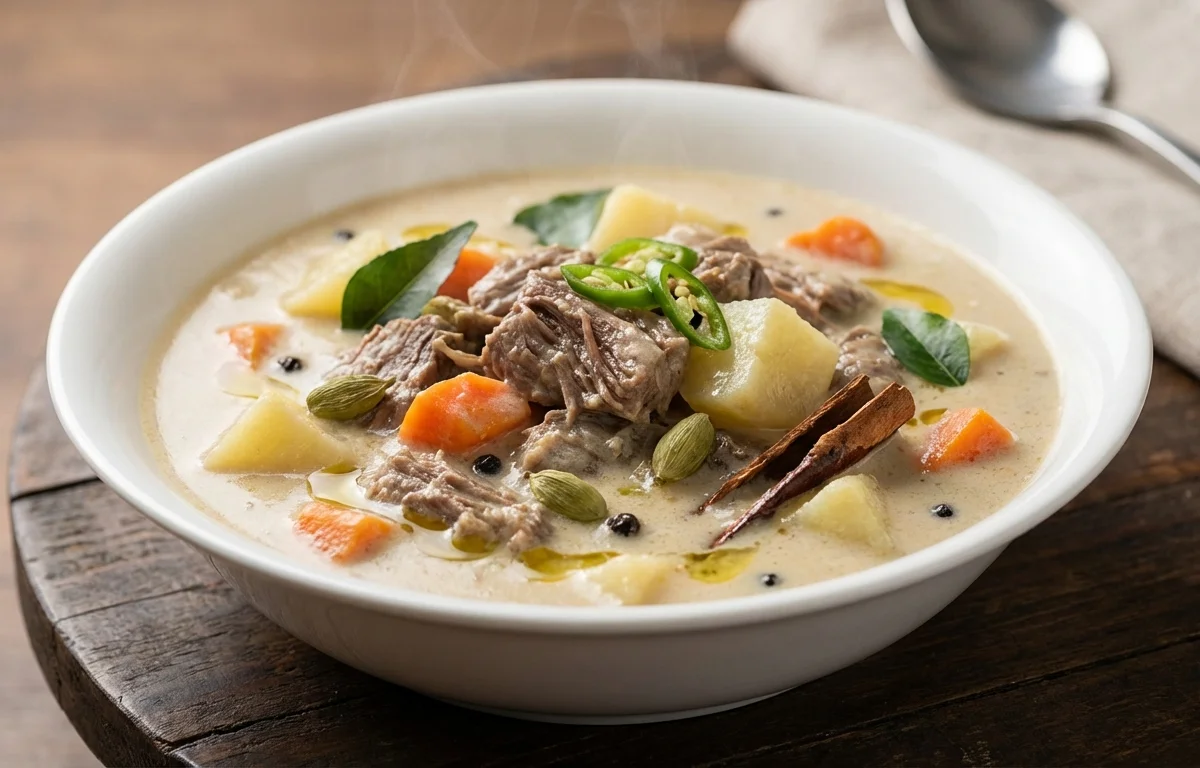
Kerala Beef Stew
A gently spiced Kerala-style beef stew with tender meat, soft vegetables, coconut milk, and plenty of black pepper. It is rich without feeling heavy and tastes especially good with appam, bread, or idiyappam.
For 4 servings
- prep · ~10 min
Prepare the beef and vegetables.
1.Cut the beef into medium cubes if not already done.2.Peel and cube the potato.3.Peel and slice the carrot.4.Slice the onion, slit the green chili, and slice the ginger and garlic. - saute · ~6 min
Cook the whole spices and onions.
1.Heat coconut oil in a pressure cooker over medium heat.2.Add cinnamon, cardamom, cloves, whole black peppercorns, and curry leaves.3.Cook for 30 seconds until fragrant.4.Add onion, green chili, ginger, and garlic, then cook until the onion turns soft and lightly translucent.TIPKeep the heat medium so the spices flavor the oil without burning. - pressure cook · ~30 min
Pressure cook the beef and vegetables.
1.Add the beef, potato, carrot, salt, black pepper, thin coconut milk, and water.2.Mix well and bring it just to a gentle boil.3.Lock the cooker and cook until the beef is tender, about 20 to 25 minutes after pressure builds.4.Let the pressure drop naturally before opening.TIPNatural pressure release helps keep the beef tender. - simmer · ~4 min
Finish the stew with thick coconut milk.
Open the cooker and check that the beef and vegetables are tender. Add the thick coconut milk and simmer on low heat for 3 to 4 minutes, without boiling hard, until the stew turns silky and lightly thickened.
TIPDo not boil hard after adding thick coconut milk or it may split. - serve
Serve the Kerala Beef Stew hot.
What to keep in mind.
7 tips from the recipe — small details that make a real difference to the final dish.
- 1Choose beef with some connective tissue like chuck so it turns tender and flavorful under pressure.
- 2Do not deeply brown the onions; keep them just translucent to preserve the stew's pale Kerala-style color.
- 3Lightly crush the whole peppercorns before adding so they perfume the broth without making it gritty.
- 4Cut the potato pieces slightly larger than the carrot so both finish tender at the same time.
- 5Let the pressure release naturally; quick release can tighten the beef and make the vegetables break up.
- 6Add the thick coconut milk only at the end and keep the heat low to prevent curdling or oil separation.
- 7This stew tastes even better after a few hours of rest, when the pepper, curry leaves, and whole spices settle into the gravy.
Adapt it for your goals.
Low-oil
Reduce the coconut oil slightly and soften the onions with a splash of water; the stew still stays fragrant because the whole spices and coconut milk carry plenty of flavor.
extra pepperyExtra-peppery
Increase freshly ground black pepper and add a few more lightly crushed peppercorns for a more assertive, warming version.
muttonMutton
Swap beef for mutton or goat for a similar Kerala-style stew with a deeper, gamier flavor; allow a little more pressure-cooking time if needed.
vegetableVegetable
Replace the beef with extra potato, carrot, and peas or mushrooms for a lighter coconut stew that pairs well with appam.
Why this is on our healthy list.
Protein-Rich Main Dish
Beef makes this stew satisfying and protein-rich, helping turn it into a substantial meal rather than just a side.
Vegetable-Based Comfort
Potato, carrot, onion, ginger, garlic, and green chili add plant variety, texture, and everyday nutrients along with the meat.
Gentle Spice Support
Ginger, garlic, black pepper, and whole spices bring flavor depth so the stew feels rich and warming without needing heavy masalas.
Frequently asked questions
Yes. Simmer it covered in a heavy pot until the beef is tender, then add the thick coconut milk at the end and heat gently without boiling hard.



.webp)


.webp)