
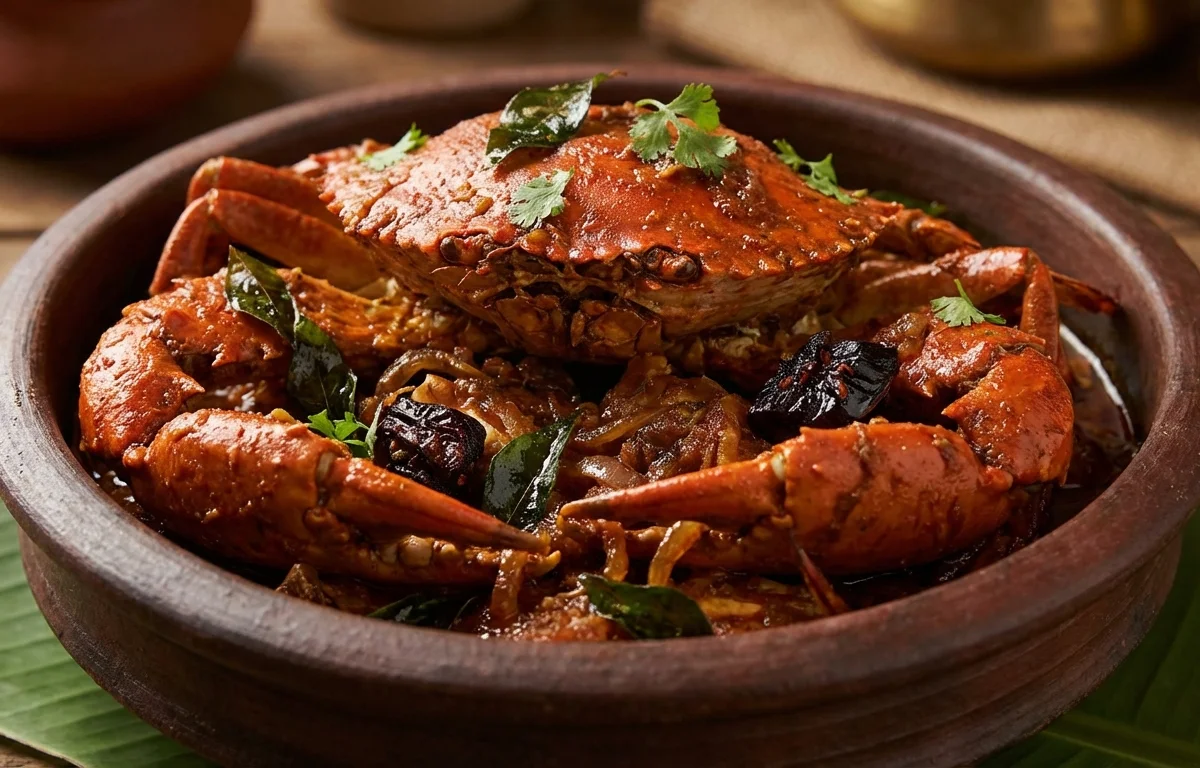
Kerala Crab Roast
Fresh crab cooked in a deeply spiced Kerala-style masala with onions, curry leaves, black pepper, and a little coconut oil. The roast turns rich, glossy, and packed with coastal flavor that pairs beautifully with rice or appam.
For 4 servings
- prep · ~10 min
Clean and ready the crab.
Wash the crab pieces well and drain fully. Crack the larger claws lightly so the masala can get in while cooking.
- saute · ~9 min
Cook the onions and aromatics.
1.Heat coconut oil in a wide pan over medium heat.2.Add onion and curry leaves, then cook until the onions turn soft and light golden, 6 to 8 minutes.3.Add ginger, garlic, and green chili, then sauté until the raw smell fades, about 1 minute.TIPUse a wide pan so the crab cooks in an even layer and the masala roasts instead of steaming. - saute · ~8 min
Build the roast masala.
1.Add tomato and cook until soft and pulpy, 4 to 5 minutes.2.Add turmeric powder, red chili powder, coriander powder, black pepper, garam masala, and salt.3.Cook the masala on low heat until it looks glossy and smells roasted, 2 to 3 minutes.TIPKeep the heat low once the spice powders go in so they darken gently without burning. - simmer · ~15 min
Cook the crab in the masala.
1.Add the crab pieces and toss well to coat them with the masala.2.Pour in water and mix gently.3.Cover and cook on medium-low heat until the crab turns bright and is cooked through, 12 to 15 minutes.TIPCrab releases some of its own juices, so add only a little water to keep the dish thick and roast-like. - saute · ~7 min
Roast until the masala clings.
Uncover and cook for 5 to 7 minutes, stirring gently now and then, until the gravy reduces and coats the crab well. The finished dish should be moist but not watery.
- serve
Serve the Kerala Crab Roast hot.
What to keep in mind.
7 tips from the recipe — small details that make a real difference to the final dish.
- 1Crack the bigger claws before cooking so the peppery masala seeps into the meat.
- 2Slice the onions thin and cook them to light golden; undercooked onions make the roast taste raw and sweet.
- 3Use a wide pan and keep the crab in a mostly single layer so it roasts instead of steaming.
- 4After adding the spice powders, keep the heat low and stir constantly for 2 to 3 minutes to avoid bitterness.
- 5Do not add extra water beyond what is needed; crab releases juices and too much liquid will prevent the masala from clinging.
- 6The crab is done when the shell turns bright and the meat loosens from the shell, usually within the stated simmer time.
- 7Let the roast rest for 5 minutes before serving so the masala thickens and settles onto the crab.
Adapt it for your goals.
Extra-peppery
Increase freshly crushed black pepper and reduce red chili slightly for a more traditional, warm heat with deeper aroma.
dry roast styleDry-roast style
Use a little less water and roast longer uncovered for a drier masala that clings tightly to the shells, great with toddy-shop style meals.
with coconut slicesWith coconut slices
Add thin coconut slices while sautéing the onions for extra texture and a richer coastal Kerala flavor.
prawn roastPrawn roast
Use prawns instead of crab for a faster-cooking version with the same masala profile and easier eating.
Why this is on our healthy list.
Protein-Rich Seafood
Crab provides quality protein, making this roast satisfying while pairing well with simple rice or appam.
Aromatic Spice Benefits
Ginger, garlic, black pepper, turmeric, and curry leaves add flavor along with beneficial plant compounds.
Moderate Added Fat
The recipe uses a small amount of coconut oil, relying more on careful roasting and reduction for richness.
Frequently asked questions
The shells turn bright in color and the meat becomes opaque and easy to pull from the shell. Avoid cooking far past that point or the meat can toughen.


.webp)
.webp)