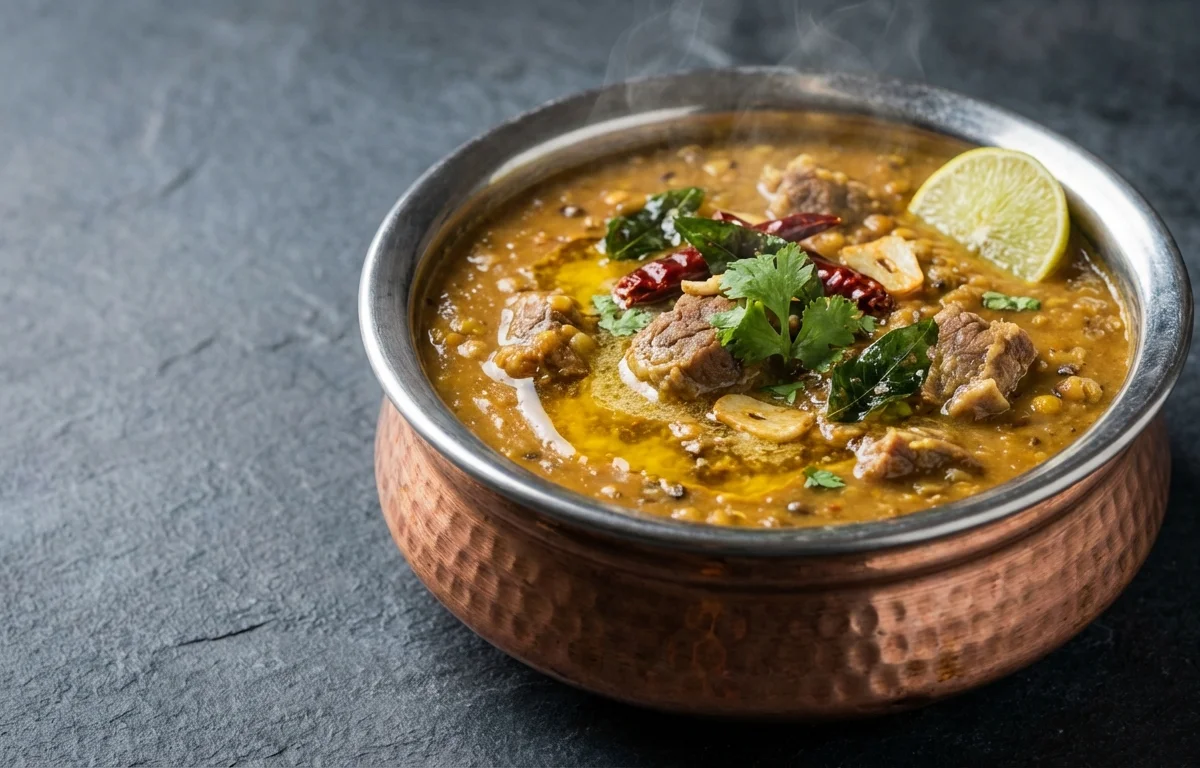
Khatti Dal Gosht
A comforting Hyderabadi-style dish where tender mutton cooks with lentils, onions, and warming spices, then gets its signature tang from tamarind. It is hearty, gently spiced, and especially good with steamed rice.
For 4 servings
- prep · ~20 min
Prepare the lentils and meat.
1.Wash the toor dal well and soak it in water for 30 minutes.2.Wash the mutton pieces and drain well.3.Slice the onion, chop the tomato, slit the green chili, and chop the coriander leaves. - saute · ~12 min
Cook the onion and spice base.
1.Heat oil in a pressure cooker over medium heat.2.Add cumin seeds, mustard seeds, and curry leaves; let them crackle for 20 to 30 seconds.3.Add sliced onion and cook until light golden, about 5 to 6 minutes.4.Add ginger-garlic paste and sauté for 1 minute.5.Add tomato, red chili powder, turmeric powder, and coriander powder; cook until the tomato softens, about 4 minutes.TIPKeep the heat medium so the spices bloom without burning. - pressure cook · ~35 min
Pressure cook the dal and mutton.
1.Add the mutton and cook for 3 to 4 minutes, stirring to coat it in the masala.2.Drain the soaked toor dal and add it to the cooker.3.Add green chili, salt, and water, then mix well.4.Cover and pressure cook until the mutton is tender and the dal is soft, about 25 to 30 minutes.TIPBone-in mutton gives the dal deeper flavor and body. - simmer · ~10 min
Add tamarind and finish the dal.
Release the pressure naturally and open the cooker. Lightly mash some of the dal with the back of a ladle, stir in the tamarind paste, and simmer uncovered for 8 to 10 minutes until the flavors come together and the gravy turns slightly tangy and smooth.
- garnish
Garnish with coriander leaves.
- serve
Serve hot with steamed rice or flatbread.
What to keep in mind.
7 tips from the recipe — small details that make a real difference to the final dish.
- 1Soaking the toor dal helps it soften at the same pace as the mutton in the cooker.
- 2Brown the onions only to light golden; darker onions can make the dal taste slightly bitter.
- 3Let the pressure drop naturally so the mutton stays juicy and the dal finishes cooking gently.
- 4Add tamarind only after pressure cooking, or the acidity can slow down both the dal and meat from softening.
- 5Mash just a small portion of the dal before simmering to thicken the gravy without making it pasty.
- 6If the gravy feels too thick after simmering, loosen it with a splash of hot water, not cold.
- 7This dish tastes even better after a few hours of rest, when the tang and meat juices settle into the dal.
Adapt it for your goals.
Spicier
Increase green chilies and red chili powder for a hotter, more robust dal gosht that still keeps the tamarind-led balance.
low oilLow-oil
Reduce the oil slightly and sauté the onions patiently over medium-low heat; you still get a flavorful base with a lighter finish.
thicker gravyThicker-gravy
Mash more of the cooked dal after opening the cooker for a creamier, spoon-coating texture that pairs especially well with rice.
jhatka of gheeJhatka-of-ghee
Finish with a small spoon of ghee along with coriander leaves for a richer aroma and a fuller, festive taste.
Why this is on our healthy list.
Protein from Meat and Dal
Mutton and toor dal together make the dish hearty and satisfying, helping turn it into a filling main course.
Fiber-Rich Lentil Base
Toor dal adds fiber and body, making the gravy more nourishing than a meat-only curry.
Tomato and Tamarind Brightness
Tomatoes and tamarind bring tang and depth, which can make a rich mutton dish feel lighter on the palate.
Aromatic Spices and Herbs
Cumin, coriander, curry leaves, ginger, garlic, and fresh coriander add flavor complexity without needing heavy cream or butter.
Frequently asked questions
Yes, but bone-in mutton gives the dal deeper flavor and a better-bodied gravy. Boneless pieces may cook a little faster and taste slightly less rich.