
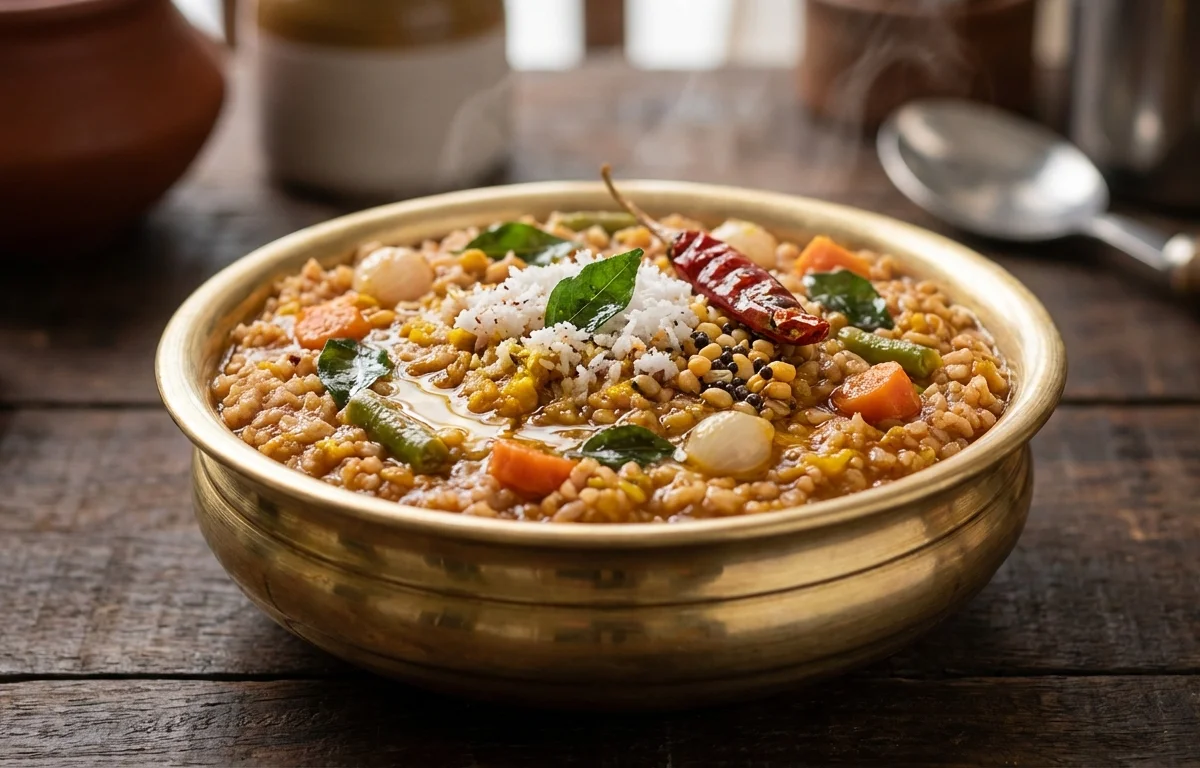
Kootanchoru
A hearty one-pot rice and lentil dish studded with seasonal vegetables and cooked in aromatic coconut-spice paste. This traditional Tamil Nadu comfort meal brings together rice, dal, and vegetables in perfect harmony, finished with a ghee tempering and fresh coconut. Rustic, nourishing, and deeply satisfying.
For 4 servings
- prep
Soak the rice.
Wash sona masoori rice in 2-3 changes of water until water runs clear. Soak in enough water for 30 minutes, then drain completely.
TIPSoaking softens the grain and helps it cook evenly without breaking. - prep
Prepare the vegetables.
1.Peel and cube the potato into 1-inch pieces.2.Scrub and dice the carrot into similar-sized pieces.3.Trim drumsticks and cut into 3-inch batons.4.Trim green beans and cut into 1-inch pieces.5.Cube the brinjal into 1-inch pieces and hold in water to prevent browning. - mix
Grind the coconut-spice paste.
In a small mixer jar, grind freshly grated coconut, green chili, and cumin seeds with 3-4 tablespoons of water to a smooth, thick paste. Set aside.
TIPThe coconut acts as the thickening and flavor base — grind until no visible pieces remain. - pressure cook · ~15 min
Pressure cook the rice, dal, and vegetables.
1.In a 5-liter pressure cooker, add the drained rice and washed toor dal.2.Add cubed potato, carrot, drumstick pieces, green beans, brinjal cubes, and green peas.3.Add turmeric powder, salt, and 3.25 cups of water. Stir gently to combine.4.Close the lid and cook on medium heat for 3 whistles.5.Turn off heat and let the pressure release naturally (10-12 minutes).TIPNatural pressure release is important — the residual steam finishes cooking the rice and dal to a soft, mushy texture signature to kootanchoru. - mix · ~2 min
Fold in the coconut paste.
Once the pressure has fully dropped, open the lid. Immediately add the ground coconut paste and mix gently but thoroughly into the hot rice-dal-vegetable mixture. The residual heat will cook the raw coconut aroma off. Cover and let sit for 2 minutes.
TIPAdd the paste while the mixture is still steaming hot — this blooms the coconut flavor without making the dish raw-tasting. - temper · ~2 min
Make the ghee tempering.
1.Heat ghee in a small tempering pan over medium heat until shimmering.2.Add mustard seeds and let them splutter (30 seconds).3.Add urad dal and fry until it turns light golden (20-30 seconds).4.Add broken dried red chili and curry leaves, fry for 10 seconds until fragrant.5.Add a pinch of asafoetida, stir for 5 seconds, then immediately remove from heat.TIPBe ready to pull the pan off the heat the moment asafoetida hits — it burns in a blink and turns bitter. - mix
Pour the tempering over the kootanchoru and mix gently.
Immediately pour the entire tempering — ghee, spices, and all — over the hot kootanchoru. Using a flat spatula, fold gently in a lifting motion to avoid mashing the vegetables too much. The ghee should coat every grain and vegetable piece.
TIPMix with a light hand — a heavy mash will make the dish pasty. We want separate grains coated in ghee, not a homogeneous mush. - garnish
Garnish with coriander leaves and serve hot.
Sprinkle chopped fresh coriander leaves over the top. Serve the kootanchoru steaming hot as-is, or with a side of papad and yogurt.
TIPA drizzle of extra raw coconut oil or a dollop of fresh butter on top just before serving takes it to temple-style territory.
What to keep in mind.
7 tips from the recipe — small details that make a real difference to the final dish.
- 1Soaking the rice for 30 minutes ensures even cooking and prevents grains from breaking during pressure cooking.
- 2Add the coconut paste only after the pressure is fully released — the residual heat cooks the raw aroma away without extra cooking.
- 3Use a flat spatula with a gentle lifting motion when mixing the tempering to avoid mashing the vegetables into a paste.
- 4Let the pressure release naturally for at least 10 minutes; the trapped steam finishes softening the dal and rice to the perfect mushy texture.
- 5For an authentic rustic finish, drizzle a teaspoon of cold-pressed coconut oil over each serving just before eating.
- 6If using frozen drumsticks, add them directly without thawing — they will cook perfectly in the pressure cooker without turning mushy.
- 7Cooled kootanchoru thickens considerably; add a splash of warm water while reheating to restore its original consistency.
Adapt it for your goals.
Low-oil
Reduce ghee for tempering to 1 tablespoon and skip the final coconut oil drizzle. The dish remains flavorful thanks to the coconut paste and vegetables.
high proteinHigh-protein
Add 1/2 cup of cooked moong dal or chana dal along with the toor dal for an extra protein boost without altering the traditional flavor.
jainJain
Omit garlic, onion, potato, carrot, and eggplant. Use only pumpkin, raw banana, and peas. Replace ghee with oil for the tempering.
veganVegan
Replace ghee with coconut oil or any neutral-flavored oil for the tempering. The dish is naturally vegan-friendly with this simple swap.
Why this is on our healthy list.
Rich in Plant Protein
The combination of rice and toor dal provides a complete protein profile, essential for muscle repair and sustained energy.
High in Dietary Fiber
A mix of vegetables — drumstick, carrots, beans, brinjal, and peas — supplies both soluble and insoluble fiber for digestive health.
Good Source of Healthy Fats
Fresh coconut and ghee offer medium-chain triglycerides and butyrate, which support brain function and gut health.
Packed with Micronutrients
Drumsticks are rich in vitamin C and calcium; carrots provide beta-carotene; green peas add iron and folate.
Anti-Inflammatory Spices
Turmeric, asafoetida, and cumin seeds in this dish possess natural anti-inflammatory and digestive properties.
Frequently asked questions
Yes, you can use any short-grain raw rice like ponni or parboiled rice. Avoid basmati as it will not yield the soft, sticky texture typical of kootanchoru.



.webp)
.webp)