
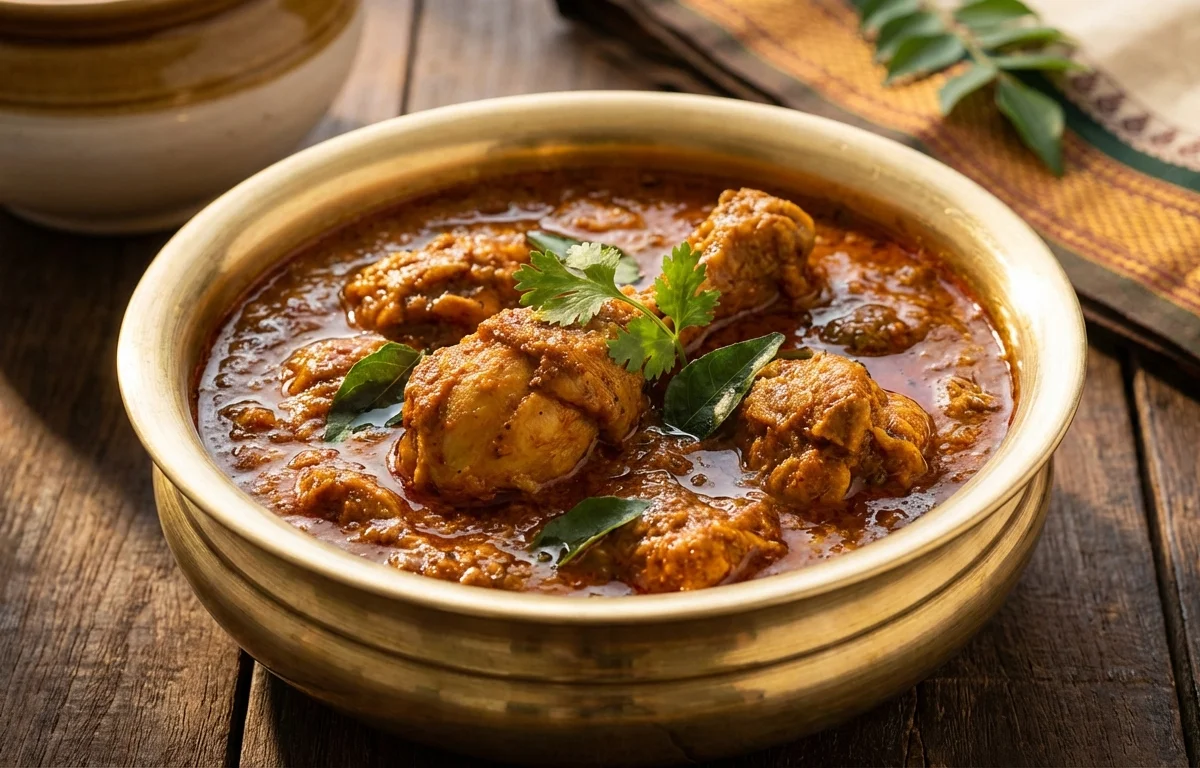
Kundapuri Chicken Curry
A rustic, fiery chicken curry from the coastal town of Kundapur in Karnataka. Bone-in chicken is slow-cooked in a freshly ground masala of roasted coconut, red chilies, and aromatic spices until the meat falls off the bone. The roasted coconut gives this gravy a deep, nutty richness balanced by the tang of tamarind. Perfect with neer dosa or steamed rice.
For 4 servings
- prep
Prep the chicken.
1.Clean and pat dry the chicken pieces.2.Rub the chicken with half the turmeric powder and a pinch of salt. Set aside. - roast · ~10 min
Roast the masala ingredients.
1.Place a pan over medium heat and dry roast the grated coconut, stirring constantly, until it turns deep golden brown (4-5 min). Transfer to a plate.2.In the same pan, add coriander seeds, cumin seeds, fenugreek seeds, and black peppercorns. Roast until fragrant (1-2 min). Transfer to the plate.3.Add the dry red chilies and roast for 30-45 seconds until they become crisp and aromatic. Do not burn them.TIPConstant stirring is crucial — coconut can burn in seconds and turn bitter. - mix · ~3 min
Grind the masala paste.
1.Add the roasted coconut, roasted spices, and red chilies to a blender jar.2.Add garlic, ginger, and soaked tamarind (with its water).3.Grind to a smooth, thick paste using about ½ cup of water. Set aside.TIPThe masala should be very fine and smooth. A coarse grind will leave a grainy texture in the curry. - saute · ~15 min
Build the base of the curry.
1.Heat coconut oil in a heavy-bottomed pan over medium flame.2.Add the curry leaves and let them crackle for 10 seconds.3.Add the sliced onions and sauté until deep golden brown (8-10 min), stirring occasionally to prevent burning.4.Add the chopped tomatoes and remaining turmeric powder. Cook until the tomatoes turn soft and mushy (3-4 min).TIPDon't rush the onions. The deep browning is essential for the rich, authentic Kundapuri flavor. - simmer · ~10 min
Cook the masala.
1.Add the ground masala paste to the pan. Stir well to combine with the onion-tomato mixture.2.Sauté the masala on medium heat, stirring frequently, until the raw smell disappears and oil starts to separate from the edges (8-10 min).3.Add a splash of water if the masala starts to stick to the bottom.TIPThe masala is cooked when the color darkens slightly and the oil glistens on the surface. - simmer · ~6 min
Cook the chicken in the masala.
1.Add the marinated chicken pieces to the pan. Stir well so each piece is coated with the masala.2.Sauté the chicken in the masala for 5-6 minutes until it starts to turn opaque.3.Pour in 2 cups of hot water and add the remaining salt. Stir well. - simmer · ~30 min
Simmer until the chicken is tender.
1.Bring the curry to a gentle boil, then lower the heat to a simmer.2.Cover the pan partially with a lid and cook for 25-30 minutes, stirring occasionally.3.Check for seasoning and adjust salt if needed. The curry is done when the chicken is falling off the bone and the oil floats on top.TIPThe curry should be thick, not watery. If it's too thin, simmer uncovered for the last 5 minutes to reduce. - rest · ~10 min
Rest the curry before serving.
Switch off the heat and let the curry sit covered for 10 minutes. This allows the flavors to meld and deepen beautifully.
TIPKundapuri chicken curry tastes even better the next day.
What to keep in mind.
7 tips from the recipe — small details that make a real difference to the final dish.
- 1Dry-roast grated coconut on medium-low heat, stirring constantly, until it turns deep golden brown for maximum nuttiness.
- 2Use a mix of Byadgi and Guntur chilies—the former for color, the latter for heat—to get the signature Kundapuri red.
- 3Grind the roasted masala to a very smooth paste; any graininess will ruin the silky texture of the gravy.
- 4Sauté onions until deep golden brown (8-10 minutes)—this sweetness is the backbone of the curry's flavor.
- 5Cook the masala paste until oil separates from the edges; this ensures raw aromas are gone and flavors are concentrated.
- 6Let the curry rest for 10 minutes after cooking, or refrigerate overnight, for the deepest flavor meld.
- 7Bone-in chicken is key—the bones release collagen, making the gravy rich and the meat fall-apart tender.
Adapt it for your goals.
Low-Oil
Reduce coconut oil to 1 tbsp and skip the initial sauté of masala in oil after grinding. The roasted coconut already provides plenty of richness, making this a lighter version without losing the core flavor.
Vegetarian (Paneer or Vegetables)Vegetarian (Paneer or Vegetables)
Replace chicken with 400g paneer cubes or a mix of cauliflower, potatoes, and carrots. Cook the vegetables directly in the simmering masala until tender (15-20 minutes). Great for a meatless Monday with the same bold coastal flavors.
Coconut Milk FinishCoconut Milk Finish
For a creamier, milder curry, stir in ½ cup of thick coconut milk during the last 5 minutes of simmering. This tones down the heat and adds a luscious, rich texture popular in some Coastal Karnataka variations.
Why this is on our healthy list.
Rich in Healthy Fats
Fresh coconut and coconut oil provide medium-chain triglycerides (MCTs), which are easily metabolized for energy and may support heart health.
Anti-Inflammatory Spices
Turmeric, ginger, and fenugreek seeds are known for their anti-inflammatory properties, potentially aiding digestion and joint health.
High-Quality Protein
Bone-in chicken is an excellent source of lean protein, essential for muscle repair and satiety, along with collagen from the bones.
Digestive Support from Tamarind
Tamarind is a natural source of dietary fiber and tartaric acid, which can aid digestion and act as a mild laxative.
Frequently asked questions
Yes, but hydrate 1 cup of desiccated coconut in ½ cup of warm water for 15 minutes before roasting. Fresh coconut gives a superior texture and flavor, but this works in a pinch.


.webp)
.webp)