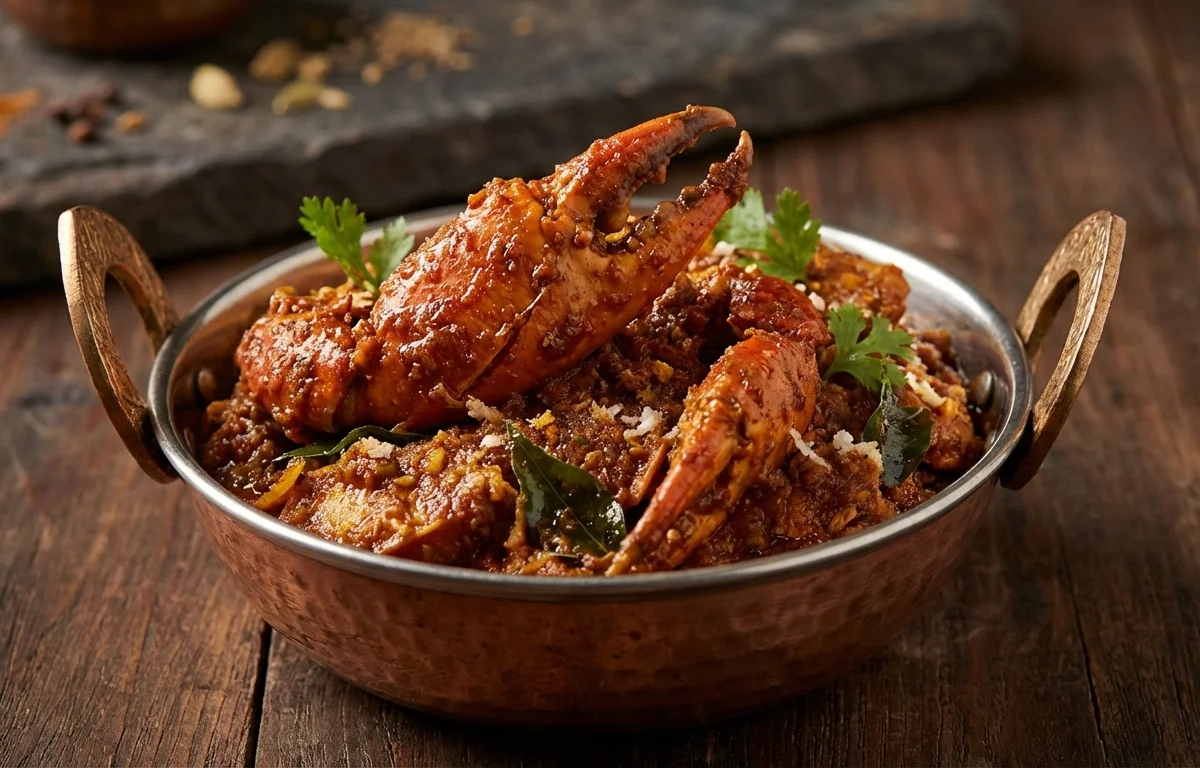
Mangalorean Crab Sukka
A coastal Karnataka favorite with fresh crab cooked in a dark, fragrant masala of coconut, red chilies, coriander, tamarind, and curry leaves. It turns rich, spicy, and slightly tangy with a clingy semi-dry finish.
For 4 servings
- prep · ~10 min
Clean and crack the crab.
Wash the crab well, remove the gills, and crack the claws and body slightly so the masala can get into the shell. Set aside in a bowl.
TIPAsk the fish seller to clean and crack the crab if you want to save time. - roast · ~7 min
Roast the spices and coconut.
1.Heat a dry pan over medium heat.2.Roast coriander seeds, cumin seeds, black peppercorns, and dried red chili until aromatic and a shade darker, about 2 to 3 minutes.3.Add grated coconut, ginger, and garlic and roast until the coconut turns light golden and smells nutty, about 3 to 4 minutes.4.Take the mixture off the heat and cool slightly.TIPKeep the heat medium so the coconut browns evenly without turning bitter. - mix · ~3 min
Grind the sukka masala.
Transfer the roasted mixture to a grinder with tamarind paste and a little water. Grind to a coarse, thick masala rather than a very smooth paste.
- saute · ~10 min
Cook the onion base.
1.Heat oil in a wide pan over medium heat.2.Add curry leaves and sliced onion, then cook until the onion turns soft and lightly golden, about 5 to 6 minutes.3.Add chopped tomato and turmeric powder.4.Cook until the tomato softens and blends into the onion, about 3 to 4 minutes. - simmer · ~17 min
Cook the crab with the masala.
1.Add the ground masala to the pan and cook for 2 minutes, stirring well.2.Add the crab, salt, and water, then mix to coat every piece with masala.3.Cover and cook on medium-low heat until the crab turns bright and is cooked through, about 12 to 15 minutes.4.Open the pan and cook a few more minutes until the masala thickens and clings to the crab in a semi-dry coating.TIPDo not add too much water; crab sukka should stay moist but not gravy-like. - garnish
Garnish with coriander leaves.
- serve
Serve hot.
Serve Mangalorean Crab Sukka hot with neer dosa, boiled rice, or soft pav to catch all the masala.
What to keep in mind.
6 tips from the recipe — small details that make a real difference to the final dish.
- 1Crack the claws and thicker shell sections well so the roasted coconut masala seeps into the crab as it cooks.
- 2Roast the coconut only to light golden; deep brown coconut can make the sukka taste bitter.
- 3Grind the masala coarse and thick, not silky smooth, for the classic clingy sukka texture.
- 4Use a wide pan rather than a deep pot so excess moisture evaporates and the masala dries onto the shells.
- 5Stop cooking the crab as soon as the shell turns bright and the meat is just done; overcooking makes it stringy.
- 6If making ahead, cook the masala base first and add crab only when reheating so the seafood stays tender.
Adapt it for your goals.
Extra-spicy
Add a few hotter dried chilies along with the Byadgi ones if you want more heat without losing the dish's red color.
prawn sukkaPrawn-sukka
Swap crab for prawns for a quicker coastal sukka; reduce cooking time so the prawns stay juicy.
low oilLow-oil
Use less oil and dry-roast carefully, then cook in a nonstick pan; good if you want the same masala with a lighter finish.
no tomatoNo-tomato
Skip the tomato and rely on tamarind alone for tang, for a more traditional, sharper coconut-spice profile.
Why this is on our healthy list.
Protein-Rich Seafood
Crab provides quality protein that makes this sukka satisfying while pairing well with the bold roasted masala.
Mineral-Rich Ingredients
Crab contributes important minerals, and the spice blend adds depth without needing heavy cream or rich sauces.
Spice and Herb Support
Ginger, garlic, black pepper, turmeric, and curry leaves bring aromatic compounds along with the dish's layered flavor.
Frequently asked questions
Yes, but thaw it fully and drain well first so the masala does not turn watery and lose its semi-dry finish.